DID Press: The 2025 U.S. National Security Strategy, grounded in an “America First” philosophy and a modern interpretation of the Monroe Doctrine, emphasizes a pragmatic, competitive stance toward China while implicitly positioning Pakistan — as a strategic partner of Beijing — in a sensitive role within Washington’s new regional calculations.
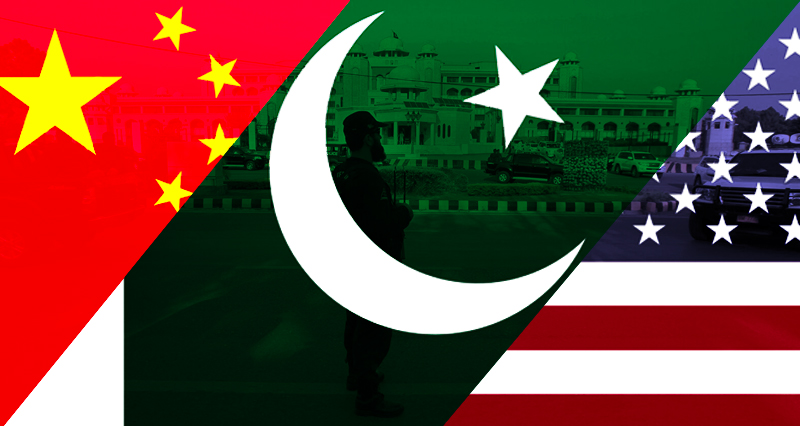
The strategy criticizes decades of U.S. foreign policy for overextending military presence, weakening the industrial base, and burdening the middle class, and it calls for a renewed focus on the Western Hemisphere. In Asia, the document prioritizes economic competition with China, military deterrence, and alliance strengthening, while in the Middle East it emphasizes energy independence, investment, and limited direct intervention.
Although Pakistan is not directly highlighted, its strategic linkage to China places it implicitly at the center of U.S. geopolitical calculations. Washington’s new approach challenges Islamabad to balance ties between Beijing and Washington, while remaining sensitive to India’s enhanced role under U.S. regional policies.
The strategy’s Asian objectives include economic balancing against China, safeguarding U.S. economic interests, and maintaining military deterrence. Tools for achieving these goals include allied networks, security frameworks like the Quad, advanced technology investments, and urging partners to contribute more to defense. Central Asian countries, and Afghanistan in particular, will feel indirect effects of this strategy, with U.S. direct intervention reduced, potentially allowing Kabul to deepen ties with India.
Summary:
The 2025 National Security Strategy aims to present a realistic vision of global politics and redefine U.S. foreign policy around national interests. If Pakistan navigates normalization with Washington wisely, it could benefit from U.S. economic priorities and leverage opportunities for investment and regional cooperation amid rising great power competition.