DID Press: Confidential documents unsealed this week by a U.S. federal judge revealed the Trump administration sought to identify, detain, and deport university students involved in pro-Palestinian activism in the past year. A federal judge described these actions as unconstitutional and intended to intimidate students.
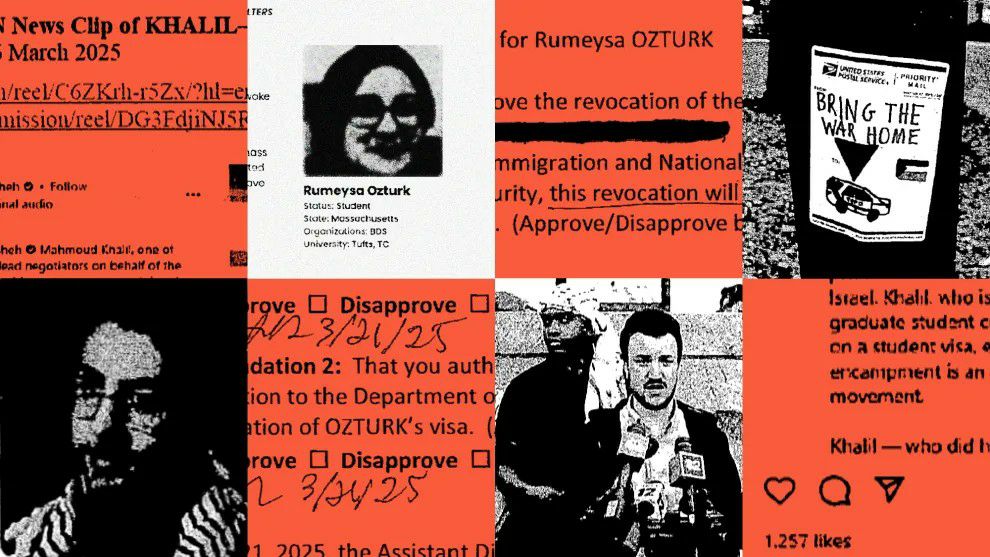
The documents show that government agencies, including the Department of Homeland Security, relied on unverified social media accounts and the anonymous website Canary Mission—which maintains blacklists of pro-Palestinian activists—to gather evidence. The release came after persistent pressure from journalists and press freedom advocates.
Investigative media outlets criticized the government’s attempts to keep large portions of the files secret, arguing that the public has a right to understand how free speech was monitored and punished. U.S. District Judge William J. Young explicitly condemned the Trump administration’s measures, calling them a “distortion of law to intimidate.”
The records detail individual cases, including that of Rumeysa Ozturk, a Tufts University student. In March 2024, her name appeared on a student letter criticizing the university’s handling of student resolutions, including recognition of “genocide in Gaza” and calls to “divest from Israel.” A profile of Ozturk was later posted on Canary Mission, followed by a government report and her detention by U.S. Immigration and Customs Enforcement (ICE) on March 25, 2025. Her participation in the student letter was cited as the basis for the deportation action.
The documents confirm that the U.S. government acted without evidence of antisemitic behavior, using students’ political speech as a pretext for enforcement, raising serious concerns over free speech rights in US universities.