Minnesota Erupts: Federal Authority Sparks Nationwide Protests
DID Press: Ongoing protests in US, particularly in Minnesota, reflect a crisis far deeper than any single event or political decision. Rooted in structural tensions between the federal government and local communities, Minnesota has once again become a flashpoint where long-standing disputes over migration, race, policing, and the limits of central authority have erupted simultaneously. The unprecedented federal presence and large-scale immigration operations have heightened feelings of insecurity and mistrust among significant segments of the population, fueling organized protests that go beyond spontaneous reactions, representing resistance to decades of centralized power.
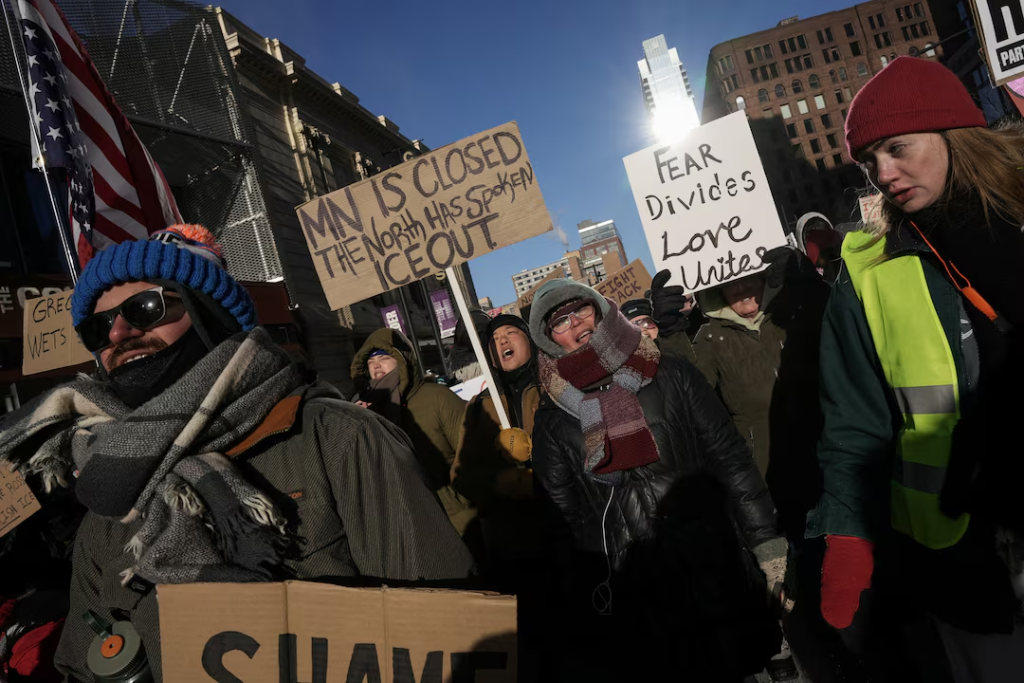
In Minnesota, these demonstrations rapidly evolved into a widespread social movement. General strikes, active participation from unions, religious groups, and civic activists, and the presence of thousands of people braving severe cold, signal that local communities have reached a structural point of resistance against federal immigration policies. The killing of an ICU nurse in Minneapolis by law enforcement, along with the arrest of activists and clergy at the city’s airport, has intensified public anger and mistrust, rather than calming tensions, pushing the state into a zone of political instability amid ongoing pressures on local authorities.
The protests have spread beyond local boundaries, inspiring similar gatherings in major U.S. cities, demonstrating the national scope of the crisis. Social media has played a critical role in rapidly mobilizing and uniting activists across states, giving the movement a dimension far beyond local grievances.
At a broader level, the unrest underscores the erosion of public trust in federal institutions and the deepening of racial, class, and political divides. The extensive federal presence, often without full coordination with state authorities, raises serious questions about the limits of central power and respect for state sovereignty. These tensions could have long-term consequences for U.S. domestic politics, influencing upcoming elections and shaping future security and immigration policies.
In sum, the Minnesota protests are not a transient crisis; they mark a new stage in American domestic politics—one in which the confrontation between federal authority and social resistance is likely to shape the trajectory of future developments. The unprecedented combination of political polarization, institutional distrust, an armed populace, and the widening federal-state divide could propel the U.S. toward a prolonged period of sporadic conflicts, civil disobedience, and localized violent clashes—a scenario that some analysts describe as a “low-intensity civil war” or “chronic internal conflict.”
International Desk – DID News Agency