DID Press: A recent report from Shafaq News indicates that the ongoing regional war has once again highlighted deep deficiencies in Iraq’s military and security structures. This conflict, which erupted on February 28, 2026, between Iran on one side and Israel and the U.S. on the other, has made Iraq’s longstanding military weaknesses—criticized repeatedly since 2003—even more apparent.
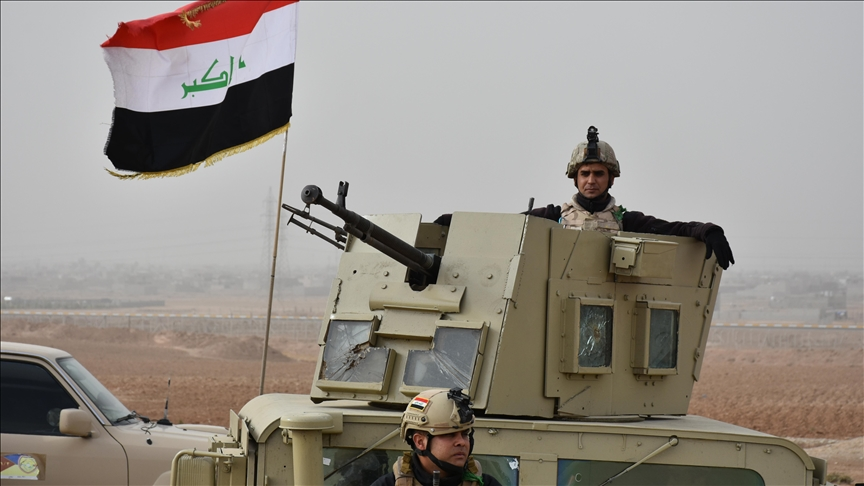
Political and security experts in Iraq believe the war demonstrates that the country’s defense system remains “vulnerable,” plagued by problems such as weak political decision-making, inability to manage crises, and a lack of decisive strategies to safeguard national security.
Despite post-2003 efforts to build an efficient military institution—which played a key role in defeating ISIS in 2017—the recent war revealed that Iraq still suffers from serious gaps. Chief among them is a severe deficiency in air defense: the Iraqi military is practically incapable of countering modern aircraft, missiles, and drones. Shortages of advanced weaponry, lack of effective deterrent systems, and over-reliance on ground forces (approximately 193,000 active soldiers) are other major challenges.
Iraq’s military equipment is a mix of Eastern and Western systems, including T‑72 and T‑90 tanks. However, the technological disparity among these systems reduces operational effectiveness.
Issam Al-Faily, a political science professor at Al-Mustansiriya University, told Shafaq News that this war will change many security and military principles in Iraq and the region. He noted that traditional methods for countering modern threats are no longer effective, and the future of security is shifting toward advanced technologies and cyber defense, where infantry and armored units alone will no longer be decisive.
Al-Faily also pointed to Iraq’s sensitive geopolitical position, noting that its neighbors are militarily dozens of times stronger and compete for influence within Iraq. He added that Iraq’s military budget is negligible compared to theirs, with the majority of the $21.6 billion defense budget for 2024 spent on salaries and operational costs rather than real modernization.
He suggests that Iraq’s path forward lies in “strategic courage,” national unity, and a comprehensive overhaul of defense policies, while forming smart alliances with regional powers without compromising internal cohesion. Al-Faily also criticized political divisions affecting sovereignty issues, citing differing responses to bombings in the Kurdistan Region.
This analysis comes as Iraq continues to try balancing international commitments, regional pressures, and the need to strengthen its military independence. The recent war shows that without a serious reconstruction of defense structures and independent political decision-making, Iraq may face even higher costs in future crises.