DID Press: The Banque de France has announced that the final portion of its gold reserves previously held in the United States was withdrawn over a six-month period from July 2025 to January 2026. The amount totaled 129 to 130 metric tons of gold, representing roughly 5 percent of France’s total gold reserves. This action officially marks the end of France’s storage of gold reserves at the Federal Reserve Bank of New York.
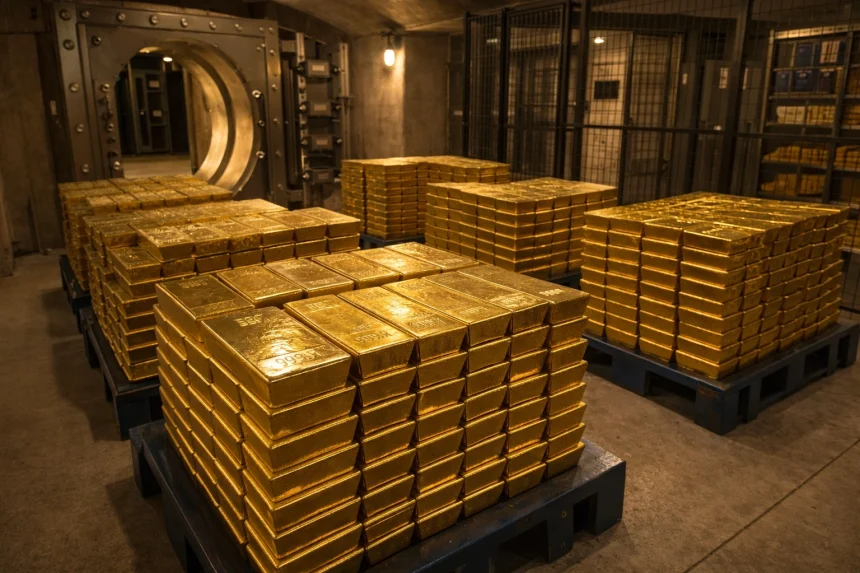
According to published reports, rather than physically transporting the gold, the Banque de France sold older, non-standard gold bars stored in the United States and purchased equivalent quantities of internationally standardized bullion within Europe. This method not only reduced transportation and security costs but also allowed the bank to capitalize on the historic rise in gold prices, generating an estimated €12.8 to €13 billion in profit.
France began the gradual withdrawal of its gold reserves from the United States and the United Kingdom in the 1960s, although a small portion remained in New York City until recently. With the completion of this operation, all 2,437 metric tons of France’s gold are now stored in Paris, and the country continues to rank as the fourth-largest holder of gold reserves worldwide.
Officials at the Banque de France emphasized that the decision was not political and was made solely to standardize reserves and improve the quality of bullion holdings. Nevertheless, the move occurred amid growing discussions across Europe—particularly in Germany—regarding the security of gold reserves stored in the United States.
Despite the bank’s insistence that the decision was non-political, some European analysts interpret the اقدام within the broader context of concerns about the reliability of the United States as a custodian of strategic reserves. In recent years, especially in Germany, debates have intensified over the “unpredictability of U.S. policies” and the safety of gold held at the Federal Reserve. Several German economists and financial institutions have warned that sudden shifts in policy from Washington, D.C. could increase the risk associated with storing reserves on American soil.
This climate of caution, which appears to be expanding across Europe, is viewed by critics as providing the psychological and strategic backdrop for France’s decision—underscoring that trust in U.S. financial infrastructure remains a sensitive axis in transatlantic economic relations.