Mohaqeq’s Letter to Munir Highlights Afghanistan’s Political Fluidity
DID Press: Interaction with anti- figures can serve as leverage over Kabul’s rulers. However, these actions mostly reflect tactical flexibility rather than a fundamental shift in Pakistan’s policy. Islamabad continues to recognize the Taliban as the de facto authority in and cannot easily invest heavily in alternative options.
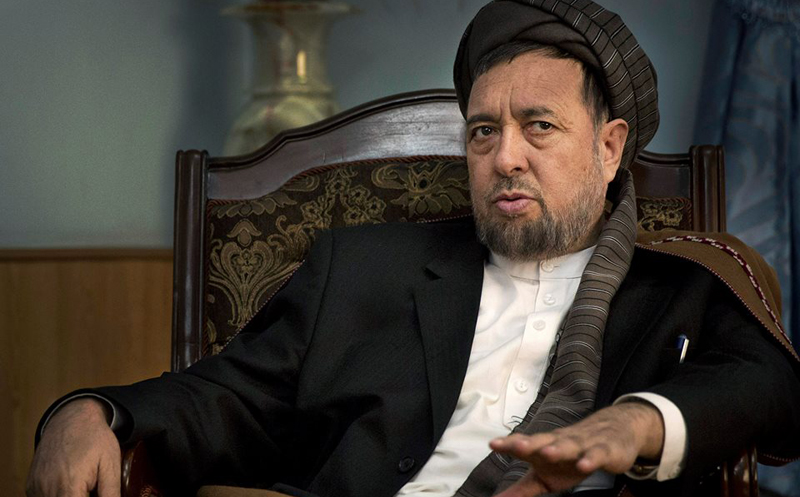
The recent letter from Mohammad Mohaqeq, Leader of the Islamic Unity Party of the People of Afghanistan, to the Pakistani army chief Asim Munir is more than a routine diplomatic gesture. It mirrors hidden dynamics in Afghanistan’s post-Taliban political landscape. While it may appear as an ordinary commendation of Pakistan’s mediation between Iran and the U.S., it raises deeper questions about anti-Taliban actors and regional players.
Since the Taliban took control of Kabul, former Afghan political leaders have been scattered internationally, lacking coherent internal structures. Mohaqiq is no exception. In this context, engagement with regional actors—even Pakistan, which has a complex relationship with the Taliban—can be interpreted as a bid to maintain relevance and the possibility of future political re-entry, rather than evidence of a new strategic alliance.
In recent years, Islamabad has had strained relations with the Taliban due to border disputes, Taliban support for the , and the lack of international recognition of the Kabul administration. Engaging with anti-Taliban figures serves as a tool to increase leverage over Kabul, reflecting tactical flexibility rather than a fundamental policy shift. Pakistan still views the Taliban as Afghanistan’s de facto rulers and cannot easily invest in alternatives.
A key focus of Mohaqeq’s letter is Pakistan’s role in mediating the Iran-U.S. two-week ceasefire, which he described as a “historic step” averting regional disaster. This praise does not indicate ideological closeness to Pakistan; rather, it reflects political realism in a context where Afghanistan’s future remains uncertain and no actor can commit exclusively to one ally. Mohaqiq and similar figures seek to expand relations with diverse regional powers to maintain influence if domestic Afghan dynamics shift.
Recent Middle East developments, including rising tensions and decreasing international focus on Afghanistan, provide opportunities for regional actors like Pakistan to increase engagement. Diplomatic initiatives may serve both declared objectives and broader geostrategic interests. Nevertheless, anti-Taliban actors still lack substantial social bases within Afghanistan, representing a structural limitation on their ability to affect future developments.
Recent interactions between anti-Taliban figures and Pakistan should not be viewed as a binary of a new alliance or mere symbolic action. These moves reflect actors adapting to new conditions and trying to preserve or enhance influence in Afghanistan’s uncertain future. What is visible today indicates political fluidity rather than strategic convergence in a region awaiting possible change tomorrow.
By Sayed Baqer Waezi — DID News Agency