Threads Without Borders: Afghan, Indian Women Stitch Shared Futures
DID Press: In a bright workshop in New Delhi, Afghan refugee women and artisans from India’s Kutch region came together with needle and thread to weave more than traditional embroidery — they stitched stories of migration, resilience and hope into a shared artistic journey.
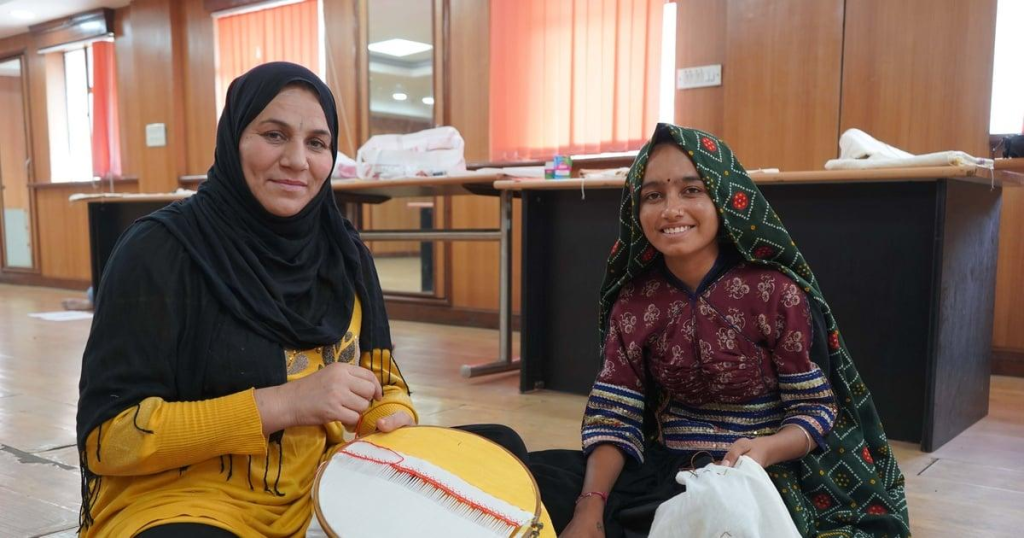
The 10-day initiative, organized with support from UNHCR and the Indian Institute of Crafts and Design, brought together Afghan refugee women and local craftswomen from Gujarat to exchange traditional embroidery and weaving techniques.
The collaboration produced handmade works blending Afghan cultural patterns with indigenous Indian craftsmanship, creating products that reflect the heritage of both communities.
Parwin Kakar, a 47-year-old Afghan refugee who moved to India in 2017, told UNHCR the experience went far beyond technical training.
“I’m happy that two countries came together and learned from each other. During these 10 days, I forgot all the hardships of my life,” she said.
With UNHCR support, Kakar was able to showcase and sell her handcrafted products, gaining both income and renewed confidence.
On the Indian side of the workshop, Darmila Ahir — a leading artisan from Kutch — guided a group of young women through traditional embroidery techniques. Ahir, who now leads a collective of around 80 women artisans, said language barriers disappeared through shared creativity.
“Our hands spoke the same language. In just 10 days, we learned from one another, worked together and became friends,” she said.
The partnership has continued beyond the workshop itself. Afghan and Indian participants now remain connected through a WhatsApp group, where they exchange designs, orders and business ideas. Ahir has also promoted Afghan artisans’ work through Instagram, helping generate new customers and commercial opportunities.
One recent order saw Afghan women produce 10 handmade embroidered bags for a customer — a small but symbolic step toward building sustainable shared markets between refugee and host communities.
The initiative is part of the “Embroidery Without Borders” project, aimed at creating long-term livelihood opportunities for refugee women and local artisans. Organizers say efforts are already underway to secure funding for a second phase of the project in 2026.
Discussions are also ongoing with MADE51 to help bring the women’s products to international markets.
Organizers say the project demonstrates how art can transcend borders — where needles do more than stitch fabric together, they also connect cultures, experiences and shared futures.