DID Press: Escalating tensions in the Middle East, disruptions to traditional trade routes, and growing competition among major powers are transforming Central Asia into one of the world’s most significant geopolitical arenas. As regional dynamics shift, the United States is increasing its focus on investment, transport corridors, and critical mineral supplies in an effort to expand its influence in a region long dominated by Russia and China.
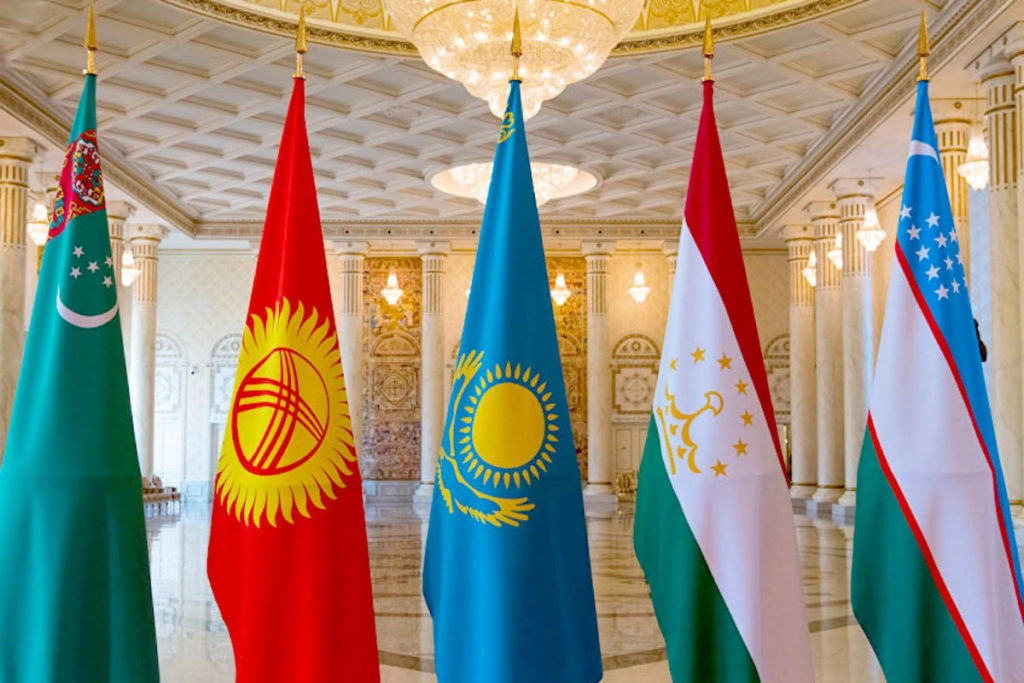
A series of crises across the Middle East, combined with economic pressures on Russia, have reshaped the geopolitical landscape of Eurasia. Central Asia is increasingly viewed as a strategic bridge between East and West, serving as a vital hub for trade, energy transit, and the transportation of critical minerals.
According to an analysis published by Caspian Vestnik, Washington has gradually shifted from a country-by-country approach to a broader regional strategy. The United States now views Central Asia as an 80-million-person market capable of offering significant opportunities for Western businesses while helping reduce strategic dependence on China.
In this context, cooperation frameworks such as C5+1 and B5+1 have become central instruments of US policy in the region, aimed at expanding economic, trade, and investment ties between Washington and the five Central Asian republics.
Trans-Caspian Corridor Gains Strategic Importance
One of the most significant outcomes of recent geopolitical crises has been the rising importance of the Trans-Caspian Corridor, also known as the Middle Corridor. The route connects Central Asia to Europe through the Caspian Sea and the South Caucasus, offering an alternative to traditional transit pathways passing through Russia and Iran.
Analysts argue that further instability along southern trade routes, particularly in the event of heightened tensions in the Persian Gulf, could make landlocked Central Asian states increasingly dependent on this corridor. As a result, the United States and its Western partners regard investment in the route as a long-term strategic priority for maintaining access to Asian markets and regional mineral resources.
Competition for Critical Minerals
Behind growing US economic engagement lies a broader contest over critical mineral supply chains. Central Asia’s substantial reserves of lithium, rare earth elements, and other minerals essential for advanced technologies and clean energy industries have attracted increasing attention from Western investors.
Washington hopes that expanded investment in mining, technology, and modern agriculture will help diversify global supply chains and reduce dependence on China. However, Beijing remains the dominant economic actor in the region through extensive infrastructure projects and large-scale investments.
Central Asia Pursues Strategic Balance
Despite expanding US involvement, Central Asian governments have shown little interest in joining new security alliances. Instead, regional leaders are pursuing a balancing strategy, seeking to maintain constructive relations with Russia, China, and Western countries while maximizing economic opportunities and avoiding direct involvement in geopolitical rivalries.
This approach allows them to reduce traditional dependencies while attracting investment, technology, and trade from multiple partners.
Outlook
In the near term, Western investment in mining, digital technology, and transportation infrastructure is expected to continue. However, the success of this strategy will depend on several factors, including stability in the Middle East, developments in Afghanistan, and the evolving policies of Russia and China toward the region.
Central Asia is no longer a peripheral player in global affairs. It is increasingly becoming a decisive theater in the competition among major powers—a contest that could shape the future of trade, energy security, and geopolitical balance across Eurasia.