DID Press: Saudi Arabia is expanding its military presence along Yemen’s western coast and strategic areas overlooking the Bab el-Mandeb Strait, reportedly with direct U.S. support. The move comes amid growing concerns over maritime security and shifting regional dynamics following a reduced role by the United Arab Emirates in parts of Yemen.
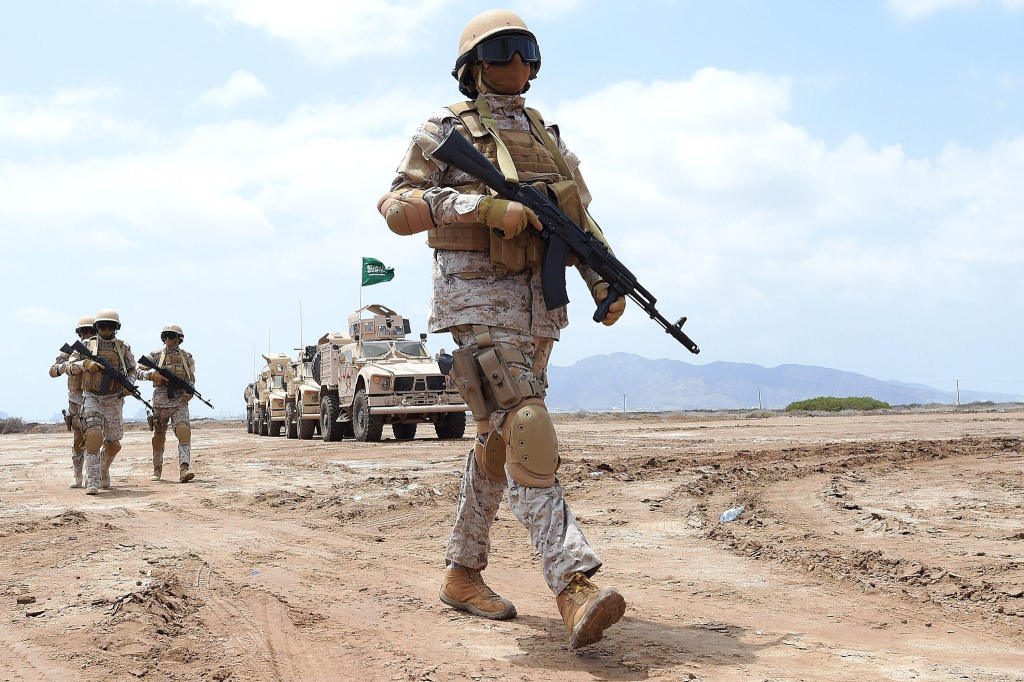
According to reports, Riyadh has appointed Saad bin Mohammed Al-Qahtani as commander of special forces in the western coastal region while increasing military activity in parts of Taiz Governorate. The deployment is viewed as part of a broader effort to strengthen control over areas adjacent to one of the world’s most important maritime chokepoints.
The developments coincide with heightened tensions between the United States and Iran around the Strait of Hormuz, raising concerns in Washington over the potential use of Bab el-Mandeb as a pressure point by Yemen’s Houthi movement.
Sources in Sanaa said Saudi activities along Yemen’s western and eastern coasts are being closely monitored. They claimed Riyadh’s presence on strategic Red Sea islands, including Perim Island and Hanish Islands, initially began under humanitarian cover before expanding deeper into key areas.
The sources further argued that the initiative is largely driven by U.S. strategic objectives, with Saudi Arabia acting as the principal implementing partner. They also contended that previous Emirati deployments on Red Sea islands had failed to alter restrictions imposed by Houthi forces on Israeli-linked shipping routes.
Meanwhile, the Southern Transitional Council (STC) has sharply criticized the Saudi moves, accusing Riyadh of creating a security vacuum through changes in force deployments along the western coast. STC leader Aidarus al-Zoubaidi claimed that the absence of council-affiliated forces could increase regional security risks and suggested that the United States and Britain consider utilizing STC forces to help secure key waterways.
Analysts in Aden say tensions intensified after Saudi Arabia assumed control of operational facilities previously managed by the UAE, including command centers and military airfields in strategic coastal areas.
At the political level, reports indicate that Riyadh has also sought to restructure allied military formations in Yemen while increasing support for forces loyal to Saudi interests. Observers view these efforts as part of a wider regional realignment focused on securing the Red Sea and protecting maritime trade routes.
Recent statements by Steven Fagin reaffirming U.S. support for maritime security efforts in the Red Sea have further underscored Washington’s role in the evolving security architecture around Bab el-Mandeb.