Kabul Shia Leaders Reject Summons from Taliban Justice Minister
DID Press: Prominent Shia leaders in Kabul have refused to appear before Taliban Justice Minister Abdul Hakim Sharaee after he summoned them for questioning following their public criticism of his policies toward Afghanistan’s Shia community.
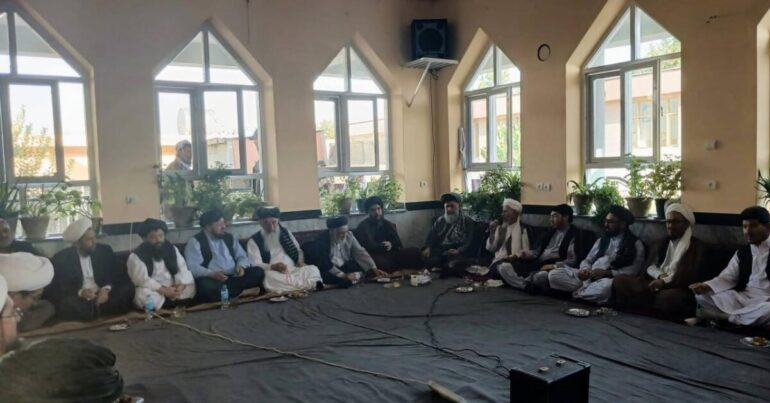
Sources familiar with the matter said Sharaee summoned members of Afghanistan Shia Ulema council, the Shia High Commission, and several former parliamentarians to his office on Saturday. Instead, the group held an emergency meeting at Al-Zahra Mosque in western Kabul and decided not to attend.
The leaders reportedly said they would agree to talks only if senior Taliban officials, including Taliban Prime Minister Mohammad Hassan Akhund, formally requested the meeting.
According to informed sources, concerns have also emerged over the possibility of widespread arrests of influential Shia figures in Kabul. These concerns follow allegations that Sharaee has recently detained a number of Shia clerics, Muharram mourners, and mosque officials.
The dispute began with a statement issued by Shia leaders condemning what they described as discriminatory restrictions and security measures imposed by the Taliban justice minister. They said such policies violate the religious freedoms and social rights of Afghanistan’s Shia community.
The refusal to comply with the summons could further deepen tensions between the Taliban and the Shia community. Analysts warn that the standoff could lead to increased security pressure and further restrictions on religious activities in Kabul and other parts of Afghanistan.
The developments also come amid reported differences within the Taliban leadership over the treatment of Shia communities. Sources close to the Haqqani network have reportedly said that Interior Minister Sirajuddin Haqqani sent a formal letter to Taliban supreme leader Hibatullah Akhundzada, expressing serious concern over growing public protests and calling for the removal of the justice minister.
Some Taliban officials in Kabul have also reportedly urged Haqqani to persuade the leadership in Kandahar to moderate its hard-line policies toward the population.
The refusal by Shia and Hazara leaders to respond to the summons is being viewed as a sign of deepening mistrust between the Taliban authorities and Afghanistan’s religious minorities.