Rhine Falls to Historic Low as Unprecedented Drought Hits Netherlands
DID Press: The Dutch Ministry of Infrastructure and Water Management has announced that the discharge of the Rhine River at Lobith has fallen to 615 cubic meters per second, the lowest level ever recorded at the monitoring station. The decline is having serious consequences for water resources, river transport and water management across the Netherlands.
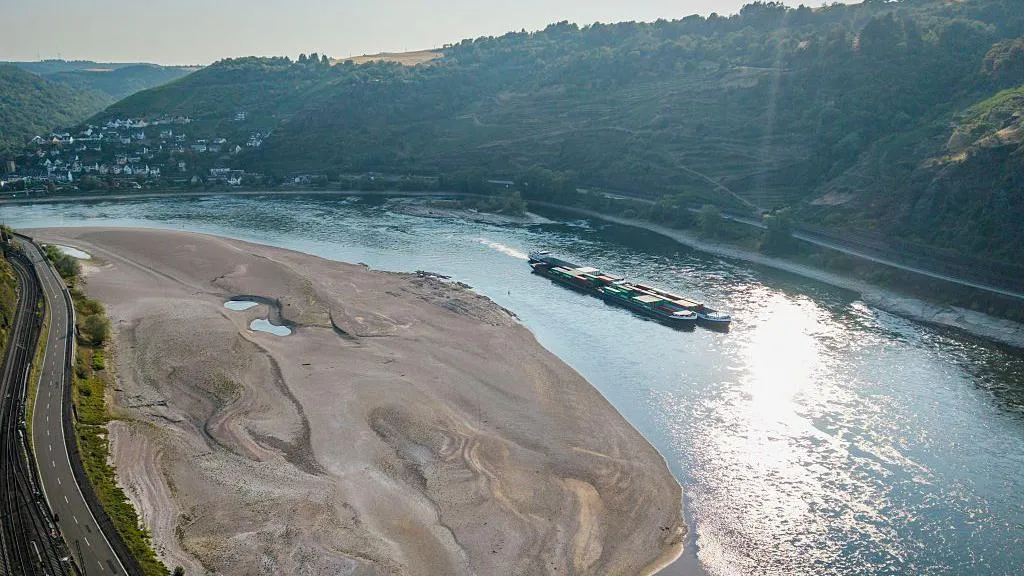
Widespread drought in the Netherlands has pushed one of Europe’s most important rivers to its lowest recorded level. The country’s Ministry of Infrastructure and Water Management reported that the Rhine’s discharge at Lobith, where the river enters the Netherlands from Germany, had fallen to 615 cubic meters per second, a level never previously recorded.
According to Anadolu Agency, the decline in the Rhine’s water level is now affecting several sectors, including water supplies, river transportation and water management. Experts warn that if the trend continues, it could pose serious challenges to supply chains, agriculture and even energy production.
The Rhine is a vital economic artery for Europe and plays a major role in transportation and trade. Its unprecedentedly low water levels could have significant consequences not only for the Netherlands but also for neighboring countries.
The crisis has once again highlighted the need for sustainable water-resource management and stronger policies to address the effects of climate change.