From War on Terror to Tactical Engagement: The 25-Year Legacy of 9/11 in Afghanistan
DID Press: Twenty-five years after the September 11, 2001 attacks, a review of the U.S. and international coalition’s intervention in Afghanistan presents a picture marked by contradictions, strategic failure and what the author describes as moral irresponsibility.
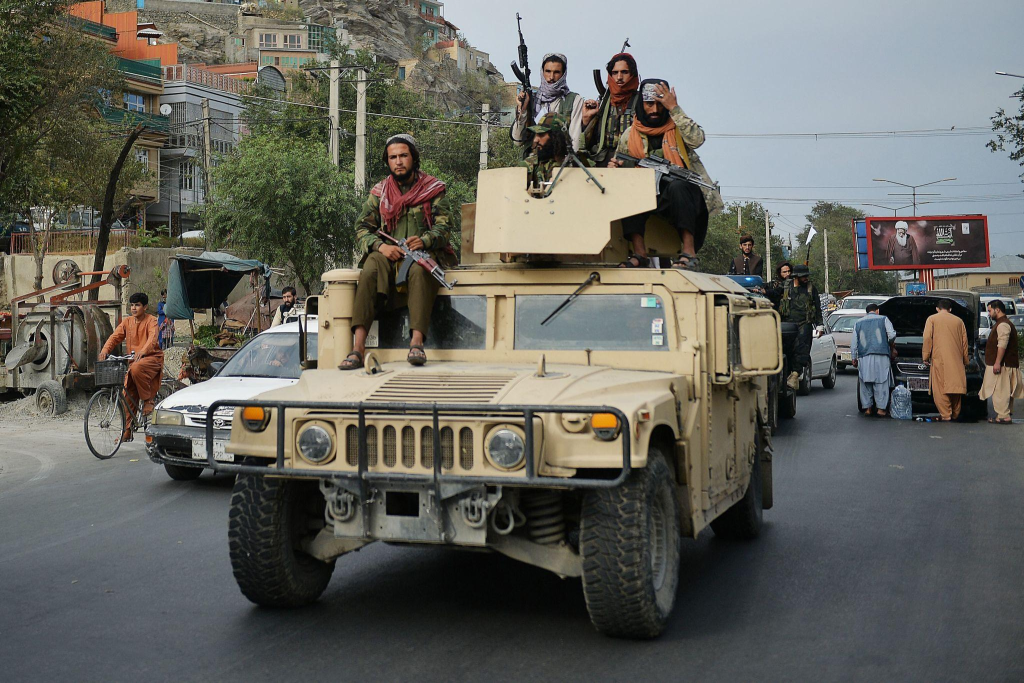
A quarter of a century ago, Washington entered Afghanistan under the banner of defeating terrorism, establishing democracy and rebuilding the country’s social infrastructure. Yet the mission ultimately ended with the sudden collapse of the republican government, a hasty withdrawal and the return to power of the very group that had been identified as a primary target of the “war on terror.”
Today, 25 years later, the legacy of that doctrine, according to the author, has been reduced to Western governments’ shift from ambitious democratic rhetoric toward tactical engagement and security arrangements with Kabul.
The post-9/11 trajectory, the article argues, shows that U.S. policymaking in Afghanistan was built on a flawed understanding of the country’s social structure, an instrumental approach to development and reliance on patronage networks. Rather than strengthening genuine national institutions and creating the foundations for sustainable development, Western state-building efforts produced a dependent system in which corruption became entrenched.
The injection of billions of dollars without adequate oversight, the author argues, primarily strengthened sections of the political elite connected to Washington and created a deep divide between the Afghan population and the former government. Afghan society, meanwhile, bore much of the cost of a war whose policies were designed and implemented not in Kabul but in Western think tanks and intelligence agencies.
The article identifies the Doha Agreement as a major turning point in Washington’s strategic and ethical approach to Afghanistan. It argues that the United States negotiated with the Taliban without adequately considering the interests of Afghans, human rights concerns it had emphasized for years, or the fate of millions of women and girls.
According to the author, the agreement prioritized an orderly Western military withdrawal over sustainable security for Afghans and helped create the conditions for the Taliban’s return to power. In this interpretation, the rhetoric of defeating terrorism gave way to security assurances designed primarily to prevent threats to the United States and its Western allies.
The article further argues that U.S. and some Western countries’ current policy toward Afghanistan has evolved into a model of “tactical engagement without responsibility.” Continued humanitarian assistance, closed-door security discussions and intelligence channels, it says, indicate that Western governments have accepted the reality of the existing authorities in Kabul while avoiding the political and human-rights costs associated with formal acceptance.
The author says this approach has left civil society, political elites, journalists and a generation that grew up amid promises of freedom and development facing uncertainty, isolation and repression.
At the regional level, the article argues that the legacy of the past 25 years includes deepening mistrust, persistent instability and new security fault lines. The Western withdrawal created what the author describes as a major regional power vacuum, encouraging Eastern powers and Afghanistan’s neighbors to pursue increasingly complex intelligence and economic strategies.
Afghanistan, the article says, is now deprived not only of meaningful development and investment opportunities but has again become an arena for transnational actors to bargain over security and economic interests, while migration and security pressures have spread to neighboring countries.
The author also identifies the erosion of social trust as one of the most significant consequences of the past quarter-century, arguing that Afghanistan’s experience has weakened public confidence in concepts such as democracy, human rights and international law.
According to the article, this experience has contributed to a perception that such principles can be used as cover for the geopolitical objectives of major powers. The resulting historical distrust, it argues, has made reconciliation, rebuilding domestic trust and reaching a national consensus on Afghanistan’s future considerably more difficult.
Twenty-five years after September 11, the article concludes that the central legacy of the Western intervention should be understood through what it describes as the use of an entire nation’s fate as an instrument in geopolitical calculations. A mission that began with promises of rescue, modernization and the eradication of extremism ended, in the author’s assessment, with a political deal, a hurried withdrawal and the neglect of fundamental rights.
The author argues that today’s discreet tactical engagement between Washington and Kabul illustrates a broader reality: in great-power politics, democratic and human-rights rhetoric remains influential only as long as it does not conflict with immediate security and commercial interests.
By Sayed Baqer Waezi | DID News Agency