DID Press: United States has completed the withdrawal of its forces from Iraq after 23 years of military presence in the country and closed its last major military base. The move ends Washington’s extensive military presence in Iraq since the 2003 invasion. According to The Wall Street Journal, the cost of this presence is estimated at around $1.7 trillion.
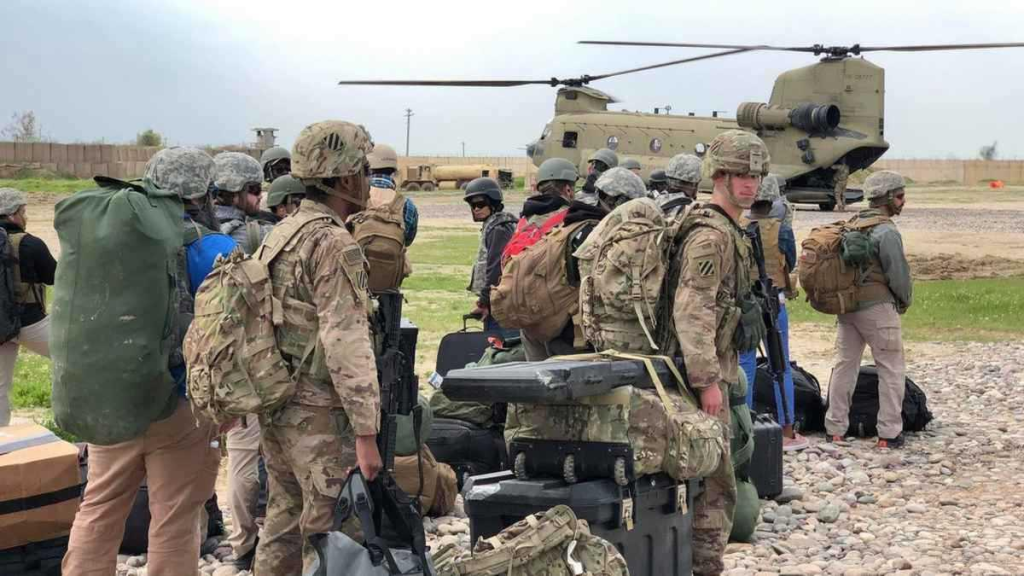
However, the withdrawal of U.S. military forces does not mean the complete end of the U.S. security presence in Iraq. Washington will retain some intelligence and surveillance capabilities, while a number of U.S. Marines will remain to protect the embassy and diplomatic facilities in Iraq.
U.S. officials have also announced that a Patriot air-defense system deployed around Erbil has been withdrawn from Iraq. Other U.S. air-defense systems that remain in Iraq will primarily be used to protect the country’s diplomatic facilities.
The complete withdrawal of U.S. forces was carried out under an agreement reached between Washington and Baghdad in 2024, the implementation of which continued under the administration of Donald Trump.
The U.S. military withdrawal from Iraq once again puts the heavy costs and failures of Washington’s military interventions in the Middle East before public attention. An estimate by Brown University’s Costs of War project shows that U.S. wars and military operations after the September 11 attacks had created about $8 trillion in direct costs and related obligations for Washington through 2022, a significant portion of which was related to the wars in Iraq and Afghanistan. The withdrawal of U.S. forces from Iraq, after more than two decades of presence, shows that massive military spending does not necessarily lead to the establishment of a stable political and security order in line with Washington’s stated objectives. As a result, Iraq represents for the United States less a symbol of the consolidation of a lasting achievement than an example of the difficulty of turning military power and enormous financial costs into long-term political outcomes in the Middle East.