UNDP: Afghanistan’s Opium Production Has Fallen by 95%
DID Press: Alexander De Croo, Administrator of the United Nations Development Programme (UNDP), says opium production in Afghanistan has fallen by 95 percent following the ban imposed by the Taliban on poppy cultivation and drug trafficking.
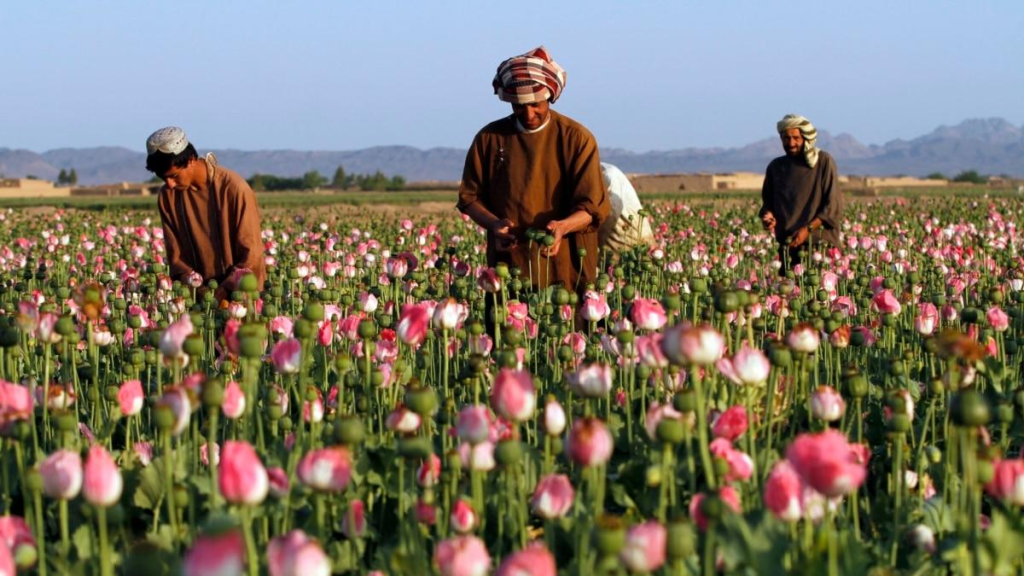
Speaking to Foreign Policy, De Croo said UNDP had worked with Afghan farmers to develop alternative livelihoods, including agricultural and horticultural production. He said the Taliban had also become involved in efforts to address the country’s drug-production problem.
The reported decline comes after the Taliban authorities imposed a ban on poppy cultivation in 2022. UN data previously showed that opium production fell by about 95 percent in 2023, from an estimated 6,200 tons in 2022 to 333 tons.
More recent UN Office on Drugs and Crime (UNODC) data indicate that production remained at historically low levels in 2025, with potential opium production estimated at 296 tons. UNODC said cultivation covered about 10,200 hectares that year, compared with roughly 232,000 hectares in 2022.
The sharp decline has also had significant economic consequences for rural communities that depended on poppy cultivation. UNDP has emphasized the need for sustainable alternative livelihoods and investment in other agricultural activities to help affected farmers transition away from opium production.