An Islamic and Historical Perspective on the Experiences of Afghanistan, Türkiye and Iran
DID Press: Hijab in Islam is not merely a form of outward dress; it is also an expression of faith, religious identity, modesty and a Muslim woman’s commitment to God’s commandments. From this perspective, denying girls who wear the hijab access to education is not simply a matter of dress restrictions. It raises fundamental questions about religious freedom, human dignity and social justice.
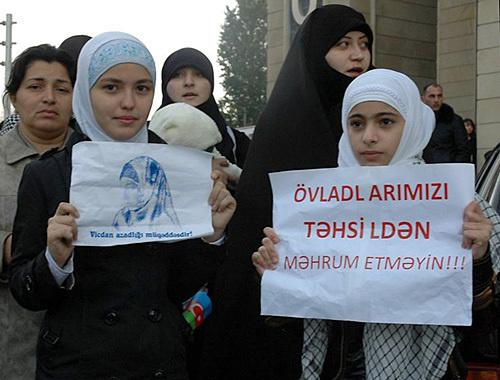
Recent media reports indicate that new restrictions on Islamic dress in schools in the Republic of Azerbaijan have sparked public reactions. If these regulations result in Muslim girls being denied access to education, a fundamental question arises: Does secularism mean state neutrality toward religion, or can it become a tool for restricting religious expression in society?
Hijab: Religious Values and the Right to Education
The Holy Quran, in Surah An-Nur, verse 31, instructs believing women to observe Islamic standards of modesty and dress. For a woman who chooses to wear the hijab on the basis of her faith, it forms part of her religious commitment and identity.
No girl should have to choose between preserving her faith and continuing her education. Governments may establish regulations to maintain order in educational institutions, but such rules should be fair, proportionate and non-discriminatory. Scientific progress and adherence to Islam are not inherently incompatible; they can coexist and contribute to the advancement of society.
Historical Lessons: From Amanullah Khan’s Afghanistan to Türkiye and Iran
The modern history of the Muslim world shows that government policies concerning women’s dress have repeatedly become sources of controversy between states and religious communities.
1. Afghanistan: The Era of Amanullah Khan
Following Afghanistan’s independence, Amanullah Khan introduced extensive political, administrative and social reforms. Some of these reforms concerned women’s social status and encouraged women to abandon the veil. These measures, alongside other rapid reforms and existing political, economic and tribal grievances, encountered resistance. His government ultimately fell in 1929.
The Afghan experience illustrates how social reforms implemented too rapidly, without sufficient consideration for religious beliefs and society’s capacity to accept change, can deepen divisions between governments and the public.
2. Türkiye: From Atatürk’s Secularism to the Restoration of Dress Freedom
Following the establishment of the Republic of Türkiye in 1923, Mustafa Kemal Atatürk introduced sweeping reforms aimed at secularizing the state and society. In subsequent decades, restrictions on the hijab in some universities and government institutions created significant barriers for women who wore Islamic headscarves.
As political and social conditions changed, these restrictions were lifted in many educational institutions and public-sector workplaces during the 2010s. Parties that supported the Islamic headscarf subsequently gained political power in Türkiye.
From this perspective, opposition to the hijab can be understood as part of a broader struggle over the place of Islam in Turkish society and politics. The author also argues that Western efforts to promote Western cultural models and limit religious expression contributed to this conflict.
3. Iran: Compulsory Unveiling Under Reza Shah
In 1936, the government of Reza Shah Pahlavi implemented a policy of compulsory unveiling, known as Kashf-e Hijab. For women who regarded the veil as an essential part of their faith and identity, the policy represented direct state intervention in their religious and social lives. Some women withdrew from public life rather than appear unveiled.
Iran’s experience demonstrated how imposing a particular dress code in the name of modernization can undermine personal choice and weaken social trust.
Despite their historical and political differences, these three experiences offer a common lesson, according to the author: coercive government policies concerning women’s clothing, particularly compulsory unveiling, can restrict individual freedom, intensify social conflict and contribute to the erosion of political legitimacy.
Azerbaijan: Islamic Identity and Restrictions on Education
Azerbaijan is a predominantly Muslim country with a secular political system. In such a society, restrictions that prevent girls who wear the hijab from attending school could weaken public trust and widen the divide between the state and sections of the population.
If secularism means state neutrality and the protection of citizens’ rights, it should not result in students being denied education because of their religious beliefs. Azerbaijani officials should seek a balance between maintaining school regulations and respecting the Islamic identity of their population.
The author urges the Azerbaijani government to learn from the experiences of governments that have opposed the Islamic headscarf and to avoid policies that could lead to confrontation with Islam and the religious beliefs of the population.
The article further argues that Azerbaijan should not create tensions with its Muslim population in an effort to gain the approval of the United States and Israel.
Conclusion: Civilization Requires Respect for Faith
The message to Azerbaijani officials is clear: No girl should be deprived of school, university or opportunities for advancement because she chooses to wear the hijab. Muslim girls have the right to education, and preserving their faith should not prevent them from acquiring knowledge or participating in society.
The histories of Afghanistan, Türkiye and Iran demonstrate that governments’ treatment of religious beliefs can have profound social and political consequences. Lasting stability cannot be achieved by humiliating religious values; it depends on justice, dialogue, mutual respect and the protection of citizens’ rights.
From an Islamic perspective, genuine progress is achieved when knowledge and faith, development and religious identity, and social order and human dignity coexist.
Advocacy for the hijab should also be accompanied by wisdom, ethical conduct and respect for the dignity of all women.
When opposition to the hijab results in discrimination and exclusion, it is neither a sign of civilization nor a guarantee of freedom. True civilization means that a Muslim girl can attend school, acquire knowledge and contribute to her country’s future while preserving her faith and dignity.
A society cannot be built through slogans about civilization; civilization is built through justice, knowledge, ethics and respect for human dignity.
By Dr. Abdul Rauf Tawana — DID News Agency