Science, Development and the Muslim World: Where Does Afghanistan Stand?
DID Press: The World Science Day for Peace and Development is more than a ceremonial occasion. It provides an opportunity to assess how societies relate to one of the principal engines of progress in the modern era: science.
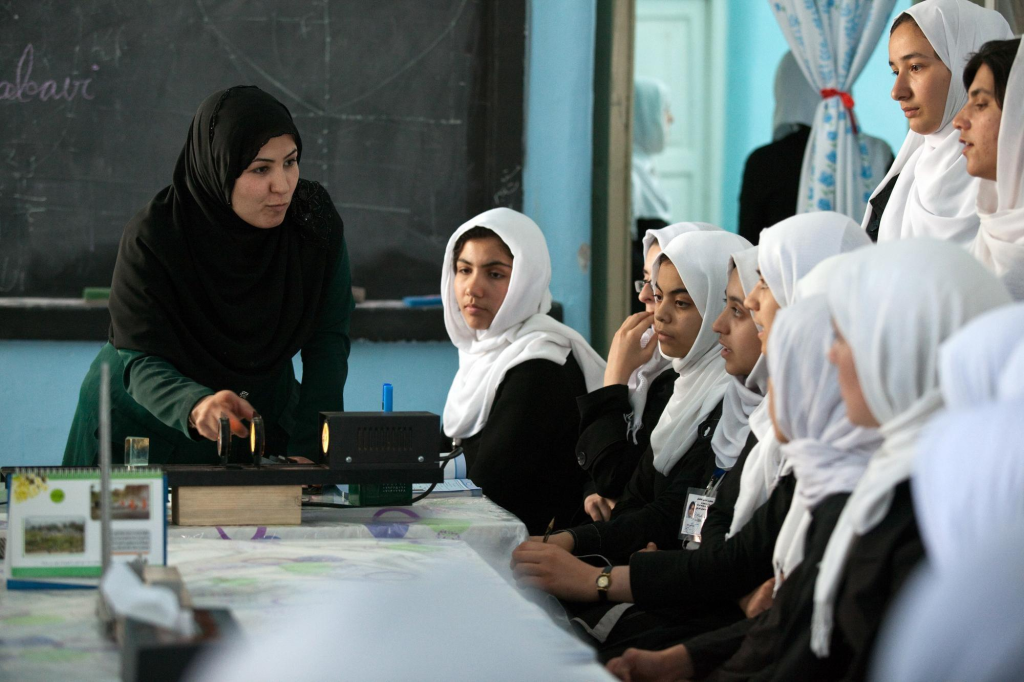
In recent years, UNESCO has focused its themes and initiatives on science diplomacy, universal access to knowledge, and the vital role of technology in addressing major global challenges. A review of developments across Muslim-majority countries shows that many, from Southeast Asia to the Persian Gulf, have adopted knowledge-based development as a central strategy for economic growth and reducing dependency. Against this accelerating trend, Afghanistan faces a fundamental question: where does it stand in the relationship between science and development in the Muslim world?
Major Islamic centres of learning and jurisprudence regard education and knowledge production not merely as ceremonial choices, but as religious duties and foundations of national self-reliance. Malaysia and Indonesia have developed into industrial hubs by investing in mass education and technological advancement, while Gulf countries are establishing international universities and investing in artificial intelligence and clean energy as they seek to transition towards post-oil economies.
Sustainable and locally driven development cannot be achieved without the active participation of all members of society, particularly women. Even prominent religious institutions, including Egypt’s Al-Azhar University and the Organisation of Islamic Cooperation (OIC), have repeatedly emphasised that excluding part of society from education is inconsistent with Islamic teachings and the historical traditions of Islamic civilisation.
The model currently implemented in Afghanistan under Taliban rule stands in sharp contrast to these experiences. The suspension of girls’ education beyond primary school and the continued closure of universities to women represent more than administrative decisions; they strike at the foundations of the country’s development.
The Muslim world is rapidly advancing into emerging fields such as artificial intelligence and the knowledge-based economy. Afghanistan, however, is facing a disruption in the chain of knowledge production. This scientific stagnation has severely weakened the country’s human infrastructure, with tangible consequences already emerging: the gradual deterioration of the healthcare system, a looming shortage of female doctors and specialists, intensified brain drain, the departure of investors, and families migrating to secure education for their children.
The central paradox of the Taliban authorities’ policies lies in the contradiction between slogans such as “economic self-sufficiency,” “political independence” and “freedom from dependence on the West” and the realities on the ground, as well as the fundamental principles of political economy. In today’s world, self-sufficiency without knowledge, modern engineering and a skilled workforce is little more than an illusion.
A country without vibrant universities and without drawing on the intellectual capacity of half its population cannot achieve independence. Instead, it will become increasingly dependent on international humanitarian assistance and foreign experts. This contradiction in the Taliban’s stated policies has also distanced Kabul from regional allies and Muslim-majority countries, whose governments face public pressure and consensus among religious scholars that make it difficult to endorse a model incompatible with widely recognised principles of development in the Muslim world.
Ultimately, placing Afghanistan on the wrong side of this equation will impose a heavy cost on the future of several generations. World Science Day serves as a reminder of a difficult truth: sustainable development and lasting peace emerge from classrooms, laboratories and universities, not from restrictions on scientific progress and diplomatic isolation.
The only way for the Taliban to address the country’s deep economic crises and secure legitimacy and a respected position in the Muslim world is to reconsider its education policies, heed the broader jurisprudential consensus of the Muslim community, and reopen the doors of learning to all the children of Afghanistan. No system has endured by extinguishing the light of knowledge.
By Sayed Baqer Waezi – DID News Agency