Kabul University Becomes Stage for Display of Loyalty to Taliban Leader
DID Press: The “Scientific and Research Conference on Examining the Impact of Decrees” at Kabul University, featuring a speech by Hibatullah Akhundzada, highlights what appears to be a shift in the university’s role from an institution for producing knowledge to a platform for displaying loyalty to the Taliban leader. Praising his decrees and conferring the title of “Sheikh-ul-Islam” on him were among the outcomes of the gathering.
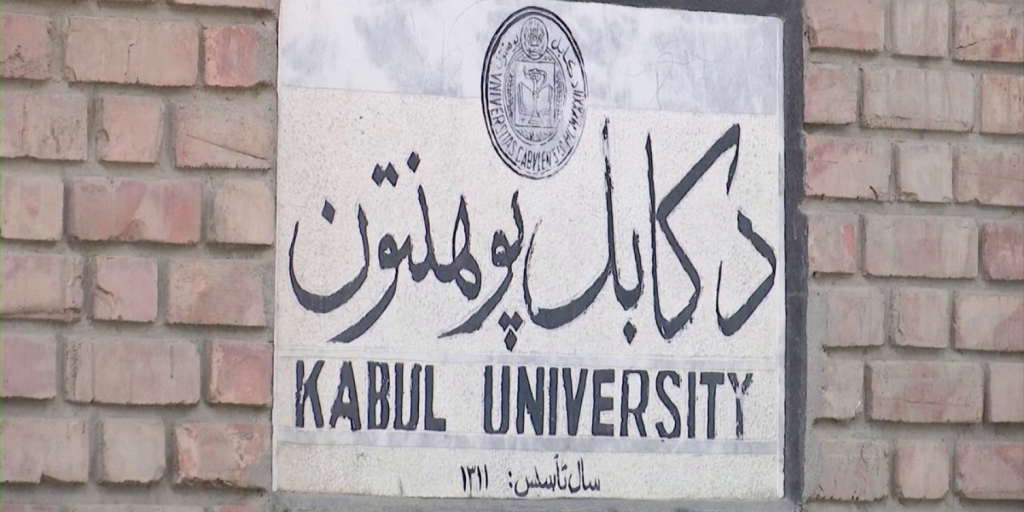
The event exposed a deep divide between the fundamental purpose of a university and the Taliban’s model of governance in Afghanistan. Universities are meant to serve as centres of education, research, inquiry, free criticism and the development of reform proposals. At this conference, however, the term “research” was turned into a tool for justifying decrees that, by the Taliban leader’s own explicit admission, have no connection to popular votes, public opinion or democratic mechanisms.
Addressing the gathering at the heart of the university, the Taliban leader said he issued decrees by personally selecting from among different Islamic jurisprudential opinions and that obedience to them was obligatory for everyone. His remarks effectively leave no room for academic criticism, independent research or questioning. Under such circumstances, a university is reduced from an institution that produces ideas, scrutinises power and encourages free debate to a platform for endorsing the authorities’ decisions and reproducing their official narrative.
One of the most striking contradictions at the conference was the gap between the claims made by the speakers and the reality within Kabul University itself. Hibatullah Akhundzada spoke at the institution about the absence of discrimination, equal security for all citizens and the possibility of opponents joining the government based on competence and merit. Yet, for more than five years, girls and women have been barred from attending secondary schools and higher education institutions. How can equality before the law and meritocracy be discussed when half the country’s population has been systematically excluded from the right to education? The absence of female students and women professors from a hall hosting praise for government decrees is itself the clearest indication of the structural discrimination prevailing in Afghanistan’s education system.
Another contradiction lies in the claim that all people in Afghanistan are followers of the Hanafi school of Islam and that disagreements stem from differing interpretations of Islamic jurisprudence. Such a view disregards the religious and historical diversity of Afghanistan’s society, including followers of the Ja’fari school and other religious minorities. A university, as a meeting place for different ideas and perspectives, should provide space for accepting this diversity rather than serving as a platform for imposing a single interpretation. Ignoring religious differences does not contribute to national solidarity; instead, it creates conditions for social exclusion and forced homogenisation — an approach incompatible with freedom of thought, tolerance and the academic spirit of a university.
The consequences of this approach extend beyond changes to the university’s role and the organisation of ceremonial gatherings. They directly threaten the future of Afghanistan’s human capital. Ideological pressure, restrictions on academic and research freedoms, and the exclusion of women from education have weakened the country’s scientific capacity and encouraged the migration of professors, researchers and students. Under these circumstances, calls for Afghanistanian expatriates to return, without reopening educational institutions to girls, guaranteeing academic freedom and accepting intellectual and religious diversity, cannot create the trust needed to encourage their return. Rebuilding human capital requires an environment in which academic merit, freedom of research and the right to education take precedence over ideological considerations and political loyalty.
The recent gathering at Kabul University should be viewed in the context of the Taliban authorities’ efforts to use the symbolic credibility of academic institutions to fill the gap in their political legitimacy. Turning a university into a stage for endorsing the Taliban leader’s decrees may demonstrate cohesion and loyalty within the power structure, but it does not, in itself, create social or political legitimacy. Lasting legitimacy comes not through staged conferences and ceremonial titles, but through accountability to the people, respect for citizens’ rights, guaranteeing the right to education for all and recognising freedom of thought and criticism. Kabul University can regain its proper standing only when it restores its academic independence and critical role in society, rather than reflecting the will of those in power.
By Sayed Baqer Waezi | DID New Agency