Pakistani Researcher Raises Alarm Over Terrorist Networks’ Access to Advanced Weapons in Afghanistan
DID Press: Amina Jabbar, a security researcher at Pakistan’s Quaid-i-Azam University, has warned that the activities of terrorist groups in Afghanistan, their access to advanced weapons and their use of digital tools have become a cross-border threat requiring coordinated regional and international cooperation.
In an article published on Sunday (November 22) by Eurasia Review, Jabbar focused on growing concerns over regional security. Referring to remarks by Syed Haider Shah, Pakistan’s permanent representative at the November 20 meeting of the United Nations Security Council, she discussed the activities of groups operating in Afghanistan, including Tehrik-i-Taliban Pakistan (TTP), the Islamic State Khorasan Province (ISKP), the Balochistan Liberation Army (BLA) and the East Turkestan Islamic Movement (ETIM).
According to Pakistani officials, cross-border attacks linked to these groups have killed more than 4,700 people in Pakistan over the past three years.
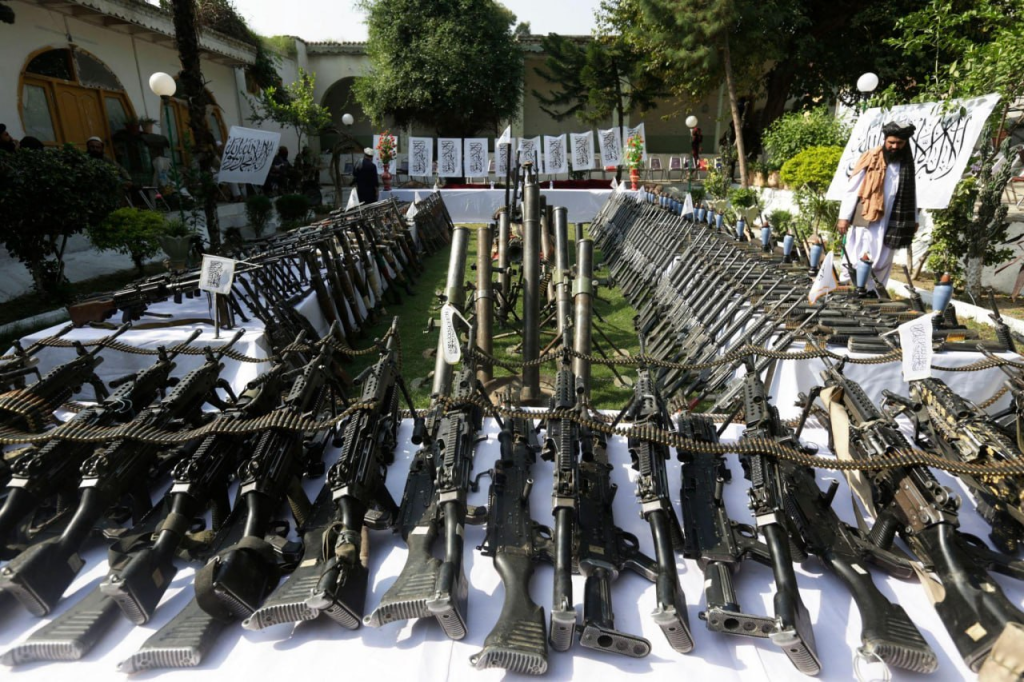
Jabbar identified armed networks’ access to drones, ammunition and weapons left behind following the withdrawal of international forces as major factors behind their growing operational capabilities. She also highlighted the use of untraceable online platforms, virtual currencies and electronic wallets by extremist groups for recruitment, propaganda and fundraising, making it more difficult to identify their financial networks.
In another part of her analysis, Jabbar called for more effective implementation of United Nations Security Council Resolutions 1267, 1373 and 1540 to curb the financing and arming of non-state actors.
Referring to requests by Pakistan and China to place Baloch separatists and the Majeed Brigade on the UN sanctions list, she stressed that the process should be based on credible evidence and transparency to prevent political considerations from undermining counterterrorism mechanisms.
The security researcher also emphasized the need for conditional engagement by the international community with the Taliban government, intelligence sharing and stronger border monitoring among regional countries.
She further warned that economic instability and humanitarian challenges in Afghanistan could fuel recruitment by extremist groups, adding that addressing these threats requires shared responsibility and coordinated international action.