Bamiyan’s Cultural Heritage Faces Neglect and Alleged Illegal Excavations Under Taliban Rule
DID Press: Sheikh Abdul Rahman Tayebi, the Taliban’s deputy minister for culture and arts at the Ministry of Information and Culture, has visited the restoration work at the historic Shesh Pol Caravanserai in Bamiyan province. The visit comes amid growing concerns over the alleged neglect of other historical sites in the province, damaging construction projects and suspicious excavations.
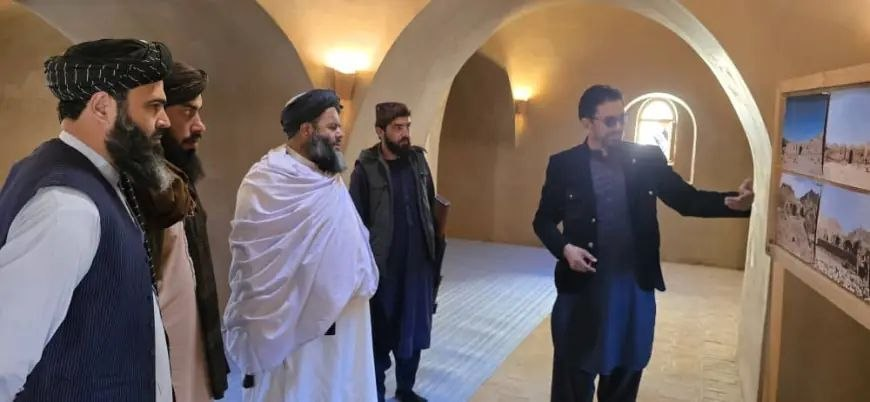
In a statement, the Taliban-run Department of Information and Culture in Bamiyan said Tayebi inspected the restoration process and assessed the general condition of the historic caravanserai during his visit to the province.
Tayebi said all archaeological sites in Bamiyan were of particular value and importance, adding that protecting the country’s historical and archaeological heritage was the responsibility of every citizen.
Qari Sayed Mustafa Saleh, head of the Taliban-run Department of Information and Culture in Bamiyan, said his department was working to protect the province’s historical monuments and would facilitate restoration efforts in cooperation with the Ministry of Information and Culture and partner organisations.
He also stressed that Police Unit 012 should regularly inspect archaeological sites and prevent unauthorised construction within historical areas.
However, despite these official statements and visits, a number of archaeologists and Bamiyan residents have expressed concern over the deteriorating condition of the province’s cultural heritage, damaging construction projects and suspicious excavation activities at historical sites.
Several archaeologists told DID Press that, alongside natural disasters and irresponsible behaviour by some tourists, neglect by local Taliban officials had further increased the vulnerability of Bamiyan’s historical monuments.
According to these experts, the construction of concrete and permanent buildings within historical sites and their cultural landscapes, allegedly with permission from some officials, has caused serious damage to the structures and historical settings of these monuments.
Experts warned that a significant number of Bamiyan’s historical remains have been buried under large amounts of soil following natural disasters and have yet to be scientifically identified or protected. Daoudi, Qala-e Ghamy, the Buddha niches and Kakrak are among the sites they say require urgent protection and specialised assessments.
Reports indicate that construction is continuing in some of these areas, despite the possibility that they contain underground cities, buried archaeological remains and other valuable historical artefacts.
Meanwhile, several Bamiyan residents told DID Press that Qari Sayed Mustafa Saleh had not played an effective role in protecting the province’s historical monuments and alleged that he had also been involved in damaging some of these sites.
The residents alleged that Saleh had allowed certain individuals to carry out construction in Qala-e Ghamy and its lower areas in exchange for money. They further claimed that, during the implementation of a UNESCO project in the area, Qari Saleh and Qari Noorzai had demanded shares or percentages from local residents.
Separately, sources affiliated with the Taliban told DID Press that Qari Saleh had examined some of Bamiyan’s historic caves using metal-detection equipment, allegedly in cooperation with individuals the sources described as an archaeological artefacts mafia.
According to these sources, in some cases, access was facilitated by breaking the doors of caves that had previously been sealed by a Chinese organisation to prevent unauthorised entry. The sources also alleged that Police Unit 012 had been prevented from intervening to stop these activities.
The sources added that, following excavations in the Somara Valley by senior Taliban intelligence officials, Qari Saleh, in cooperation with Hafiz Noorzai Aminzadeh, the Taliban’s head of Industry and Commerce in Bamiyan, and Khalkag Pay, a former Taliban commander now living in the Kakrak area, had also carried out excavations at the Kakrak Buddha site.
According to the sources, some lower-ranking employees of the Taliban-run Department of Information and Culture, who are close to Khalkag Pay, have also been involved in these activities.
The sources also referred to the Sleeping Buddha of Bamiyan and the discovery of an underground historical monument at the Daoudi site during excavations led by Zémaryalai Tarzi. They said that, despite the significance of these discoveries, concerns over unauthorised access and excavation in these areas remain unresolved.