Qosh Tepa Canal Headworks Near Completion as Uzbekistan Raises Water Concerns
DID Press: Taliban’s National Development Corporation has announced that construction of the headworks of the Qosh Tepa Canal is nearing completion, saying that once the remaining work is finished, water from the Amu Darya River will be diverted into the canal. However, the absence of a comprehensive regional agreement on water allocation has heightened concerns among neighbouring countries, particularly Uzbekistan, over the project’s potential impact on water resources and agriculture.
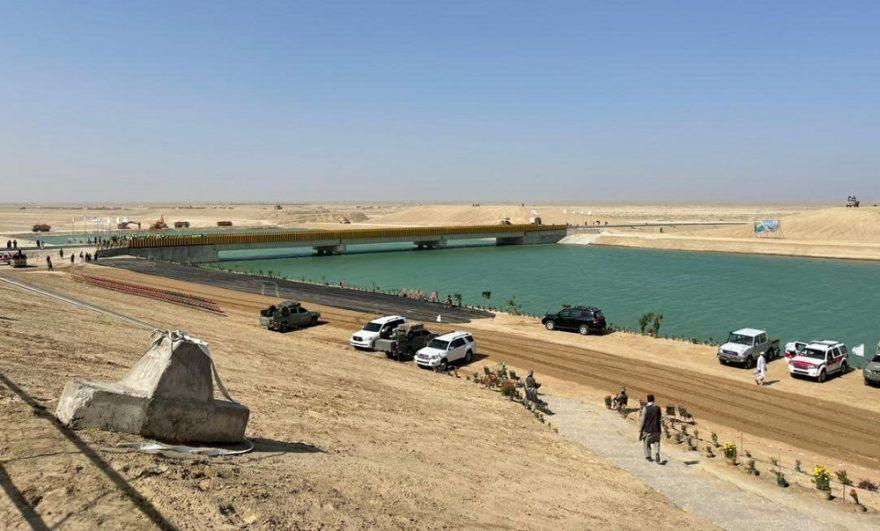
Radio Hurriyat, a Taliban-affiliated broadcaster, reported that construction of the canal’s headworks was in its final stages and that water from the Amu Darya would flow into the canal once the remaining sections were completed.
The announcement comes amid continuing concerns over the use of Amu Darya water and the absence of a joint agreement on the allocation of shared water resources, an issue that has become a point of contention between the Taliban and neighbouring countries, particularly Uzbekistan.
Uzbekistan’s Water Resources Minister, Shavkat Khamraev, said several days ago that water withdrawals from the Amu Darya should begin only after the project is completed and the parties have signed an agreement specifying the volume of water to be diverted.
He also raised the possibility that large-scale water withdrawals could be delayed until 2050.
Khamraev warned that Afghanistan’s annual withdrawal of more than 4 billion cubic metres of water from the Amu Darya could pose a serious threat to Uzbekistan’s agricultural sector.
The Taliban, meanwhile, have said they plan to divert around 10 billion cubic metres of water annually in years with high river flows and approximately 6 billion cubic metres in low-water years. These figures have intensified concerns over the project’s potential impact on water supplies in downstream countries.
The Qosh Tepa Canal, approximately 285 km long, was launched in 2022 to divert water from the Amu Darya and irrigate agricultural land in the northern provinces of Balkh, Jawzjan and Faryab. The first 108-km section of the canal was completed in October 2023.
The Taliban have estimated the project’s construction cost at approximately $680 million. However, researchers, citing technical studies, estimate that completing the entire canal and developing the associated irrigation networks could cost around $1.5 billion.
Experts say diverting water from the Amu Darya without a clear agreement with neighbouring countries could turn the project into a major dispute over shared water resources in Central Asia. They stress that completing the canal’s infrastructure alone does not resolve the legal and regional questions surrounding water allocation.
Against this backdrop, the absence of a water-sharing framework accepted by all countries with interests in the Amu Darya basin could turn the Qosh Tepa Canal into a new source of tension between the Taliban and Afghanistan’s northern neighbours.