Express Tribune: Signs Emerge of Taliban Efforts to Address Pakistan’s Security Concerns
DID Press: Pakistan’s Express Tribune newspaper, in a report by Kamran Yousaf, says Islamabad remains committed to its current strategy toward Afghanistan, as Pakistani officials believe sustained pressure on the Taliban administration is gradually having an impact and signs are emerging that Kabul is attempting to address Pakistan’s security concerns.
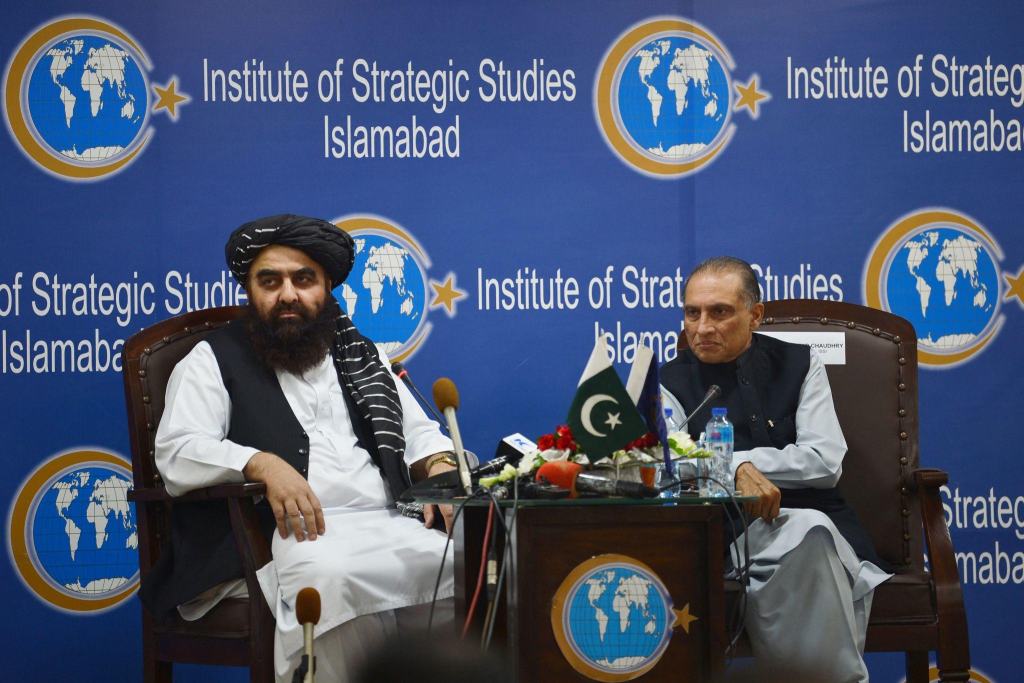
Pakistan Denies Reports of Engagement with Taliban in Doha
According to the report, published on Monday, November 23, 2026, informed sources in Islamabad have denied reports of possible engagement and talks between Pakistan and the Taliban in Doha.
The sources said no engagement had taken place in Doha and Pakistan had no immediate plans to change its policy. Islamabad insists it will maintain its current strategy until the Taliban take “clear and verifiable” action against Tehreek-e-Taliban Pakistan (TTP) and other militant groups.
Informed sources told The Express Tribune that the Taliban had recently taken steps that could indicate a willingness to address Pakistan’s concerns. They confirmed that Taliban forces had detained several TTP members, but said the nature and circumstances of the detentions remained unclear.
According to the report, one source expressed doubts about the seriousness of the measures, saying: “At this stage, we are not sure whether these detentions are permanent or just an eyewash.”
The source said the developments could mark the beginning of an impact from sustained pressure, adding: “We want the Taliban regime to take the same action against TTP members that it usually takes against its other opponents.”
Hibatullah Akhundzada Says Fighters Cannot Leave Their Areas in the Name of Jihad Without Permission
Pakistani officials are also closely monitoring the recent movements and statements of Taliban leader Hibatullah Akhundzada.
Akhundzada recently spent three days in Kabul during a rare visit, where he met senior Taliban officials, before travelling to Maidan Wardak province on November 19 — an area regarded as one of the Taliban’s historical support bases and centres of ideological networks.
According to accounts published on Taliban-affiliated messaging platforms, Akhundzada strongly criticised fighters who leave their assigned areas under the pretext of “jihad” without obtaining his permission.
The Taliban leader described such actions as disobedience to the leadership, ordered the fighters to return to their areas and warned that those who disobeyed could no longer consider themselves affiliated with the “Islamic Emirate”.
Given Pakistan’s repeated accusations that TTP militants use Afghan territory to launch attacks against Pakistan, officials in Islamabad view Akhundzada’s recent directives as a potentially positive development. However, they have reserved their final judgment until it becomes clear whether the Taliban leadership can translate these orders into practical action.
2. Islamabad Institute of Strategic Studies to Hold Special Session on Afghanistan
DID Press: The Institute of Strategic Studies Islamabad (ISSI) has announced that it will hold a special session focusing on Afghanistan and regional stability during the sixth edition of the Islamabad Conclave in December this year.
Amina Khan, Director of the institute’s Centre for Afghanistan, Middle East and Africa, said the event would take place on December 9–10, 2026, in Islamabad.
According to Khan, the session will include a panel titled “Quest for Peace, Stability and Shared Prosperity”, bringing together prominent policymakers, diplomats and regional experts.
Discussions are expected to focus on four key areas: Afghanistan and regional stability, geopolitical developments in West Asia, Central Asia’s growing role in regional connectivity, and Pakistan’s expanding engagement with Africa.
ISSI’s Changing Assessment of Taliban-led Afghanistan
The Institute of Strategic Studies Islamabad (ISSI) is an independent, non-profit think tank and research organisation in Pakistan, established in 1973 with the support of the country’s Ministry of Foreign Affairs.
Its main mission is to provide objective analysis, conduct strategic research and organise expert discussions on regional and global issues affecting Pakistan’s peace, security and development.
The institute focuses on areas including Pakistan’s foreign policy, developments in South Asia, Afghanistan, the Middle East, nuclear issues and counterterrorism. It is regarded as one of the region’s prominent research and advisory institutions.
Following the escalation of border and security tensions between Pakistan and Afghanistan since late 2025, ISSI has significantly revised its analytical approach toward the Taliban. Instead of the previous policy of “engagement and strategic patience”, the institute now emphasises the need to reconsider past policies and require Kabul’s rulers to accept the responsibilities of a governing authority.
According to policy briefs published by the think tank in 2026, Pakistani researchers believe that, five years after returning to power, the Taliban should no longer be viewed as an insurgent movement but as the de facto rulers of Afghanistan, who are expected to meet the legal and security obligations of a government.
Experts at the institute argue that the deep gap between the Taliban’s commitments under the Doha Agreement and their actions on the ground has brought Islamabad’s strategic patience to an end.
ISSI identifies the presence and free operation of Tehreek-e-Taliban Pakistan (TTP) militants on Afghan territory as a major factor behind border clashes and the closure of key crossings, including Torkham and Chaman.
The institute argues that Kabul’s failure to take decisive action against these groups has pushed bilateral relations into a period of instability and prompted Islamabad to conduct cross-border operations.
In this context, the institute has recommended that Pakistan recalibrate its engagement with Kabul. One of its proposed measures is to make economic cooperation conditional, linking trade and transit benefits, as well as major regional connectivity projects, to genuine Taliban cooperation in combating militancy.
These projects include the Uzbekistan-Afghanistan-Pakistan railway, the Turkmenistan-Afghanistan-Pakistan-India (TAPI) gas pipeline and the Central Asia-South Asia (CASA-1000) electricity transmission project.
The institute has also proposed greater use of regional diplomacy and multilateral mechanisms involving China and Central Asian countries to coordinate pressure on Kabul, rather than relying solely on unilateral measures.
In recent years, ISSI has published reference books, academic articles in its quarterly journal Strategic Studies and research databases. It has also hosted numerous meetings involving domestic experts, international think tanks and Taliban officials, including Taliban Foreign Minister Amir Khan Muttaqi in November 2021.