Secret Contacts with Taliban Raise Fears of Another Doha-Style Deal
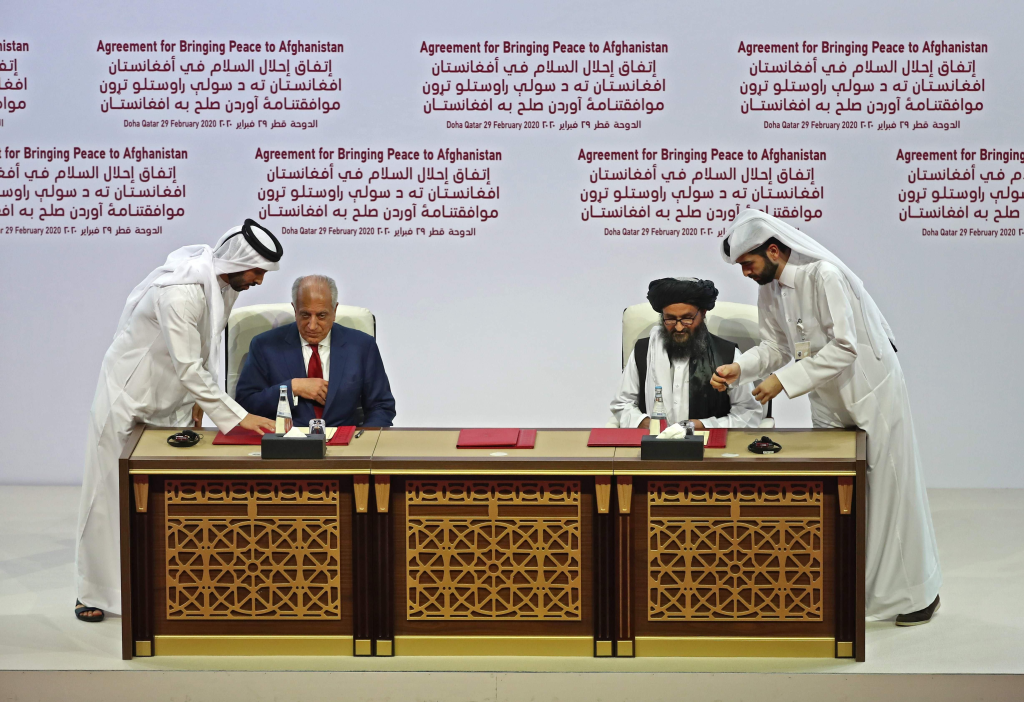
DID Press | Opinion: Confirmation by Mohammad Omar Daudzai, a former interior minister and current rotating head of the National Council for the Salvation of Afghanistan, that backchannel contacts with the Taliban have taken place has once again raised concerns among many Afghan citizens at home and abroad. It has also brought a serious question to the forefront: Is Afghanistan once again approaching a repeat of the painful Doha negotiations, this time under a different guise?
Daudzai’s remarks about the formation of a working group among some opposition figures to prepare for possible talks, following a recent speech by Taliban leader Hibatullah Akhundzada in Kabul, may be viewed by those involved as an effort to “create an opportunity and save the country.” However, for people who still bear the scars of the one-sided Doha agreement, the development looks more like a warning sign of another historic mistake.
The people of Afghanistan have not forgotten how, in the years leading up to the collapse of the republic, closed-door negotiations and ambiguous deals in Doha advanced under attractive and misleading promises such as “ending the war” and “forming an inclusive government.”
At the time, people were repeatedly told that details had to remain confidential to avoid undermining the peace process. Meanwhile, civil society, women and the younger generation were effectively excluded.
The consequences of that diplomacy conducted in secrecy were clear: neither lasting peace nor genuine national participation emerged. Instead, the country’s legal institutions collapsed and an absolute monopoly on power returned.
Now, when talk of “secret contacts” and withholding details resurfaces, it is entirely natural for people to fear that the fate of millions of citizens may once again be negotiated behind closed doors and without public scrutiny.
Another striking and contradictory aspect of Daudzai’s remarks is the wide gap between the opposition’s expectations and the realities of Taliban rule.
He has spoken of readiness to negotiate on the basis of retaining and amending the previous constitution, convening a free Loya Jirga, and holding elections with equal voting rights for women and men.
Yet, in the same interview, he acknowledged that the Taliban leader had distinguished between “government” and “government positions” in his recent speech, and that the Taliban had sought only to preserve the “Islamic Emirate” and offer a limited number of administrative posts even during the Doha negotiations.
The question is straightforward: What common ground for an agreement exists between a system established in Kandahar on the basis of unquestioning obedience to an unelected leader and a political order whose legitimacy derives from a constitution, an independent Loya Jirga and equal voting rights for women and men?
The experience of the past five years has shown that the Taliban’s invitations to former political figures to return to Kabul do not necessarily indicate acceptance of “power-sharing” or a change in the political structure. Rather, they represent an effort to employ these individuals as administrative officials under the umbrella of the Emirate.
The main objective, according to this analysis, is to reduce growing regional pressure, address the international legitimacy crisis and fill vacancies in government institutions with qualified personnel, without making the slightest change to core policies—particularly the exclusion of girls and women from schools, universities and employment.
Excessive optimism about the Taliban leader’s verbal flexibility, and even attempts to explain away his controversial remarks about “all the people of Afghanistan being Hanafi Muslims” as a “slip of the tongue,” suggest that some of Afghanistan’s politicians have yet to properly reflect on the lessons of Doha.
Everyone knows that Afghanistan today needs a national solution more than ever to overcome isolation, poverty and the governance crisis. No one opposes ending the five-decade cycle of exclusion and violence.
However, negotiations launched from a position of weakness, without genuine public consensus, without the meaningful participation of women’s representatives and the younger generation, and without guarantees of structural changes to the concentration of power, will not lead to a “national government.” Instead, they will merely lend renewed legitimacy to the status quo and repeat the failed experience of Doha.
The history of this country has repeatedly demonstrated that peace and stability cannot emerge from secret deals or the distribution of a few administrative positions. Afghanistan’s path to salvation lies only in transparency, accountability and genuine respect for the rights of all its citizens.
By Sayed Baqer Waezi – DID News Agency