Afghanistan Ranks 184th in Global Quality-of-Life Assessment
DID Press: Afghanistan has ranked 184th among 186 countries in an international assessment of quality of life, according to data published by the website Where Lives Stand. The assessment examines countries across eight major areas: security and peace, governance, civil liberties, the economy, health and education, infrastructure and technology, climate, and the environment.
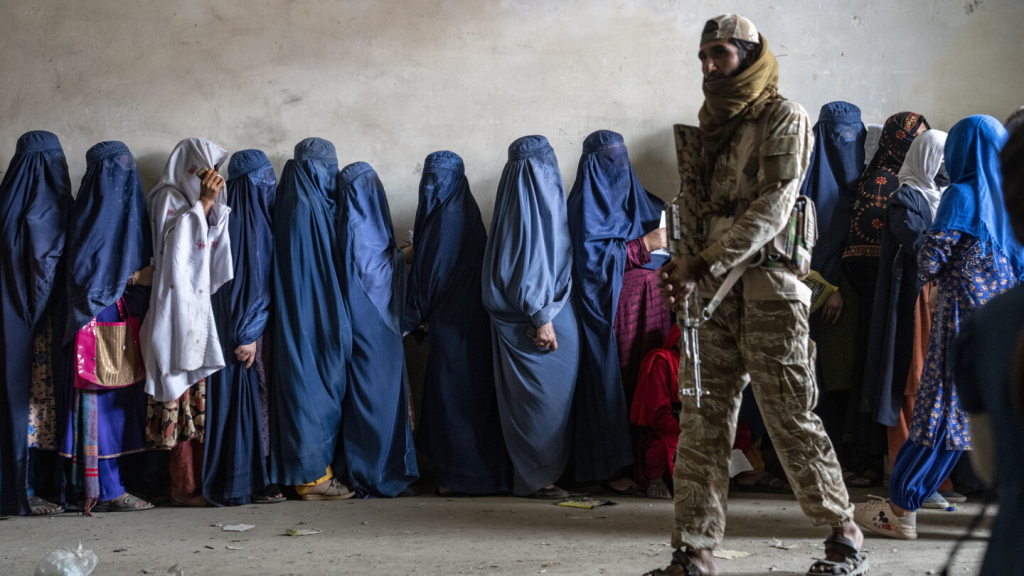
Where Lives Stand is an international platform that collects, analyses and compares quality-of-life indicators across countries. It evaluates national conditions using 34 indicators grouped into eight main categories, drawing on data from sources including the World Bank, the United Nations, the World Health Organization, the International Labour Organization and international research institutions. The platform’s data were last updated on October 31, 2026.
The assessment shows that Afghanistan performs poorly across most of the areas examined. In some indicators, including women’s status, religious freedom and fixed-broadband internet speed, the country ranks at or near the bottom globally.
Governance: Afghanistan Among the Lowest-Ranked Countries
Afghanistan scored 3 out of 100 in governance and the rule of law, placing 181st worldwide.
According to the platform’s data, Afghanistan ranked 184th out of 186 countries in government effectiveness, with a score of -1.97. In the rule-of-law indicator, it scored -1.85, ranking 181st.
Afghanistan received a score of 16 out of 100 in the Corruption Perceptions Index, placing 166th out of 179 countries.
Its resilience to organised crime was also assessed as weak. With a score of 1.5 out of 10, Afghanistan ranked 183rd out of 184 countries.
These figures point to weak institutional capacity, problems with the rule of law and limited ability to combat organised criminal networks.
Civil Liberties: Afghanistan Ranks Last in Religious Freedom
Civil liberties and social participation were Afghanistan’s weakest-performing category, with a score of just 0.6 out of 100. The country ranked last, 177th out of 177 countries, in this area.
In the Women, Peace and Security Index, Afghanistan scored 0.279 out of one, ranking 176th out of 176 countries. The position reflects the country’s extremely poor performance in women’s security and social participation.
Afghanistan also ranked last in religious freedom, placing 174th out of 174 countries with a score of -3.29.
The assessment gave Afghanistan a press freedom score of 19.5 out of 100, placing it 170th out of 175 countries. In academic freedom, the country scored 0.09 out of one and ranked 161st out of 174 countries.
Taken together, these indicators point to major challenges involving civil liberties, women’s rights, media freedom and the independence of academic activities.
Low GDP Per Capita
Afghanistan scored 39.5 out of 100 in the economy, employment and cost-of-living category, ranking 158th out of 176 countries.
The country’s GDP per capita, measured in purchasing power parity, stood at approximately $2,236 in international dollars in 2024. Afghanistan ranked 170th out of 181 countries on this indicator.
The unemployment rate in 2025 was reported at 13.4 percent, placing Afghanistan 160th out of 180 countries.
Afghanistan’s Economic Complexity Index stood at -0.82 in 2024, ranking the country 107th out of 144 countries.
Health and Education
Afghanistan scored 10.6 out of 100 in the health, education and family category, placing 176th out of 185 countries.
Healthy life expectancy in Afghanistan was approximately 53.3 years in 2023. In the essential health services coverage indicator, the country scored 42 out of 100, ranking 171st out of 185 countries.
The under-five mortality rate in 2024 was reported at 53 deaths per 1,000 live births, placing Afghanistan 160th out of 185 countries.
In education, Afghanistan’s Human Development Index education component stood at 0.384 out of one in 2023, ranking the country 169th out of 185 countries.
These figures highlight serious challenges in access to healthcare, maternal and child health services, and the development of the education system. However, the Human Development Index education component should not be treated as equivalent to literacy rates or school enrolment levels.
Infrastructure and Technology
Afghanistan scored 21.7 out of 100 in infrastructure and technology, ranking 172nd out of 184 countries.
Fixed-broadband download speed was reported at 16 megabits per second, placing Afghanistan last among the 164 countries assessed.
According to 2024 data, only 16.1 percent of Afghanistan’s population used the internet. The country ranked 177th out of 184 countries in internet usage.
In electricity access, 87.8 percent of the population had access to electricity in 2024. However, the country’s logistics performance was also poor: Afghanistan scored 1.9 out of five, ranking 166th out of 167 countries.
These conditions could affect trade development, access to public services, digital education and economic connectivity.
Environment
Afghanistan scored 12.5 out of 100 in the environment and resilience category, ranking 175th out of 184 countries.
According to 2023 data, the average concentration of PM2.5 particulate matter in Afghanistan’s air was 49.3 micrograms per cubic metre. The country ranked 180th out of 185 countries on this indicator.
Only 30.6 percent of Afghanistan’s population had access to safely managed drinking-water services in 2024.
In the 2026 Environmental Performance Index, Afghanistan scored 33.1 out of 100, ranking 132nd out of 174 countries.
Another concerning indicator is the country’s capacity to adapt to climate change. Afghanistan scored 33 out of 100 in the ND-GAIN Index, ranking 173rd out of 183 countries. These figures point to high vulnerability to environmental hazards and limited capacity to adapt to climate change.
Climate and Weather: Afghanistan’s Highest-Ranked Category
Among the eight assessed categories, climate and weather was Afghanistan’s strongest-performing area. The country scored 69 out of 100, ranking 65th out of 184 countries.
According to the climate data used in the assessment, Afghanistan’s average annual temperature is 14.2 degrees Celsius, while annual precipitation stands at 318 mm.
The average maximum temperature in the hottest month was reported at 34.8 degrees Celsius, while the average minimum temperature in the coldest month was -5.7 degrees Celsius. Six months of the year fall into the category of months with comfortable climatic conditions.
However, Afghanistan’s relatively favourable position in the climate-comfort indicator does not mean the country is protected from drought, water shortages or the consequences of climate change.
Security and Peace
Afghanistan scored 25.6 out of 100 in the security and peace category, ranking 163rd out of 185 countries.
The country’s Global Peace Index score for 2026 was 3.106 out of five, placing it 155th out of 161 countries.
Afghanistan’s organised crime index score was reported at 7.02 out of 10, ranking the country 167th out of 184 countries.
By contrast, the intentional homicide rate in 2021 was reported at four deaths per 100,000 people. Afghanistan ranked 93rd out of 148 countries on this indicator, a relatively better position compared with many of its other rankings.
Deaths resulting from road traffic accidents stood at 22.9 per 100,000 people in 2023.
The Gap Between Natural Potential and Development Conditions
A comparison of the eight assessment categories shows that Afghanistan performs relatively better in climate and some security-related indicators. However, the country faces deep-rooted problems in governance, civil liberties, health, education, infrastructure and the environment.
Afghanistan’s overall position of 184th out of 186 countries, alongside its very low rankings in government effectiveness, women’s status, religious freedom and digital access, indicates that the country’s challenges are not confined to a single sector but affect multiple aspects of public life.
Conclusion
An examination of Afghanistan’s quality-of-life indicators in the international platform’s assessment shows that the country’s challenges extend beyond poverty and shortages of resources. They also involve structural weaknesses in governance, restrictions on civil liberties, the erosion of human capital and limited capacity to achieve sustainable development.
Afghanistan ranks 184th out of 186 countries, reflecting the accumulation of difficulties across several areas of public life.
One of the report’s most significant findings is the uneven severity of the crisis across different sectors. Afghanistan scored 3 out of 100 in governance and 0.6 in civil liberties, while health and education received 10.6, the environment 12.5, and infrastructure and technology 21.7.
These figures suggest that Afghanistan’s problems are not solely the result of limited financial resources and facilities. They also involve weak governing institutions, restrictions on social participation, declining accountability and the absence of effective mechanisms to turn available resources into public services.
Weak governance should be considered one of the key factors perpetuating Afghanistan’s crisis. Deficiencies in the rule of law, government effectiveness and corruption control limit the ability to implement public policies and create a predictable environment for economic activity. Under such conditions, even investment in sectors such as education, healthcare and infrastructure may fail to produce sustainable results.
In terms of human capital, low scores in health and education, healthy life expectancy of 53.3 years and essential health services coverage of 42 percent point to serious constraints on human development. The exclusion of women and girls from educational and social opportunities further exacerbates the situation. In the long term, this trend could reduce the skilled workforce, restrict innovation and increase the cost of economic and social recovery.
Economically, a score of 39.5, GDP per capita of approximately $2,236 in purchasing power parity and an unemployment rate of 13.4 percent point to a weak and vulnerable economy. Beyond poverty and unemployment, the main challenges include limited capacity to generate added value, diversify the economy and create sustainable jobs. Weak digital and logistical infrastructure also makes it more difficult for Afghanistan’s economy to connect with regional and global markets. Only 16.1 percent of the population uses the internet.
Environmental and climate vulnerability reveal another dimension of the crisis. High concentrations of particulate matter, limited access to safe drinking water and weak climate resilience could place additional pressure on food security, public health and household livelihoods. The environment is therefore also a matter of human and economic security in Afghanistan.
The links between these crises are more significant than any individual indicator considered separately. Weak governance contributes to declining public service quality and restrictions on economic activity. This, in turn, erodes human capital, while declining human capital reduces society’s capacity for reform and economic recovery. The result is a cycle that will be difficult to break through isolated or short-term measures.
From this perspective, Afghanistan’s priorities should focus on three areas: first, strengthening governance, the rule of law and institutional accountability; second, restoring human capital through inclusive access to education, healthcare and social participation, particularly for women; and third, developing a productive economy, digital infrastructure and sustainable natural-resource management.
By Masoud Balkhi | DID News Agency