Pakistan’s Coercive Diplomacy: Reflection of Four Decades of Misguided Policy?
DID Press: Pakistan’s current insecurity, many analysts argue, is the natural outcome of a strategy it adopted four decades ago. By seeking to destabilize Afghanistan in the belief that doing so would secure its own stability, Islamabad is now facing the blowback of violence returning to its own soil.
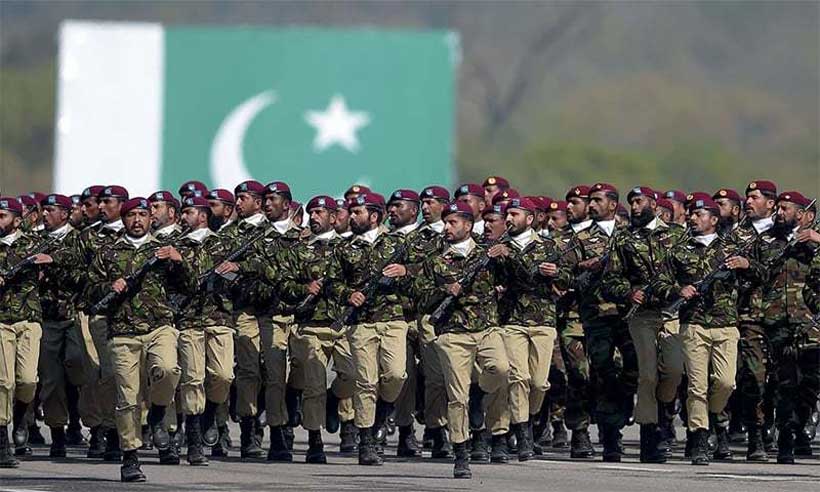
On Saturday, September 13, Prime Minister Shehbaz Sharif delivered a sharp warning to Kabul during the funeral of soldiers killed in the restive Bannu district of Khyber Pakhtunkhwa. “Today I want to send a clear message to Afghanistan: choose between Pakistan and Tehrik-e-Taliban Pakistan (TTP),” he declared.
The blunt tone of Sharif’s remarks, made in a week when 19 Pakistani troops were killed, underscores the depth of the security crisis confronting Islamabad. His ultimatum to the Taliban in Kabul reflects not only anger but also deep contradictions at the heart of Pakistan’s foreign policy.
Islamabad’s demand that Kabul sever ties with the TTP lacks political or strategic logic. Given the ideological affinities between the Afghan Taliban and the Pakistani Taliban, expecting such a rupture reveals a simplistic reading of the region’s complex geopolitics.
For decades, Pakistan itself played a central role in fostering and supporting similar groups, under the doctrine of “strategic depth.” That very policy, designed to insulate Pakistan, has now come full circle, transforming into a nightmare that forces Sharif’s government into threats against its eastern neighbor.
History shows that no nation has ever achieved lasting security by destabilizing its neighbors. Pakistan is no exception. The threats it now faces are the very seeds it sowed decades ago. Confronted with the consequences of its own policies, Islamabad’s recourse to ultimatums against Kabul risks compounding regional instability rather than resolving it.
Sharif and his security team must recognize that Pakistan’s path out of crisis lies not in coercion but in a fundamental rethinking of its security and foreign policy. So long as Islamabad avoids accountability and instead blames others, the vicious cycle will continue.
Ultimately, Sharif’s ultimatum appears less a demonstration of strength than an admission of weakness in the face of self-inflicted turmoil—one that could drag bilateral relations deeper into crisis and add new layers of complexity to the region’s fragile security landscape.
By Ahmad Zaki Nawisa – DID Press Agency