DID Press: This report examines and compares the human resource management and organizational structures of two governments: the United States federal government and Afghanistan during Ashraf Ghani’s presidency (2014–2021). The focus is strictly on administrative, organizational, and governance capacity differences, rather than military strength or international influence.
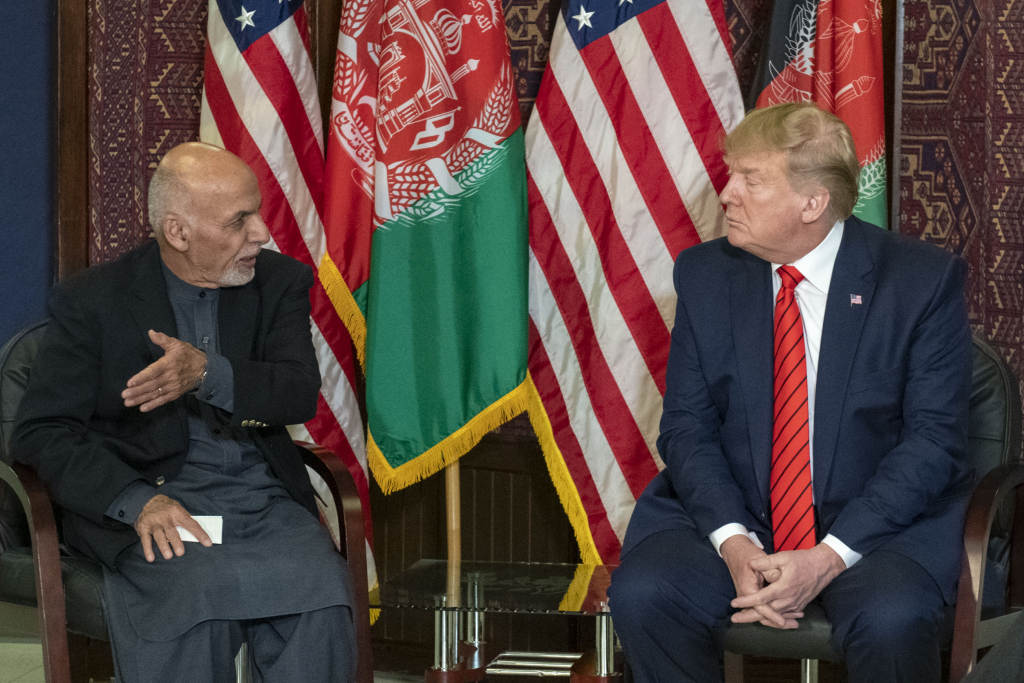
Analyzing government staffing structures provides a key indicator of governance capacity, administrative efficiency, and national security priorities. Comparing the US federal government, one of the world’s largest bureaucracies, with Afghanistan under Ghani reveals fundamental differences in size, composition, and function of personnel, with significant implications for governance.
- Human Resource Structure of the US Federal Government
The US federal government employs approximately 2.1 million personnel, making it one of the largest employers worldwide. Staffing distribution shows that defense and veteran affairs dominate the workforce.
1.1 Defense and Veterans Affairs Focus
Department of Defense: 770,900 personnel
Department of Veterans Affairs: 474,500 personnel
These two departments alone account for over half of the federal workforce, highlighting the centrality of military service and veteran support within the US administrative framework.
1.2 Extensive Civilian Agencies
Departments such as Treasury, Health and Human Services, Agriculture, Interior, Transportation, and Commerce each employ tens of thousands. Specialized agencies like NASA, the Environmental Protection Agency, and the General Services Administration also form significant components of the bureaucracy.
This breadth reflects a stable, multilayered government with clearly defined divisions of labor.
- Human Resource Structure of Afghanistan under Ashraf Ghani
By contrast, Afghanistan employed roughly 400,000 personnel during Ghani’s presidency—less than one-fifth of the US federal workforce—with a very different composition.
2.1 Dominance of Security and Defense Forces
Total security and defense personnel: 250,000
National Army: 180,000
National Police: 70,000
National Directorate of Security: several thousand
Over 60% of Afghanistan’s workforce was in security roles, reflecting a crisis-driven, conflict-focused administration heavily reliant on foreign support.
2.2 Limited and Centralized Civil Administration
Ministry and central administrative staff: 100,000
Provincial and local staff: 30,000
Independent and semi-autonomous agencies: 20,000
Civil administration was small relative to the country’s 38 million population and largely concentrated in Kabul, which, combined with weak infrastructure, severely constrained government efficiency.
- Structural Challenges in Afghanistan
Afghanistan’s workforce faced several critical issues:
Widespread administrative corruption
Non-transparent, politically motivated hiring
Heavy dependence on foreign aid
Irregular salaries and weak payroll systems
Lack of performance evaluation systems and professional training
These factors undermined the government’s administrative capacity, a weakness made starkly evident by the fall of the Ghani administration in August 2021.
- Key Comparison: US vs. Afghanistan
Size and Composition
US: 2.1 million employees, multilayered, professional, financially stable
Afghanistan: 400,000 employees, predominantly security-focused, administratively fragile, aid-dependent
Administrative Capacity
US: Broad, specialized agencies with clearly defined roles and strong institutional support
Afghanistan: Small, centralized civil service with limited capacity to deliver public services
Financial Stability
US: Funded primarily through domestic resources
Afghanistan: Almost entirely reliant on foreign aid
Professionalization and Governance
US federal workforce operates within a professional, stable, and well-resourced framework.
Afghanistan’s workforce, despite security emphasis, lacked institutional support, proper management, and operational capacity.
This comparison shows that workforce size alone is not a sufficient measure of governance capacity. Quality of management, institutional stability, professionalization, and financial sustainability are far more decisive.
Conclusion
While the US federal government maintains a large, professional, and stable workforce, Afghanistan under Ashraf Ghani had a smaller, aid-dependent, and security-heavy administrative structure that limited its governance capacity. These differences help explain Afghanistan’s institutional fragility and the rapid collapse of its government in 2021.
The analysis underscores that effective governance depends not on numbers alone but on the quality, structure, and professional management of human resources.
Research Unit — DID Press Agency