Jewish Immigrants’ Pivotal Role in Shaping Early NBA
DID Press: A lesser-known chapter in the history of the National Basketball Association (NBA) highlights the decisive role of Jewish immigrant communities in turning basketball into an “urban game” and a pathway into mainstream American society.
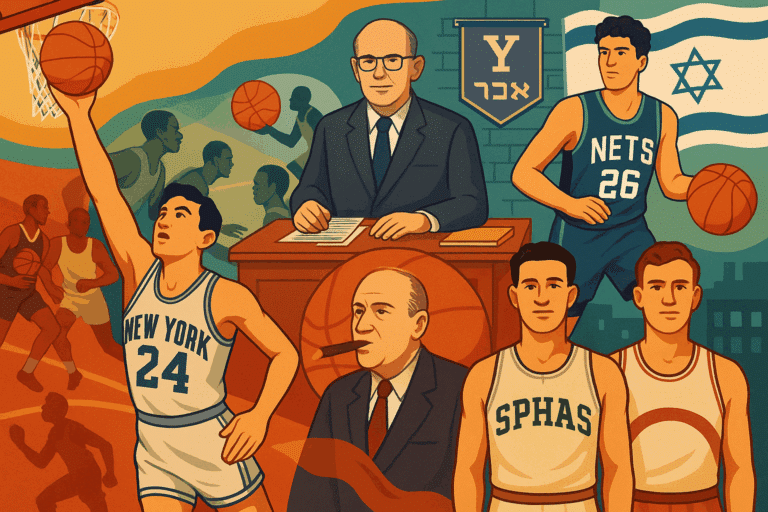
From the 1920s through the 1950s, basketball was more than recreation for many working-class Jewish families in New York. With minimal equipment needs and suitability for dense urban neighborhoods, the sport became a vehicle for social mobility, educational opportunity, and, for a few, entry into the professional ranks.
In the NBA’s first official game on November 1, 1946, the New York Knicks fielded four Jewish starters and six Jewish players overall. In that historic 68–66 victory over the Toronto Huskies, Leo “Ace” Gottlieb led the scoring, Sidney Hertzberg captained the side, and Oscar Schechtman scored the first basket in league history.
At the time, franchises sought players who reflected local communities. Just as Boston adopted the “Celtics” brand to appeal to Irish Americans, the Knicks recruited Jewish talent from nearby colleges, reflecting New York City’s large Jewish population.
Jewish influence extended beyond the court. Maurice Podoloff became the NBA’s first president, while coaches such as Red Auerbach and Eddie Gottlieb shaped the league’s early development and later entered the Hall of Fame. Dolph Schayes of the Syracuse Nationals remains the only Jewish player on the league’s list of the 50 greatest players.
Over time, concerns within Knicks management about ticket sales contributed to a gradual shift in roster composition, and the era of Jewish dominance in professional basketball faded.
Even so, historians note that Jewish communities helped define the NBA’s earliest identity. In mid-century New York, basketball was not only an “urban game,” but — to a significant extent — a “Jewish game,” whose legacy remains embedded in the league’s history.
International Desk — DID Press Agency