Central Asia Emerges as Afghanistan’s Strategic Corridor Out of Trade and Economic Deadlock
DID Press: Central Asia has the potential to meet Afghanistan’s fundamental energy needs. Currently, Afghanistan imports approximately 6.5 billion kilowatt-hours of electricity annually, with more than 70 percent supplied by Central Asian states—particularly Uzbekistan and Turkmenistan.
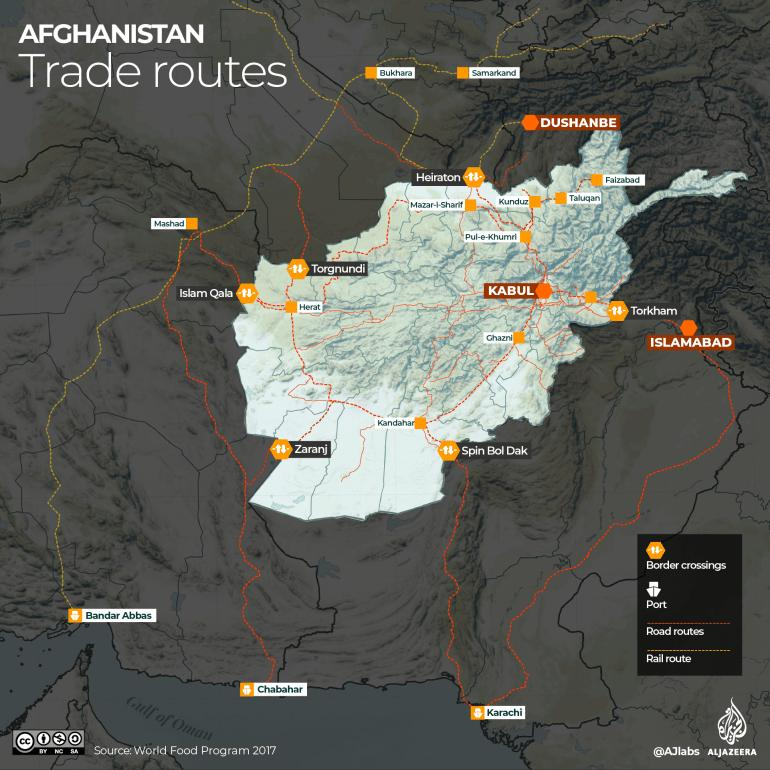
Afghanistan’s economy, as one of the most landlocked in the world, has for decades been trapped by geographic constraints. Heavy dependence on limited trade routes—especially through Pakistan—combined with internal political instability has made the country one of the region’s most fragile economies. Trade statistics show that in 2024, Afghanistan’s total foreign trade reached $12.42 billion, with exports accounting for only 15 percent (around $1.8 billion) and imports 85 percent ($10.6 billion). This structural imbalance means any disruption to traditional trade routes can quickly escalate into a full-scale economic crisis.
In such circumstances, Central Asia is not merely an option but a strategic necessity for Afghanistan. Geographic proximity reduces transportation costs, while shared historical and cultural ties help foster mutual trust. What makes this opportunity tangible, however, is the steady growth in bilateral trade.
According to 2025 data, trade volume between Afghanistan and Central Asian countries increased by 43 percent, reaching $2.7 billion. During the same period, Afghan exports to the region surged by 77 percent, rising from $122 million to $216 million. Uzbekistan alone accounted for $1.6 billion of this trade, representing a 45.5 percent increase. These figures clearly indicate that northern markets are becoming increasingly reliable destinations for Afghan goods.
Beyond Trade: Energy Supply and Regional Connectivity
The importance of cooperation extends beyond raw numbers. First, Central Asia can reliably supply Afghanistan’s essential energy needs. Second, the region serves as a gateway to larger markets such as Russia, the Caucasus region, and even Eastern Europe.
If northern transit corridors are further developed, Afghanistan could transform into a strategic bridge linking South Asia—with a population exceeding 1.8 billion people—to Eurasia. Such a position would not only generate significant foreign currency revenues from transit trade but also substantially strengthen Kabul’s political leverage in regional dynamics.
Key Obstacles to Full Integration
Despite the promising outlook, the path to fully utilizing this opportunity remains challenging. At least four major obstacles stand in the way:
1. Weak Domestic Infrastructure
Afghanistan’s road and railway networks are not yet fully integrated with Central Asia’s transportation system. Currently, only one operational railway line connects Mazar-e-Sharif to Termez in Uzbekistan. Its capacity is insufficient to handle growing trade volumes. The proposed Afghan-Trans railway project—linking Termez, Mazar-e-Sharif, Kabul, and Peshawar—could address this gap but requires nearly $5 billion in investment and long-term political stability.
2. Institutional and Administrative Barriers
Afghan customs procedures lack harmonized standards with northern neighbors. Excessive bureaucracy, absence of a unified trade window system, and administrative corruption increase transaction costs by up to 30 percent. According to Afghanistan’s Chamber of Commerce, export trucks to Uzbekistan can sometimes remain stranded at border crossings for more than 10 days.
3. Lack of a Coherent Economic Strategy in Foreign Policy
Afghanistan’s foreign policy in recent decades has been shaped more by security and political considerations than by economic priorities. A comprehensive national strategy to transform the country into a transit hub connecting South and Central Asia has yet to be fully developed and implemented. As a result, many bilateral agreements remain declarative rather than operational.
4. Security Challenges
Security concerns in northern provinces—including Balkh, Jowzjan, and Faryab—occasionally disrupt infrastructure projects and discourage international insurers and investors from committing to long-term investments.
Lessons from Recent Trade Disruptions
In 2025, repeated disruptions at Pakistan’s border crossings—particularly Torkham and Chaman—demonstrated how vulnerable Afghanistan’s economy is to closures of traditional routes. During that period, northern corridors through Central Asia and eastern routes via Iran helped absorb much of the economic shock. Afghanistan’s total foreign trade reached $13.9 billion that year, proving that alternative routes are not theoretical concepts but operational realities.
Strategic Outlook
Ultimately, Central Asia represents a genuine strategic opportunity for Afghanistan to break free from economic dependency. Trade patterns over the past two years show a natural shift toward northern markets despite persistent obstacles. However, realizing the full potential of this shift will require sustained political commitment to infrastructure reform, transparent customs procedures, development of a national transit strategy, and targeted economic diplomacy.
If Afghanistan successfully capitalizes on this window of opportunity, it could reduce reliance on unstable traditional routes and emerge as a key player in the regional supply chain. The path is difficult—but achievable.
Author: Ehsanullah Samim – DID News