Taliban’s Engineering of Silence Keeps Afghanistan at Bottom of Press Freedom Index
DID Press: Afghanistan has once again been ranked among the most repressive countries in the world in the 2026 World Press Freedom Index, reflecting not a temporary decline but the consolidation of a systematic strategy of information control under Taliban rule. Reporters Without Borders places Afghanistan at 175th out of 180 countries, a position that signals structural, not episodic, media repression.
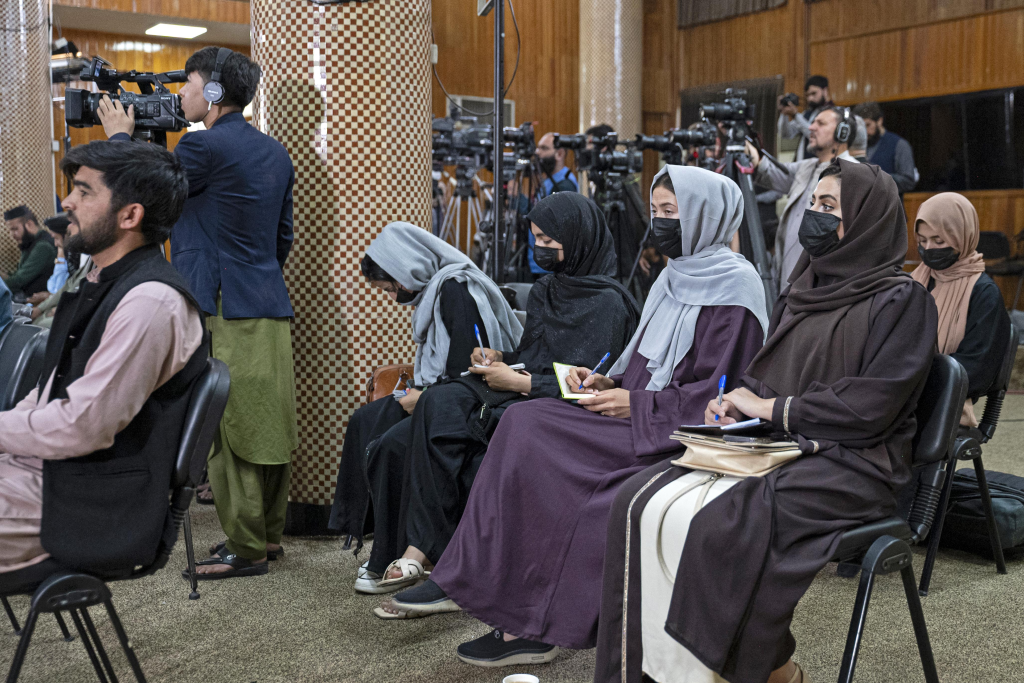
Collapse of Media Freedom After 2021
The Taliban’s return to power in 2021 marked a decisive turning point in the dismantling of Afghanistan’s fragile media ecosystem. While the country previously faced insecurity and political pressure on journalists, it still maintained a relatively diverse and pluralistic media landscape, including private outlets and female journalists.
That system rapidly deteriorated after the takeover. Restrictions on reporting, content censorship, intimidation, arrests of journalists, and the systematic exclusion of women from media institutions reshaped the information environment into a tightly controlled space.
Media as a Tool of Control, Not Accountability
Under Taliban governance, media is not viewed as a mechanism of public oversight but as a potential threat to political legitimacy. As a result, independent journalism is reframed as a security risk, while critical reporting is effectively criminalized.
This approach has triggered widespread self-censorship, mass departure of journalists, closure of hundreds of media outlets, and the erosion of public trust in information channels.
Economic Collapse of the Media Sector
Alongside direct political pressure, severe economic contraction has further weakened Afghan media. The withdrawal of international funding, collapse of advertising markets, administrative restrictions, and broader economic instability have left many outlets financially unsustainable.
This dual pressure—political and economic—has created a self-reinforcing cycle of media contraction and silence.
Structural Legitimacy Crisis and Information Control
The sustained suppression of media freedom also reflects a deeper legitimacy challenge. Governments lacking broad public participation and institutional accountability often perceive free media as a destabilizing force.
In this context, information control becomes a governing strategy rather than a temporary policy choice. The engineering of silence thus emerges as a core component of statecraft.
Regional and Global Implications
Afghanistan now stands as one of the most extreme global cases of media repression, reflecting broader patterns of declining press freedom worldwide. Its case illustrates how ideology-driven governance combined with authoritarian control mechanisms can rapidly dismantle civil media ecosystems.
The implications extend beyond journalism, affecting civic participation, political development, and the functioning of civil society.
Conclusion
Afghanistan’s position at the bottom of global press freedom rankings is not merely statistical—it represents a structural transformation of the information space into a controlled and restricted environment. As long as media remains subordinated to political authority rather than functioning as an independent institution, Afghanistan is likely to remain within a cycle of enforced silence and informational isolation.
By Sulaiman Saber — DID News Agency