DID Press: The recent missile strike launched by Iran against Israeli-held territory is being described as a turning point in the regional balance of power, carrying not only military implications but also significant political and strategic messages reaching from Tel Aviv to Washington and Beirut.
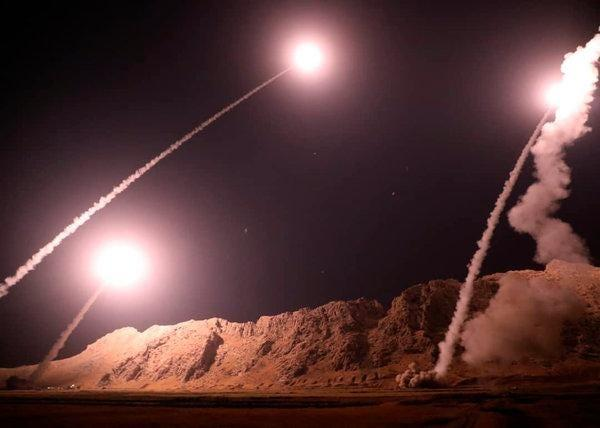
The analysis argues that the operation came in response to alleged ceasefire violations in Lebanon and recent strikes on Beirut’s southern suburbs, framing the attack as a calculated response aimed at restoring deterrence and reinforcing Iran’s declared red lines within the regional axis of resistance.
Missile Capability and Operational Reach
The operation is presented as evidence that Iran’s missile capability remains multi-layered, dispersed, and resilient despite repeated claims by the United States and Israel regarding the degradation of its military infrastructure.
The simultaneous launch of ballistic missiles with varying ranges, alongside reports of jet-powered unmanned systems and precision targeting of Israeli military and energy infrastructure, is described as demonstrating both survivability and adaptability of Iran’s strike network.
Even where interception occurred, analysts note that the scale of air-defense activation, widespread sirens, and disruption to civilian life contributed to the deterrent effect of the operation.
Support for Lebanon and the Regional Front
By explicitly linking the strike to developments in Lebanon, Iran is portrayed as reinforcing its view of Lebanon and Hezbollah as integral to its strategic depth. The move is interpreted as a signal that Tehran’s support is not limited to political rhetoric but extends to direct military engagement when required.
Preemptive Action and Dynamic Deterrence
The operation is framed as “dynamic deterrence,” shifting away from passive retaliation toward immediate and targeted responses designed to raise the cost of perceived red-line violations. At the same time, Iran’s framing of the strike as a response rather than initiation is seen as an effort to preserve legal and diplomatic legitimacy.
Message to the United States and Israel
The strike is also interpreted as a signal to Washington, increasing the potential cost of escalation and pushing U.S. policymakers toward containment rather than expansion of conflict dynamics.
Trump’s Reaction and Washington–Tel Aviv Divide
A notable aspect highlighted in the analysis is the reported reaction of Donald Trump, who indicated that the United States would not automatically align with Israeli calls for retaliation and reiterated a preference for maintaining diplomatic engagement with Iran. His remarks are described as underscoring a growing gap between Washington and Benjamin Netanyahu.
Conclusion
The strike is ultimately presented as part of a broader strategy aimed at consolidating Iran’s deterrence posture, reinforcing its regional alliances, and influencing U.S. strategic calculations while simultaneously managing escalation risks in an already volatile regional environment.
By Rahel Mousavi | DID News Agency