Remote Agitation and the Mechanics of Political Project-Making in Jebrail, Herat
DID Press: Calls made from afar, amplified through social media and detached from the consequences on the ground, can appear low-cost and effortless, yet they often carry severe human and social costs.
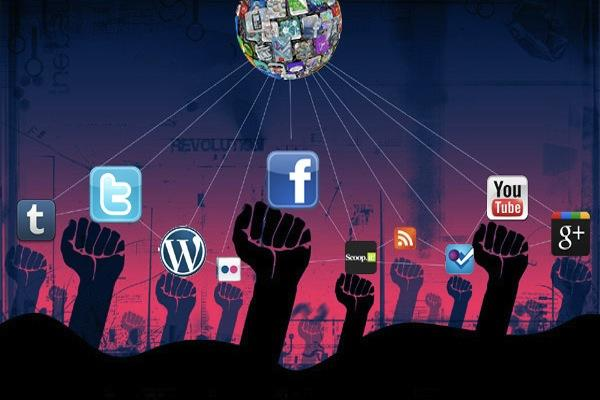
Individuals living in secure environments across Europe and North America, while bearing little or no responsibility for the outcomes of their rhetoric, are accused of encouraging young people in Jebrail, Herat, to engage in street mobilization under the banner of resisting oppression. According to this argument, such encouragement risks reproducing past cycles of tragedy in which young lives are lost, communities absorb deep psychological wounds, and families are left grieving, while those issuing the calls remain untouched by the consequences.
The article argues that in an age shaped by information abundance and increasingly powerful communication technologies, distinguishing constructive civic action from emotional mobilization has become more difficult than ever. Through emotionally charged language and persuasive online narratives, activists and commentators can rapidly attract support and push vulnerable audiences toward confrontation. Yet without strategy, leadership and realistic planning, such mobilization may deepen instability rather than produce meaningful change.
From this perspective, the absence of capable leadership, organizational discipline and a clear political roadmap can reduce social movements to short-lived emotional reactions that struggle to survive sustained pressure. The article references past experiences — including the experience of the Enlightenment Movement — as examples of mobilizations that generated momentum but ultimately failed to secure durable outcomes.
It further argues that any future social or political movement seeking lasting impact must be rooted in rational planning, structured organization and informed leadership rather than spontaneous emotional escalation.
The commentary also points to circulating allegations surrounding recent developments in Jebrail, claiming that certain controversial figures associated with Afghanistan’s former republican period may be attempting to exploit public grievances for political re-entry and personal gain. According to this view, there is concern that public suffering could once again become a vehicle for transactional politics.
Under such conditions, the article warns that grassroots movements become vulnerable to political appropriation — especially when actors with weakened legitimacy attempt to convert public resistance into renewed political influence. It argues that collective awareness and clear distancing from opportunistic actors are necessary to prevent human suffering from becoming political capital.
The central message stresses that protecting lives, preserving public safety and avoiding reckless escalation should remain the immediate priority. In highly charged environments shaped by rumors, tension and political competition, ordinary civilians are often the first to bear the costs — not those who encourage confrontation from a distance.
The article concludes that caution should not be interpreted as acceptance of injustice or surrender to oppression. Rather, it argues that actions lacking preparation, realistic objectives and responsibility can turn public anger into avoidable tragedy. Sustainable civic action, it suggests, requires strategic judgment as much as moral conviction.
By Rahel Mousavi | DID News Agency