Silencing the Press: How the Taliban Seeks to Control Afghanistan’s Narrative
DID Press: Recent reports by Reporters Without Borders indicate that Afghanistan under Taliban rule has become increasingly restrictive for the free flow of information. New criminal regulations reportedly criminalize criticism of Taliban leaders and impose severe penalties, including imprisonment and flogging.

What began in the early days of Taliban rule as informal directives and restrictions has increasingly evolved into formal and stringent regulations. This suggests that the Taliban’s treatment of journalists and media outlets is not merely a series of isolated incidents or temporary reactions, but reflects a deeper fear embedded within the group’s power structure. The central question, however, is why a group that seized power through military force and suppressed armed opposition would remain so concerned about a few lines of reporting or an independent news story.
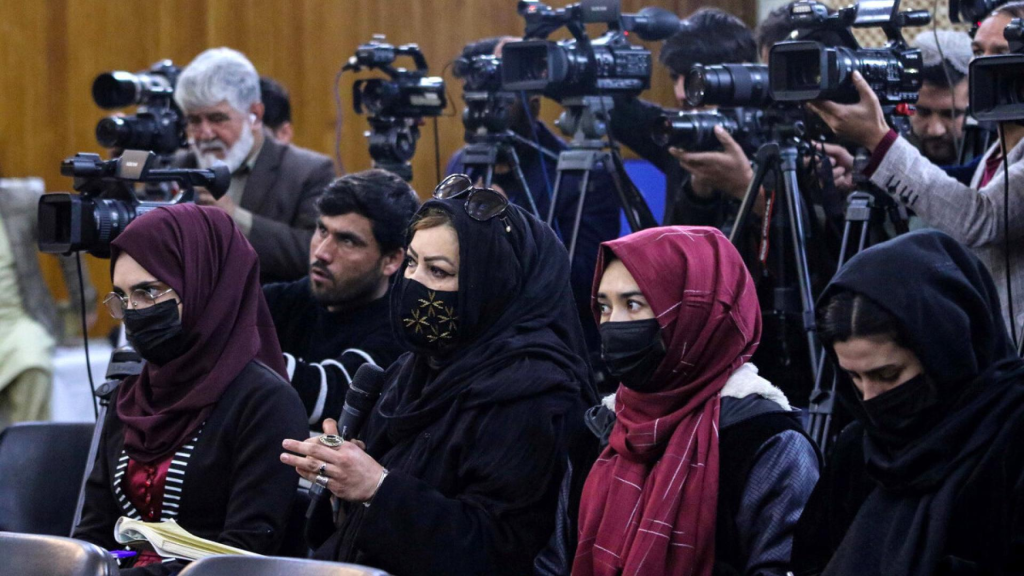
One explanation lies in the Taliban’s fear of exposing realities on the ground. The group seeks to promote a single narrative—one centered on its own claims of security, success and prosperity. When independent media report on widespread poverty, unemployment among young people, restrictions on women and girls’ education and employment, or everyday public grievances, those claims of effective governance are challenged. The Taliban understands that public awareness can undermine unquestioning obedience. By silencing the media, it seeks to limit society’s ability to think critically, compare realities and scrutinize its performance.
A second and equally important factor concerns divisions within the Taliban itself. Despite the image of unity and cohesion promoted through its propaganda, differences in views, competition and disagreements exist among various factions within the group. A free press and persistent journalism could expose these divisions, internal disputes, administrative conflicts and behind-the-scenes power struggles to the public and the international community. To preserve an image of unity and strength, the Taliban has therefore sought to prevent journalists from examining its internal affairs and to stop alternative narratives from emerging.
Media outlets also serve as a historical record of a government’s conduct. Reports documenting arbitrary arrests, extrajudicial punishments, public flogging and other alleged human rights violations can become evidence used by international organizations and judicial institutions in assessing the Taliban’s conduct.
The Taliban understands that the continued publication and preservation of such reports can pose a significant obstacle to its international recognition. Through intimidation, censorship and pressure on journalists, the group has sought to limit the documentation of alleged abuses and shape how its rule is recorded in the historical record.
Afghans lived for two decades with relatively freer media, multiple political voices and a more open information environment. The Taliban’s effort to impose comprehensive control over such a society therefore requires the gradual restriction of independent sources of information. Yet the scale of pressure, imprisonment and punishment directed at journalists does not necessarily demonstrate strength. Rather, it can be interpreted as a sign of insecurity, fragility and a lack of confidence in the foundations of the Taliban’s rule.
A government that enjoys broad public support, effective governance and legitimacy has little reason to fear criticism, transparency or independent reporting. The Taliban appears to regard a free press not simply as an instrument of public information, but as a fundamental challenge to the survival of its political system—one that force alone cannot permanently silence.
By Sayed Baqer Waezi — DID News Agency