Top UN Officials Visit Afghanistan to Assess Humanitarian Needs
DID Press: Senior United Nations officials have arrived in Afghanistan to assess the humanitarian situation, with a focus on returnees, community resilience, and strengthening development and relief cooperation.
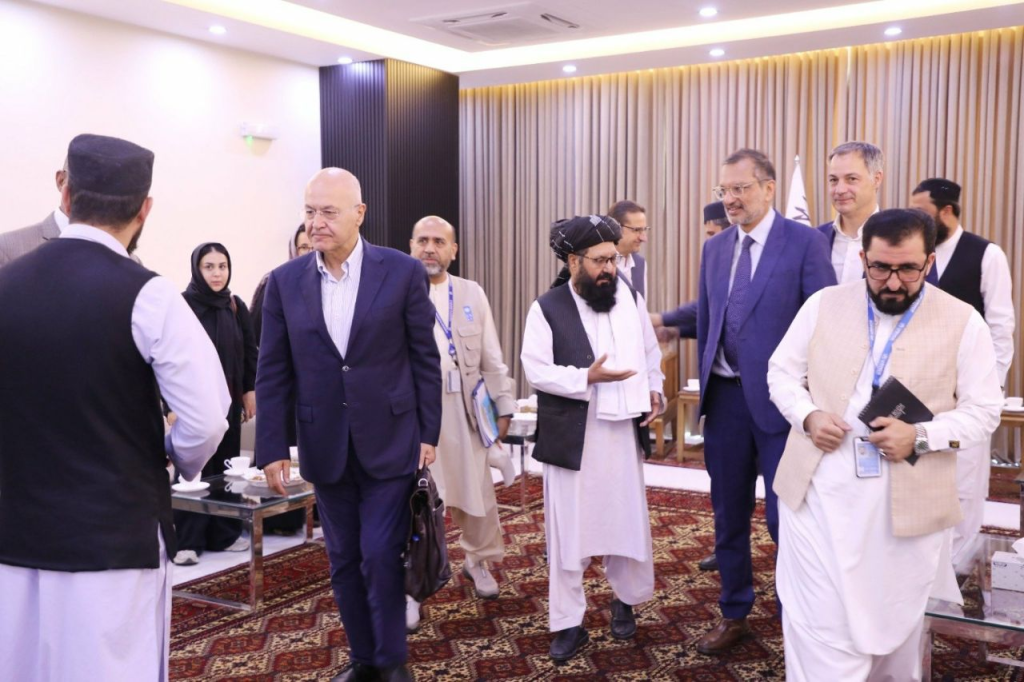
According to Afghanistan’s Ministry of Refugees and Repatriation, Acting Deputy Minister Abdulrahman Rashid welcomed the UN delegation at Kabul International Airport. The delegation includes Alexander De Croo, identified by the ministry as a senior UNDP official and UN Under-Secretary-General, and Barham Salih, identified as the UN High Commissioner for Refugees.
The ministry said the visit aims to assess living conditions across Afghanistan, review the challenges facing returning migrants, and evaluate their humanitarian needs.
Rashid described the visit as an opportunity to present an accurate picture of conditions in the country, stressing that addressing the needs of returnees is essential to protecting human dignity and improving livelihoods.
During the visit, De Croo also toured a UN-supported flood protection and irrigation project in the Sultan area. He said strengthening climate resilience in Afghanistan is a practical necessity rather than an abstract concept, noting that the project helps reduce flood risks, protect farmland, and create income opportunities through community participation.
He added that three out of every four Afghans are unable to meet their basic living needs, underscoring the scale of the country’s humanitarian challenges.
Separately, Abdul Salam Hanafi, the Taliban administration’s Deputy Prime Minister for Administrative Affairs, met with UN and international representatives and criticized the exclusion of Taliban delegations from international conferences.
According to the Prime Minister’s Office, the meeting focused on healthcare, polio eradication, support for returning migrants, and continued cooperation with international organizations. Hanafi called for humanitarian and health cooperation to remain separate from political considerations and urged international organizations to invite Taliban representatives to relevant health-related meetings.
The visit comes as the Taliban administration remains unrecognized by any country, and its representatives continue to be excluded from formal international diplomatic forums.