DID Press: As the 36th NATO Summit draws renewed attention to regional security, analysts say the prospect of a Middle East NATO remains remote, with decades of efforts to establish a NATO-style security alliance repeatedly undermined by competing regional interests and the influence of external powers.
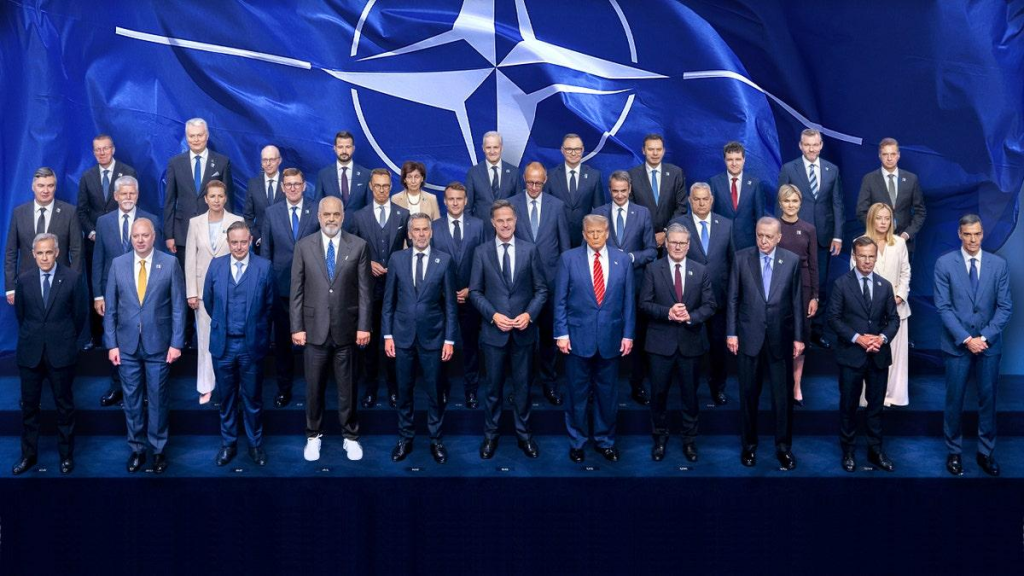
According to an analysis by Türkiye Today, NATO was founded during the Cold War around a shared external threat and a collective defense framework. In contrast, security challenges in the Middle East are largely regional, domestic, and multi-layered, while governments across the region differ sharply in defining what constitutes a common threat.
Historical attempts to build a regional security architecture—including Arab security initiatives in the 1950s, the Peninsula Shield Force in the 1980s, and later US-backed proposals under the administrations of Barack Obama and Donald Trump to establish an anti-Iran alliance—have failed to produce a durable and comprehensive security framework.
The report notes that despite the continued presence of tens of thousands of US troops across the region, many Middle Eastern states remain dependent on Washington for security. However, analysts argue that strong US backing for Israel, coupled with differing regional priorities, has prevented the emergence of a broadly accepted collective security arrangement.
It also argues that normalization agreements between several Arab states and Israel, including the Abraham Accords, have not produced meaningful security integration and, in some cases, have deepened geopolitical divisions.
Meanwhile, reports point to emerging security initiatives among Muslim-majority countries. A proposed defense pact involving Türkiye, Saudi Arabia, and Pakistan, alongside expanding cooperation among Türkiye, Saudi Arabia, Pakistan, and Egypt under the so-called R4 framework, has been cited by some observers as a possible foundation for an independent regional security architecture.
Analysts conclude that as long as deep regional rivalries, external power competition, and the Israel issue remain unresolved, the creation of a NATO-style alliance in the Middle East is likely to remain out of reach.