DID Press Analysis: Throughout history, some events cannot be measured solely through conventional political or social frameworks. Such moments reveal deeper layers of collective identity and demonstrate how societies define their relationship with the past, present, and future.
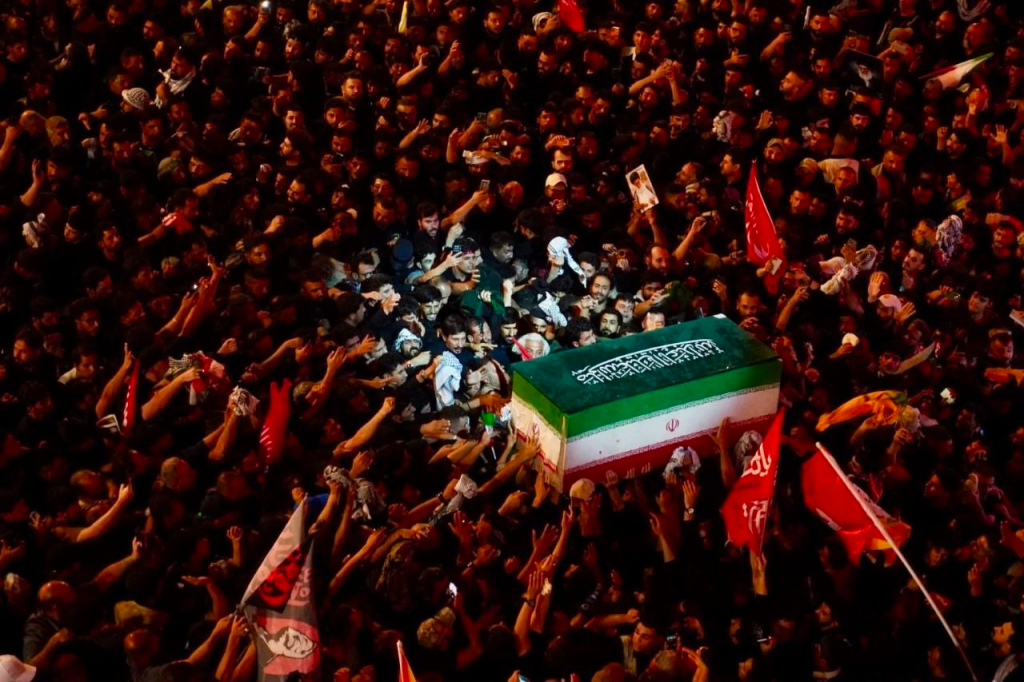
The large-scale funeral ceremonies held for the Martyred Leader of the Islamic Revolution, Ayatollah Seyyed Ali Khameneie in Tehran, Qom, Najaf, Karbala, and Mashhad can be examined within this framework. Beyond a mourning ceremony, the event represented a display of social capital, collective identity, and the capacity for cultural mobilization within Iranian society.
In political science, legitimacy is not formed only through official institutions or legal mechanisms. A significant part of legitimacy emerges through public rituals and collective actions in which societies voluntarily express their shared values and beliefs. From this perspective, the large public participation in the ceremonies was not only significant because of its scale, but also because of the meaning attached to it — reflecting loyalty, historical memory, and a collective vision of the future.
A common analytical mistake regarding Iranian society is reducing it to short-term statistics, opinion polls, or external media narratives. Iran’s social structure is shaped by deep historical, cultural, and religious connections that often influence public behavior during critical moments. Factors such as collective memory, religious identity, and perceptions of independence and security can become powerful forces capable of mobilizing large segments of society.
The ceremonies in Iraq, particularly in Najaf and Karbala, can also be viewed beyond a purely political or religious context. They reflect long-standing cultural, historical, and social links between Iranian and Iraqi communities. The scale of participation demonstrated that relations between the two societies extend beyond official state relations and are rooted in broader historical and cultural connections.
From a strategic perspective, the funeral ceremonies highlighted the role of social capital as a source of national resilience. Unlike economic or military resources, social capital is built through trust, shared experiences, collective memories, and a sense of common destiny. These elements can strengthen social cohesion during periods of crisis and uncertainty.
The international attention surrounding the ceremonies also demonstrated the importance of understanding societies through their internal cultural and historical foundations. Different political interpretations may exist, but the scale of public participation became a significant factor that attracted global media attention.
The broader significance of the event lies not only in the present moment but also in its potential long-term implications. A society capable of rebuilding collective unity during major historical moments possesses greater capacity to withstand future challenges. Such unity does not necessarily eliminate political differences or social diversity; rather, it reflects the existence of deeper shared values that emerge during critical periods.
A balanced analysis must recognize both the diversity and challenges within Iranian society while also acknowledging its ability to generate collective solidarity. Events of this nature demonstrate that national power is defined not only by military capabilities, economic strength, or diplomatic influence, but also by a society’s ability to maintain meaningful social and cultural bonds.
Conclusion: The funeral ceremonies were not merely a farewell to a religious and political figure; they represented a broader expression of collective identity, social cohesion, and the ability of a society to present its own narrative of continuity and future direction on the historical stage.
#We-Must_Rise
By Rahel Mousavi | DID News Agency