DID Press: The 2026 World Cup final was more than a football match. For many observers, it evolved into a symbol of competing political narratives, with the result interpreted through the lens of broader geopolitical rivalries rather than sport alone.
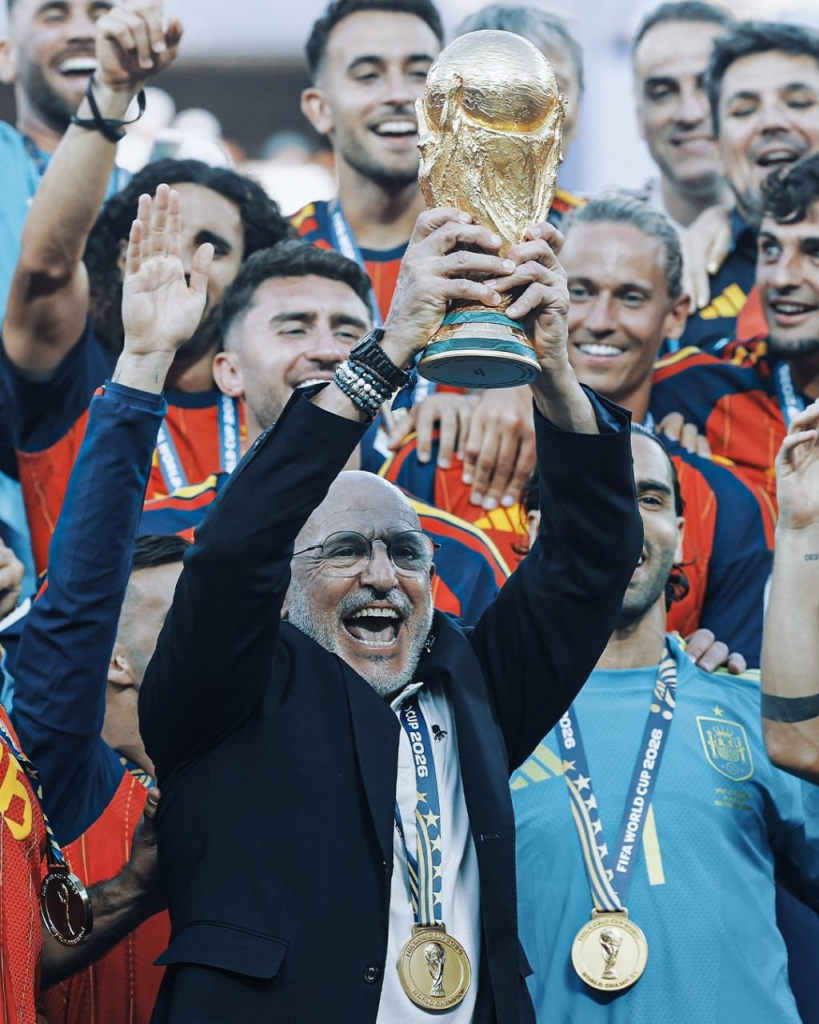
Spain’s victory was celebrated by many supporters of Palestine, who viewed the triumph as carrying political symbolism beyond the football pitch. Messages shared by several pro-Palestinian figures reflected this interpretation, portraying the result as a moral victory for supporters of the Palestinian cause. Such reactions underscore how major sporting events increasingly become vehicles for political messaging.
Yet the more significant issue extends beyond the final score. When international sport becomes an arena for geopolitical competition, it risks losing its fundamental purpose. Sport is intended to foster mutual respect, fair competition and connections across societies—not to serve as an extension of ideological or political confrontation. Whenever political leaders or influential groups attempt to frame sporting results as victories or defeats for their political agendas, the spirit of sport is diminished.
This phenomenon is far from new. During the Cold War, football—and particularly the FIFA World Cup—often reflected ideological rivalry between global powers. Rather than fading, that trend has intensified. Today, football has become one of the world’s most politically scrutinized sports.
Examples frequently cited in this debate include Russia’s suspension from international football competitions following its invasion of Ukraine, visa-related difficulties affecting some members of Iran’s national team, reported visa issues involving an international referee, political commentary surrounding disciplinary decisions in football, and public statements by politicians that have drawn accusations of politicizing the game. Together, these episodes illustrate the growing intersection between politics and global sport.
Against this backdrop, support among many Muslims for Spain during the final was viewed by some as extending beyond football. Spain was among the first European countries to recognize the State of Palestine, despite political pressure, and its government has taken positions that differ from those of former U.S. President Donald Trump on several Middle East issues, as well as on certain NATO-related matters. For many supporters, backing Spain therefore carried both sporting and political significance.
Football nevertheless remains the world’s most popular sport. Its global appeal also makes it attractive to political leaders seeking legitimacy, public support or symbolic victories. National teams often become platforms onto which broader political narratives are projected.
From the author’s perspective, just as interventionist foreign policies can deepen international tensions, politicizing sporting competitions ultimately harms both sport and the societies that cherish it. If football becomes merely another arena for geopolitical confrontation, it risks abandoning its central mission of promoting unity, friendship and mutual respect among nations.
The broader lesson drawn from this final is that sport should remain independent of political conflict. Global powers should refrain from using football as an instrument of influence, political legitimacy or international polarization. Sport fulfills its highest purpose when it serves as a shared language among peoples—not as another battlefield in global rivalries.
Ultimately, when politics overshadows sport, the greatest loser is neither the winning nor the losing team, but the integrity of sport itself and the shared values it represents.
By Abdul Rauf Tawana | DID News Agency