DID Press: The newly signed Mecca Agreement has raised questions over whether it could evolve into a collective-defense framework resembling NATO in the Middle East, according to Javid Hassan, former head of an economic advisory group and a geopolitical analyst.
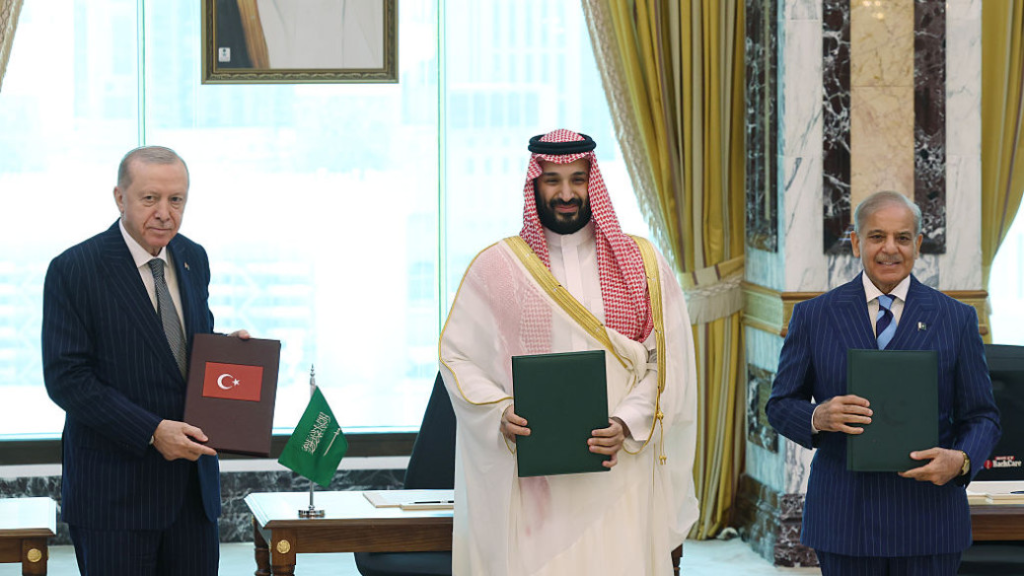
Hassan said the key question is whether the agreement contains a provision comparable to Article 5 of NATO, which establishes the principle of collective defense and the commitment that an attack against one member is treated as an attack against all.
If the agreement does not include such a commitment, Hassan argued, it could still carry significant diplomatic importance but would fall short of constituting a genuine collective-defense treaty.
NATO member Türkiye’s participation also adds complexity to the arrangement. As a NATO member, Türkiye could face legal and political constraints in fulfilling obligations under a separate regional security pact.
Hassan raised the question of how Türkiye could reconcile its obligations under both frameworks in the unlikely event that one of the three countries involved in the agreement entered into a conflict with a NATO member.
The issue could become particularly significant if the Mecca Agreement develops beyond political and diplomatic cooperation into a formal military or collective-security arrangement.