DID Press: Newly surfaced evidence in a long-running lawsuit in New York has renewed questions about the possible role of Saudi-linked individuals in the September 11, 2001 attacks and about how U.S. intelligence and law-enforcement agencies handled information concerning two of the hijackers.
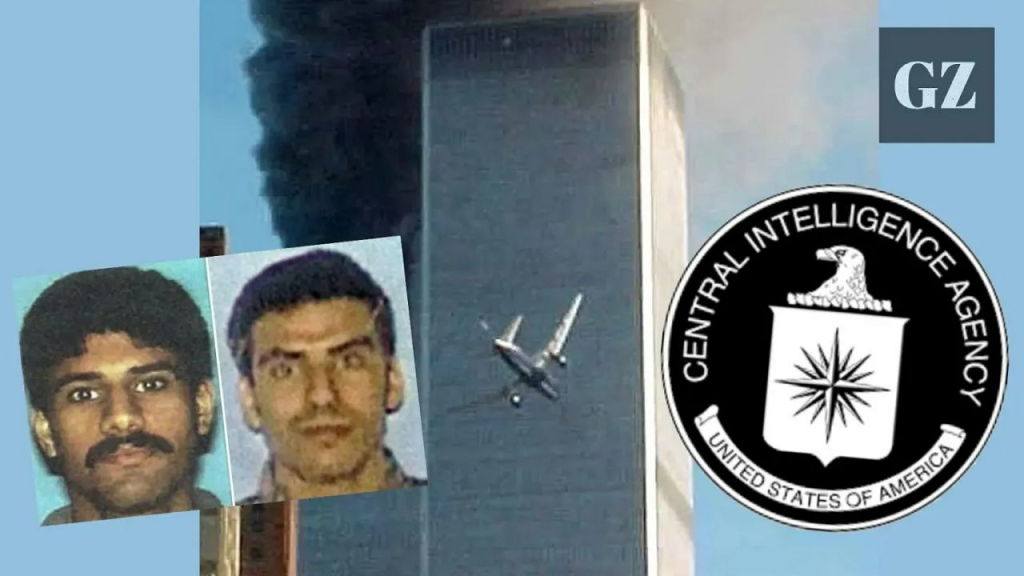
The evidence includes videos, handwritten notes and sketches seized from the Birmingham, UK, residence of Omar al-Bayoumi in 2001. The material is now being examined as part of a lawsuit brought by families of 9/11 victims against Saudi Arabia. ITV News reported that former Scotland Yard counterterrorism officer David Campbell said he was not shown some of the material during his interrogation of al-Bayoumi shortly after the attacks.
Among the newly reported material is video showing al-Bayoumi with Anwar al-Awlaki, who later became a senior figure in al-Qaeda in the Arabian Peninsula. Other footage reportedly shows al-Bayoumi taking images of prominent sites in Washington, including the U.S. Capitol, the White House and the Washington Monument. Lawyers for the victims’ families have argued that the footage could be relevant to their case, while its precise significance remains disputed.
A notebook recovered from al-Bayoumi’s residence reportedly contains a drawing of an aircraft and a mathematical equation. Lawyers for the victims’ families have said the material could relate to calculations concerning an aircraft’s descent toward a ground target, although that interpretation is an allegation in the litigation rather than an established finding.
The case also draws attention to a 2021 declaration by Donald C. Canestraro, an investigator with the U.S. Office of Military Commissions. Canestraro said he reviewed FBI records and interviewed former intelligence and law-enforcement personnel while investigating possible Saudi and CIA connections to the events preceding 9/11.
In the declaration, Canestraro relayed accounts from confidential sources alleging that al-Bayoumi had links to Saudi intelligence and had assisted hijackers Nawaf al-Hazmi and Khalid al-Mihdhar while they were in San Diego. One source further alleged that a CIA operation, conducted through a liaison relationship with Saudi intelligence, sought to recruit the two men. These statements were presented as witness accounts gathered during an investigation and have not been established as facts.
The declaration also contains allegations that CIA officials failed to provide the FBI with information about al-Hazmi and al-Mihdhar before the attacks and that subsequent investigations did not fully examine their connections to Saudi-linked individuals. Such claims remain contested and should be distinguished from established findings of the official 9/11 investigations.
The 9/11 Commission previously reported that it found no evidence that the Saudi government as an institution or senior Saudi officials individually funded al-Qaeda. At the same time, subsequent FBI investigations and declassified documents have continued to examine contacts between Saudi nationals or officials and some of the hijackers.
The latest disclosures come as the 25th anniversary of the attacks approaches. Families of the victims are again calling for the release of additional records concerning possible Saudi links and the FBI’s handling of information about al-Bayoumi and the two hijackers. President Donald Trump said this week that he would consider a request to release additional 9/11-related records concerning possible Saudi connections.
Saudi Arabia has consistently denied involvement in the 9/11 attacks. The new evidence and allegations are being examined within ongoing civil litigation and do not, by themselves, establish that Saudi government officials directed or supported the attacks.