Afghanistan’s Mines: From Geological Heritage to a Source of Taliban Revenue
DID Press: Afghanistan is among the countries in the region with significant mineral reserves, ranging from copper and iron to gold, coal, lead, zinc, gemstones and talc. Yet this underground wealth has failed over decades to develop into a large and sustainable industry. Since the Taliban returned to power in August 2021, mining has become one of the group’s main economic policy priorities, with hundreds of extraction contracts awarded to domestic and foreign companies. The shift has increased mining revenues while also raising questions about contract transparency, the public share, environmental issues and how revenues are spent. This exclusive, data-driven DID Press report examines the trend, revenue figures, mining contracts and challenges facing the development of Afghanistan’s underground wealth.
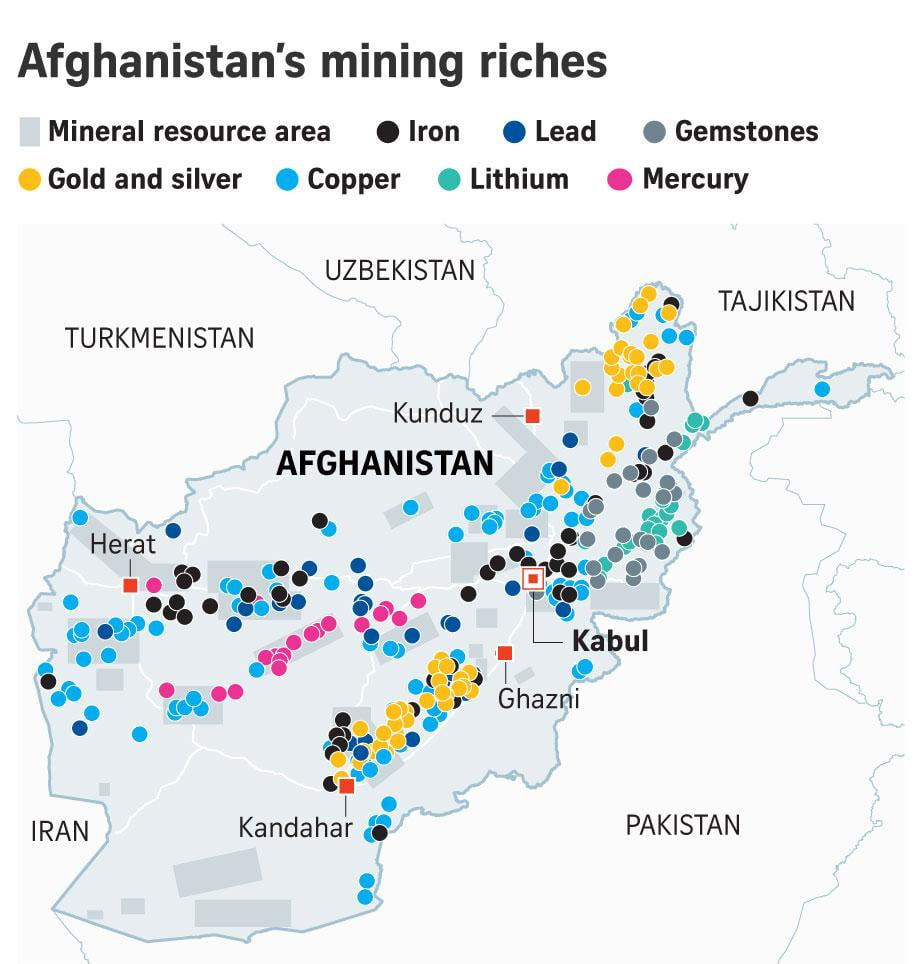
Before the Taliban: Great Wealth, Small Industry
The picture of Afghanistan’s mining sector before the Taliban’s return was also far from successful. World Bank reports show that the mining sector in Afghanistan was largely underdeveloped, with small-scale activities accounting for a large share of extraction; as a result, direct government revenue from the sector remained limited.
The U.S. Geological Survey also wrote in a 2021 report on traditional and small-scale mining in Afghanistan that mining activities in the country had long been carried out mainly on a traditional and small scale. One of the republican government’s objectives was to formalize the sector in order to improve working conditions and increase government royalty revenues.
During that period, security problems, weak infrastructure, limited investment, administrative corruption and a lack of technical capacity were among the main obstacles to mining development. The World Bank had previously warned that illegal extraction was widespread and that transactions involving licensed mines were also, in some cases, affected by corruption, resulting in significant losses of government revenue.
Therefore, the issue of Afghanistan’s mines did not begin with the collapse of the republic in 2021. Before then, too, the mining sector struggled with informal extraction, weak oversight, corruption, insecurity and a lack of industrial investment.
Why Did the Taliban Turn to Mining?
With the Taliban’s return, Afghanistan’s economic structure changed. Foreign aid, which had provided a large share of the previous government’s financial resources, declined sharply, leaving the new authorities in need of domestic sources of revenue.
Under these circumstances, mines became an attractive source for the Taliban because, unlike many industrial projects, the government can generate revenue through issuing licenses, collecting royalties and taxes, and selling mineral resources.
The World Bank reported that the mining and quarrying sector grew by about 5.7 percent in 2023 and 4 percent in 2024. It also said that by 2024, the Taliban administration had awarded 183 mining contracts, including 13 major projects, to domestic and foreign companies.
Another World Bank report in 2026 shows that Afghanistan’s mining sector experienced significant nominal and real growth between 2022 and 2024. Companies in the sector reported annual real sales growth of around 25 to 30 percent, while employment grew by about 14 to 15 percent annually. However, the World Bank emphasized that many of the awarded contracts remain in their early stages, meaning their immediate impact on production and exports is limited.
Hundreds of Contracts With Billions of Dollars in Investment?
One of the largest figures announced during the Taliban period concerns mining contracts worth billions of dollars. In August 2023, the Taliban announced the signing of seven mining contracts worth a combined $6.5 billion. The contracts covered the extraction and processing of iron, lead, zinc and gold in Herat, Ghor, Logar and Takhar provinces, with some contracting companies working with foreign investors from China, Iran and Turkey.
But the “value of a contract” is not the same as “investment made.” Mining-sector analysts have warned that implementing major mining projects can take years and requires roads, electricity, water, equipment, skilled workers and export markets. Therefore, announcing a multibillion-dollar contract does not by itself mean that the same amount of capital has entered Afghanistan’s economy.
This distinction is fundamental to assessing the performance of the Taliban: a contract is not an investment; and an investment does not necessarily mean actual production and revenue.
How Much Has Mining Revenue Increased?
Published figures on mining-sector revenue during the Taliban period show a significant increase compared with the republican era, although figures from different sources are not consistent.
An analytical report citing information published by the Taliban administration puts mining revenues at about $29 million in fiscal year 2021–22, $182 million in 2022–23 and $118 million in 2023–24. Compared with the republican period, when annual mining-sector revenue was reported at between roughly $3 million and $102 million in some years, these figures indicate an increase.
In June 2024, the Taliban Ministry of Mines also announced that it had generated nearly $90 million from mining and oil fields in less than two months. Most of that amount was related to oil sales from the Amu Darya basin, meaning it cannot all be considered net mining revenue.
The World Bank also reported in 2025 that non-tax government revenues reached 43.8 billion Afghanis in the first half of fiscal year 2025, with mining royalties among the factors contributing to this revenue, although the World Bank emphasized that the scale of extractive revenues remained limited.
Overall, the data shows that mining has become a more important source of revenue for the Taliban than in the past, but it cannot yet be considered the main pillar of Afghanistan’s economy.
The Major Difference Between the Republic and the Taliban
During the republican period, the main problem was limited industrial extraction capacity. Many of Afghanistan’s reserves were either not being extracted or were being exploited on a small and informal scale. Large projects such as Mes Aynak copper and Hajigak iron also failed to reach sustained industrial production despite extensive contracts and studies. The World Bank has identified Mes Aynak and Hajigak as among Afghanistan’s most important potential mining projects.
After 2021, the Taliban adopted a different approach: faster allocation of mining areas and attracting domestic and foreign companies.
This change has increased extraction activity, but one fundamental difference remains: Afghanistan still lacks the extensive processing infrastructure and industrial supply chains required to turn a large share of raw materials into higher-value products.
Put simply, the risk is that Afghanistan will mainly sell “mineral products” in the form of rocks and raw materials, while a significant share of the economic value is created outside the country.
China: An Important but Not the Only Player
China holds an important position among foreign investors interested in Afghanistan’s resources. Chinese companies have been involved in various mining and oil projects, while Beijing is interested in expanding economic ties with Kabul because of geographical proximity, demand for raw materials and regional economic links.
However, Afghanistan’s entire mining sector should not be attributed to China. Contracts and activities involve companies from various countries as well as Afghan companies. In recent years, Iran, Turkey, Qatar and other countries have also been involved in mining projects or related investments.
In fact, competition over Afghanistan’s resources is part of a broader trend: a poor country without broad access to global capital facing companies and governments that need raw materials and mineral resources.
The Main Issue: How Transparent Are the Contracts?
One of the most serious questions surrounding the new mining model is the level of contract transparency.
Analytical reports on the Taliban’s mining sector say that complete information on many contracts—including financial terms, the exact amount of royalties and companies’ obligations—has not been made publicly available. Even where the value of a contract has been announced, details regarding the actual investment, extraction timetable and government share are not fully accessible.
This matters because the value of a mine depends not only on the size of its reserves. Royalty rates, extraction costs, taxes, the government’s share, infrastructure costs, the contract period and the method of return on investment determine how much of the underground wealth ultimately returns to Afghanistan’s economy.
Where Is the Public’s Share?
Increased mining revenue becomes economic development when part of it returns to education, healthcare, infrastructure, electricity, water, roads and job creation.
The World Bank, in its assessment of Taliban government revenues, has emphasized that even with increased domestic revenue, financial resources are largely used for current expenditures, leaving limited fiscal space for development investment. In fiscal year 2023–24, domestic revenue reached the target of 210 billion Afghanis, but these revenues were largely used to cover operational expenditures, leaving little room for development.
Therefore, the question about Afghanistan’s mines is not only how much revenue the Taliban receives from mining. The more important question is where that revenue is spent and how much of it returns to mining communities and the country’s broader development.
The Hidden Cost of Extraction
Rapid extraction without environmental standards can create costs that do not appear in revenue statistics. Land degradation, water pollution, loss of vegetation, worker insecurity, mining accidents and the displacement of local communities are among the costs that, in the absence of effective oversight, may eventually be borne by the public.
In January 2026, clashes between residents and employees of a gold-mining company in Chah Ab district of Takhar left four people dead and five others wounded. Following the incident, the company’s operations were suspended and officials announced that the matter was being investigated. The incident shows that expanding extraction without clear mechanisms for resolving local disputes can also lead to social conflict.
Afghanistan Faces a Major Choice
Afghanistan is now at a point where its underground resources have entered the extraction cycle more extensively than before. The Taliban have awarded more contracts than during the republican period and increased mining revenues. World Bank data also confirms significant growth in mining activity in recent years, but this growth by itself does not mean sustainable development.
To turn mining into an engine of development, Afghanistan needs transparent contracts, independent oversight, environmental assessments, a clearly defined share for local communities, domestic processing, transport and electricity infrastructure, skilled workers and a system of public accountability.
During the republican period, weak governance and insecurity prevented the widespread exploitation of this wealth. Under the Taliban, the main problem is no longer only “failure to extract” but also how mining areas are allocated, the actual amount of revenue generated, how revenues are spent and what share of this wealth reaches future generations.
Afghanistan’s mineral wealth has billions of dollars in potential value, but that value will reach the people only when extraction develops from a revenue-generating activity for the government into a transparent and productive economic chain for the country. Otherwise, Afghanistan may move beyond the stage of having “untapped underground wealth” while still facing the same old problem: a country with abundant resources, but whose people receive only a small share of the value created.