Afghanistan Reaches Self-Sufficiency in Salt Production
DID Press: Afghanistan’s Industry Workers Union and Taliban authorities say the country has achieved self-sufficiency in salt production, with domestic output now exceeding annual demand. The figures are also reported by TOLOnews, which cited official statistics putting annual demand at 300,000 metric tons and domestic production capacity at 344,000 metric tons.
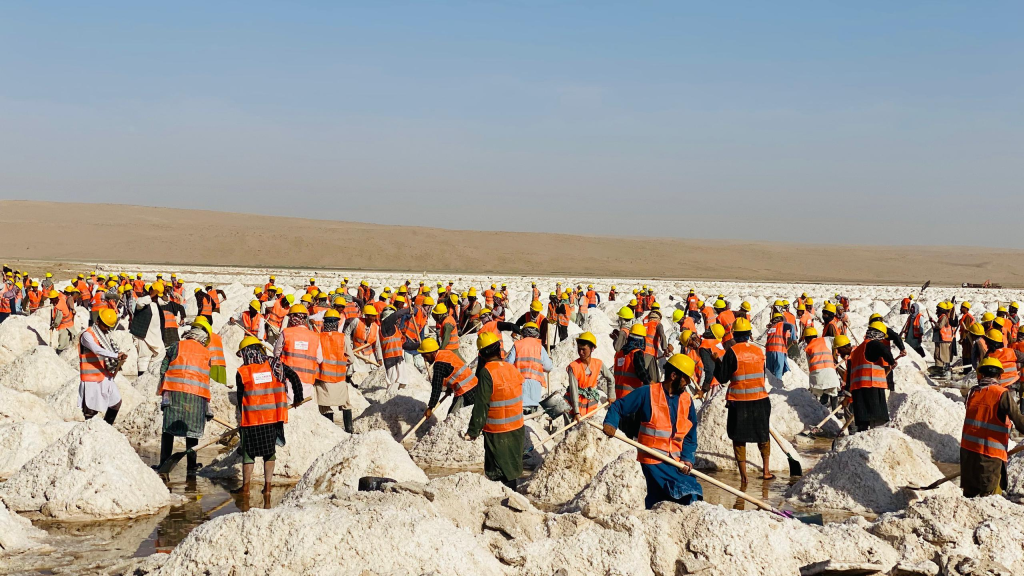
According to figures provided by Taliban authorities, Afghanistan requires about 300,000 metric tons of salt a year, while domestic production has reached about 344,000 metric tons. Officials say salt for the food and industrial sectors is supplied from domestic mines and that imports have been halted as part of measures to support local production. The Taliban’s Economic Deputy Office has previously said that 12 active mines in 10 provinces collectively produce about 344,000 metric tons annually.
Hamdullah Fitrat, the Taliban’s deputy spokesman, said salt is extracted from mines in different provinces and processed at dozens of factories. According to Fitrat, the sector has created employment opportunities for thousands of people. TOLOnews reported that 53 factories are currently operating in salt processing and production.
Afghanistan previously met part of its salt demand through imports from neighbouring countries, particularly Pakistan and Iran. However, specific figures for the value of salt imports in previous years have not been published in the sources reviewed.
Despite increased domestic production, the quality of edible salt remains a concern. BBC, as cited in the report, has highlighted complaints from some consumers in Kabul about soil and sand found in some domestically produced salt.
Nutrition specialist Humayoun Loudin said edible salt should be free of impurities and sufficiently fortified with iodine.
Abdul Jabbar Safi, head of the Afghanistan Industry Workers Union, said dozens of companies are involved in salt production and processing and that producers are working to supply standardized products. He also called for stronger government oversight of the production and refining process.
The Industry Workers Union says plans are also being pursued to improve quality, introduce standardized packaging and create conditions for exporting Afghan salt as production capacity increases.
Afghanistan has extensive salt reserves, with deposits identified in provinces including Takhar, Samangan, Balkh, Faryab, Ghor, Herat, Parwan, Ghazni, Paktia and Kandahar. Official and media reports have identified salt production in these provinces, although the number of active mines differs among sources.