Armed Resistance in Afghanistan Has Spread to 26 Provinces
DID Press: An analytical report by South Asia Times has reported the geographical expansion and increased activity of armed groups opposed to the Taliban in Afghanistan, emphasizing that armed resistance in August and September 2026 went beyond sporadic local clashes and developed into a multi-front campaign.
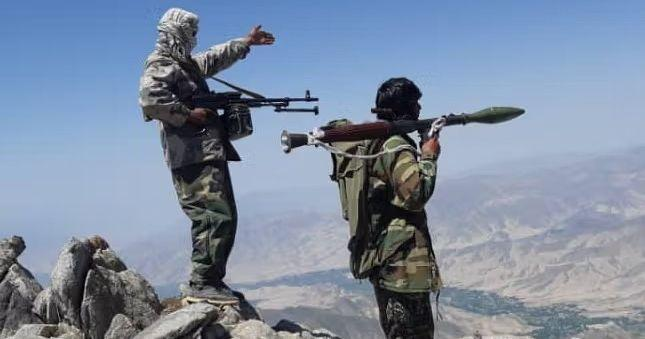
According to the report, groups opposing the Taliban carried out 119 attacks in 26 provinces during the two months, killing more than 250 Taliban personnel. The report describes the trend as a sign of increased operational coordination and the expansion of resistance networks across different parts of Afghanistan.
The report also attributes the Taliban’s governance crisis to the concentration of power among a limited circle of Kandahari elites and the exclusion of other ethnic groups. It says Tajik, Uzbek and Hazara communities have been excluded from the power structure, while the Taliban cabinet has no Hazara or female representation. The report also identifies violations of the announced general amnesty for former security personnel, including executions, arrests and torture, as factors contributing to growing discontent and the joining of some former military personnel with resistance groups.
In another section, the report identifies the National Resistance Front, Afghanistan Freedom Front and Afghanistan United Front as the main resistance groups. It also refers to the activities of networks of former military personnel and smaller groups, describing the emergence of the Afghanistan United Front, led by General Sami Sadat, as a sign of expanding resistance among Pashtun forces. According to the report, the group claimed responsibility for 59 attacks in Helmand, Kandahar, Nimroz and Ghor late this year.
The Afghanistan Freedom Front, led by Yasin Zia, and the National Resistance Front, led by Ahmad Massoud, are also identified as other major centers of armed activity. The report says the National Resistance Front has maintained operational pressure in Baghlan, Parwan and Kabul, while the Afghanistan Freedom Front has carried out attacks in Badakhshan.
The report also describes the temporary capture of the Yiftal-e-Sufla district center in Badakhshan by the Soldiers of the Homeland Front as a significant development, calling it the first instance of the Taliban losing control of a district center since August 2021.
Alongside these developments, the report identifies the expansion of activities by the Islamic State’s Khorasan branch as a parallel threat and warns that the simultaneous emergence of multiple security threats will place greater pressure on the Taliban’s ability to control the domestic situation and secure the country’s borders.
In conclusion, the author of the report argues that the continuation of armed resistance and the formation of multi-ethnic alliances will pose greater challenges to the Taliban’s capacity to contain these threats simultaneously.