DID Press: Former Turkish Prime Minister Ahmet Davutoglu’s visit to Najaf, Kufa and Karbala, along with meetings with prominent Iraqi political and religious figures, highlights Ankara’s efforts to expand its engagement across Iraq’s political and religious landscape. The approach could broaden Türkiye’s presence among Iraqi Shiite communities alongside its existing economic and security ties.
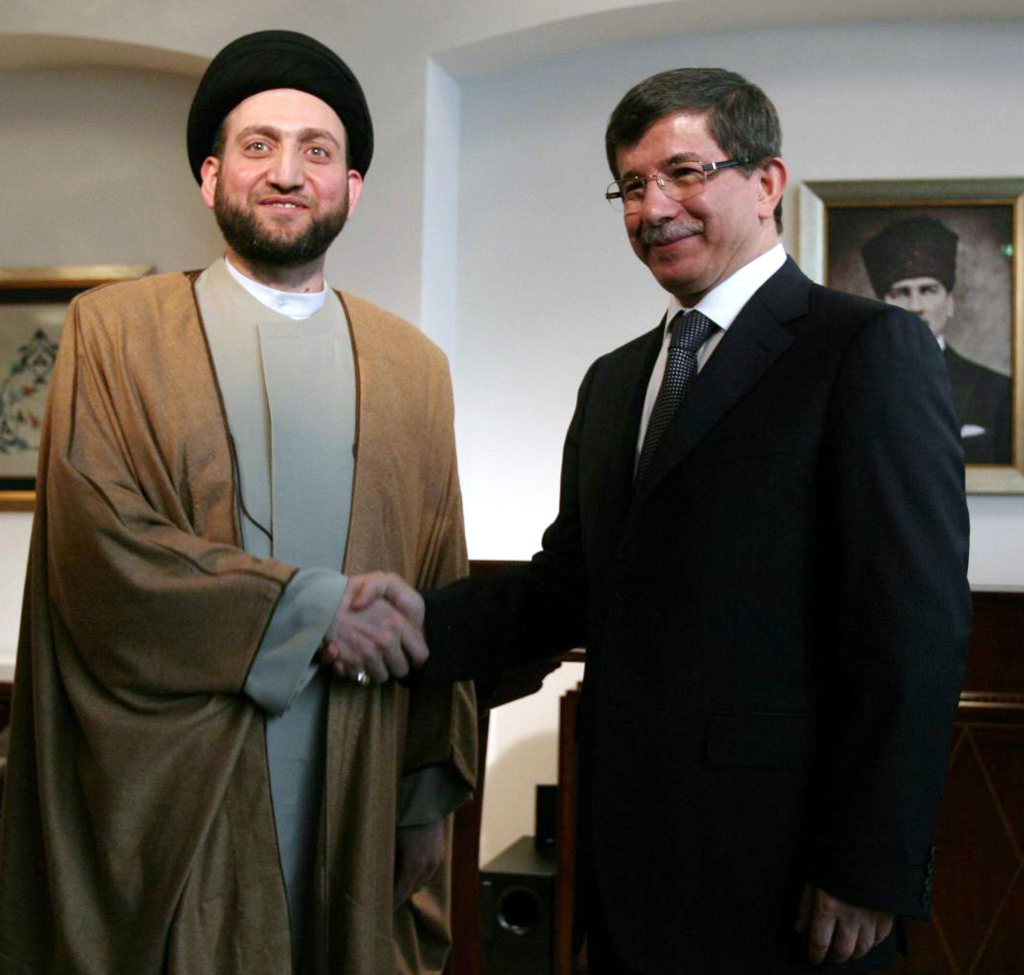
During his October 3–5 visit to Iraq, Davutoglu visited the shrines of Imam Hussein, Abbas ibn Ali and Imam Ali after attending a ceremony marking the anniversary of the death of former Iraqi President Jalal Talabani. In Karbala, he met Sheikh Abdul-Mahdi al-Karbala’i, the religious custodian of the Imam Hussein Shrine, and in Najaf he met Jawad al-Khoei. His itinerary also included the Kufa Mosque and sites associated with Muslim ibn Aqil, Hani ibn Urwa and Mukhtar al-Thaqafi.
In Baghdad, Davutoglu met Iraqi President Nizar Amedi, Parliament Speaker Haibat al-Halbousi, Ammar al-Hakim, Mohammed al-Halbousi, Khamis al-Khanjar, Falih al-Fayyadh and Hammam Hamoudi. Their discussions covered bilateral relations, regional developments and Iraq’s security. Al-Hakim also stressed the need to place all weapons under the control of the Iraqi state.
The visit can be viewed in the context of Türkiye’s efforts to strengthen ties with Iraq’s political, religious and social groups. Ankara has maintained extensive relations with the Kurdistan Region, Sunni political currents and Iraq’s federal government. It is now also seeking to deepen engagement with Shiite figures and religious institutions in Najaf and Karbala. However, the meetings alone do not indicate a shift in the Iraqi participants’ positions toward Iran.
Economic ties are another important dimension of Türkiye’s approach. Bilateral trade between Türkiye and Iraq reached $16.8 billion in 2025, and the two countries set a target in July 2026 to increase trade to $30 billion. The Development Road project, intended to connect the Port of Grand Faw to Türkiye and European markets, is also a key area of cooperation.
Some analyses view Türkiye’s expanding engagement with Iraqi Shiite elites and religious institutions as complementary to Ankara’s economic and political objectives and overlapping with US efforts to curb Iran’s influence. However, assessing whether these objectives will be achieved requires further evidence of the practical outcomes of these contacts.