DID Press: A ceremony was held at Jameat al-Ulum in Qom, Iran, to unveil the 14-volume collection Ma’idat Fiqh Ahl al-Bayt (The Jurisprudence of Ahl al-Bayt), authored by prominent Afghan scholar Ayatollah Seyyed Kazem Mostafavi. The event also honoured the scholar’s academic contributions and was attended by a group of seminary professors and students.
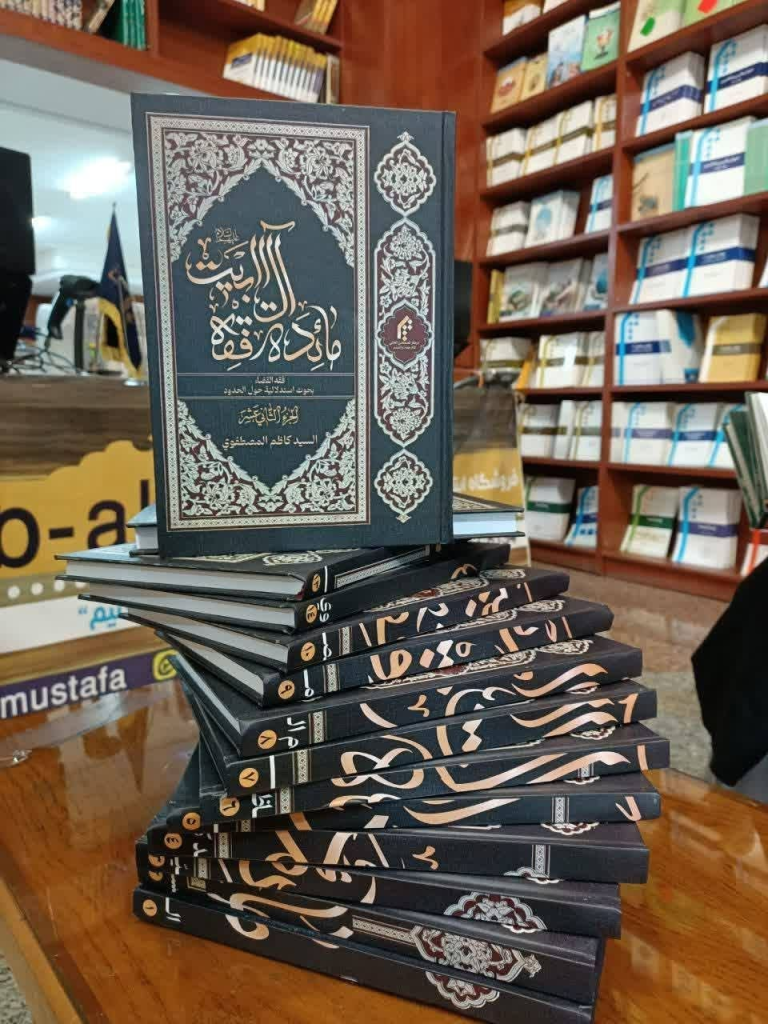
Mostafavi believes that students who master the collection after studying Kifayat al-Usul can reach the level of ijtihad, the ability to independently derive Islamic legal rulings.
During the ceremony, Hojatoleslam Abolhosseini discussed Mostafavi’s academic and teaching background, describing the collection as the result of years of scholarly and practical experience in Khorasan, Najaf and Qom. He said the author had also drawn on the teachings of three generations of prominent Islamic jurists, including Ayatollah Seyyed Abd al-A’la Sabzevari, Ayatollah Seyyed Abolqasem Khoei, Ayatollah Ruhollah Khomeini and Ayatollah Mohammad Baqir al-Sadr.
Abolhosseini added that the work covers not only classical Islamic jurisprudence but also subjects such as governmental jurisprudence and jurisprudence of governance and systems. He described it as the product of years of study, teaching and research.
He also praised Mostafavi’s clear writing and accessible style, noting the scholar’s simple and ascetic lifestyle. According to Abolhosseini, Mostafavi has devoted his academic work and teaching to promoting the teachings of Ahl al-Bayt.
Speaking at the unveiling, Ayatollah Seyyed Kazem Mostafavi said Ma’idat Fiqh Ahl al-Bayt provides a comprehensive treatment of jurisprudential subjects, written in clear and unambiguous language and based on the sources commonly used in Islamic seminaries.
He said the collection examines legal questions primarily through Shara’i al-Islam, the work of the prominent jurist al-Muhaqqiq al-Hilli, while presenting the views of other well-known Islamic jurists. He added that the authors had sought to update the supporting references and present the material clearly for seminary students.
Emphasising the collection’s educational value, Mostafavi reiterated his view that students who have studied Kifayat al-Usul and mastered the new collection can reach the level of ijtihad.
He also highlighted the broad scope of jurisprudence concerning Ahl al-Bayt, saying it relates to various aspects of life and other fields of knowledge. In his view, jurisprudence can provide perspectives and legal rulings on areas including politics and economics.
Mostafavi further referred to discussions of jihad in Ayatollah Khomeini’s works, saying he had written a commentary on those subjects. He concluded by stressing the role of Islamic jurisprudence as one of the foundations underpinning various fields of knowledge and professional specialisations.