Political Deadlock in Tel Aviv Raises the Costs for Washington
DID Press: Preliminary results from Israel’s Knesset elections indicate that neither electoral bloc can form a government on its own, setting the stage for complex coalition negotiations and raising the possibility of prolonged political instability or another election in the occupied territories.
According to the figures announced so far, Benjamin Netanyahu’s bloc has secured 53 seats, the bloc led by Gadi Eisenkot has won 48 seats, and Arab parties have obtained 19 seats. The distribution means that none of the three groups can independently form a cabinet, making the outcome heavily dependent on difficult coalition negotiations.
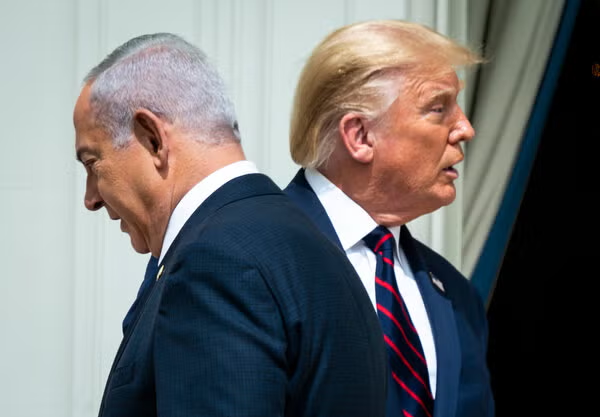
For the administration of US President Donald Trump, the situation extends beyond an internal Israeli political crisis. Washington relies on close coordination with Tel Aviv to manage regional developments and advance its policies toward Iran. Continued political confrontation in Israel could complicate decisions on security and military affairs, significantly limiting the Trump administration’s room for maneuver in the region.
In other words, Netanyahu’s electoral success is as vital to Trump as it is to Netanyahu himself. The argument is that having a far-right figure such as Netanyahu in power gives Trump greater freedom to pursue his confrontational regional policies. If Netanyahu loses the election or political disagreements in the occupied territories drag on, Trump’s plans—particularly those targeting Iran—could face serious disruption.
For this reason, the central concern for Trump is not necessarily a structural change in the composition of Israel’s next government. Rather, it is ensuring that Israel remains capable of aligning with Washington’s regional priorities in dealing with its longstanding adversaries, particularly the Islamic Republic of Iran.
From this perspective, prolonged coalition negotiations could undermine US diplomatic initiatives in Gaza while making coordination over Iran more difficult.
An important point is that an electoral deadlock does not necessarily mean a change in Israel’s strategy toward Hamas, Hezbollah or Tehran. Although Netanyahu and Eisenkot may use different means to retain or gain power, their shared opposition to the establishment of a Palestinian state suggests that even an agreement to form a government may not bring a significant shift in Tel Aviv’s approach.
Trump’s main concern, therefore, is not necessarily Netanyahu’s failure to remain in power. It is the rising political and diplomatic cost of US regional policies as Israel’s electoral deadlock and prolonged disagreements over forming a new government continue.
By Mohsen Mowahed | DID News Agency