Afghan Farmers Return to Opium Poppy as Drought and Poverty Deepen
DID Press: Opium poppy cultivation in Afghanistan has increased sharply this year, according to the United Nations, amid declining farm incomes, falling crop prices and growing difficulties for rural families in meeting their basic needs.
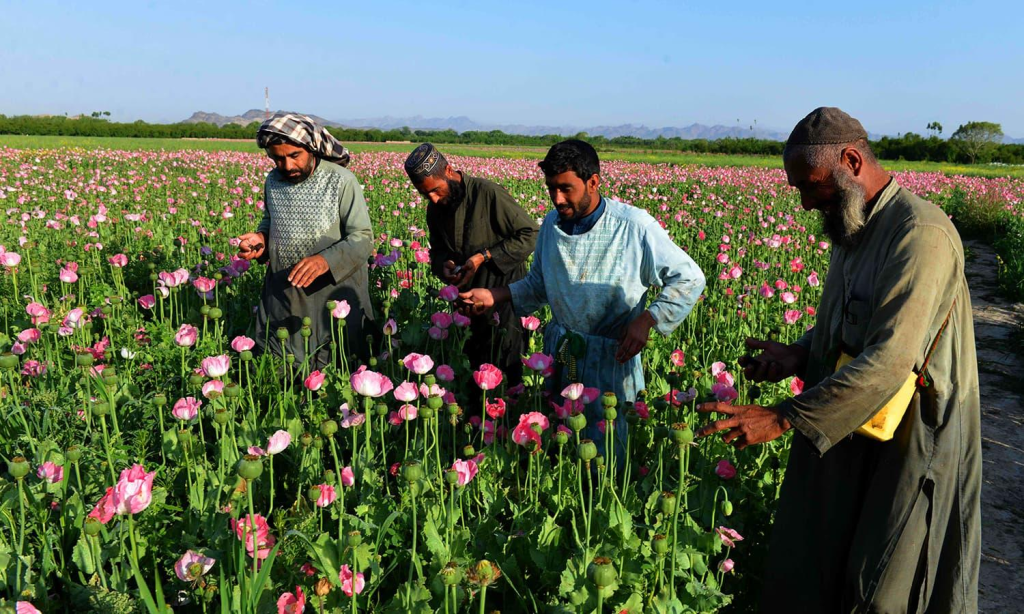
According to a new report by the United Nations Office on Drugs and Crime (UNODC), the area under opium poppy cultivation in Afghanistan has increased more than fourfold compared with 2025, reaching approximately 43,300 hectares. The rise comes despite the Taliban’s widespread enforcement of a ban on poppy cultivation after returning to power.
Despite the increase, the area under cultivation remains far below the level recorded in 2021, when approximately 177,000 hectares of land across Afghanistan were devoted to opium poppy.
Falling Incomes and Rising Malnutrition
Reports indicate that many farmers have been unable to find alternative crops that generate enough income to cover their families’ living expenses since the poppy ban was imposed.
Mohammad Dawood, a 28-year-old farmer in Baba Yusuf village in Balkh province, said that before the ban, income from a single poppy harvest could cover his family’s expenses for an entire year. Now, he struggles to meet their basic needs by growing cotton and wheat.
He said his children are suffering from malnutrition and that his income has fallen sharply during periods of poor harvests.
Meanwhile, health workers in Balkh province report an increase in child malnutrition cases. United Nations agencies say child malnutrition has reached critical levels in 10 Afghan provinces this year, a figure that could rise to 14 provinces by 2027.
Drought and Falling Crop Prices
Farmers say recurring droughts, declining water resources and falling agricultural prices have further worsened their livelihoods.
In Baba Yusuf village, some farmers say wheat cultivation barely covers production costs. They also report that cotton prices have fallen sharply amid increased domestic market supply.
The closure of the Pakistan border late last year has also restricted access to an important market for cotton sales, according to some farmers.
Meanwhile, alternative crops such as fruit and nuts, recommended by aid organizations as substitutes for opium poppy, require considerable time, sufficient water and reliable access to export markets.
According to a United Nations survey, more than four out of five households in Balkh and two neighboring provinces said that after losing income from opium poppy, they had either found no replacement income source or had recovered only part of their lost earnings.
Concerns Over a Resurgence in Global Drug Markets
The increase in opium poppy cultivation in Afghanistan could affect global drug markets, particularly the supply of opium and heroin to Europe.
The United Nations has warned that opium stockpiles accumulated before the ban may be running low, potentially increasing farmers’ incentives to return to poppy cultivation.
Revenue from opium sales in Afghanistan is estimated at approximately $525 million this year. With the exception of 2022, this would be the highest figure recorded since 2018.
The Taliban, however, have rejected the UN findings on the extent of poppy cultivation, saying the actual area under cultivation is about half the organization’s estimate. Taliban officials have also stressed that efforts to eradicate poppy fields are continuing.
Insufficient Support for Farmers
A representative of the UN Office on Drugs and Crime in Afghanistan said that insufficient support had been provided to help farmers establish alternative livelihoods, both by the Taliban authorities and by the international community.
Taliban officials have also recently emphasized the importance of supporting alternative livelihoods for farmers.
Nevertheless, continued drought, declining incomes and mounting economic hardship are creating further challenges for enforcing the opium poppy ban.
The UN report indicates that although the ban remains in place, economic pressure on rural households has pushed some farmers back toward poppy cultivation. If the trend continues, it could affect both the livelihoods of millions of Afghans and drug markets around the world.