Opium Production in Afghanistan Surges 400% as Poppy Cultivation Exceeds 43,000 Hectares
DID Press: Opium production in Afghanistan has increased nearly fivefold over the past year, rising from approximately 300 tonnes to 1,500 tonnes, according to a report by the United Nations Office on Drugs and Crime (UNODC).
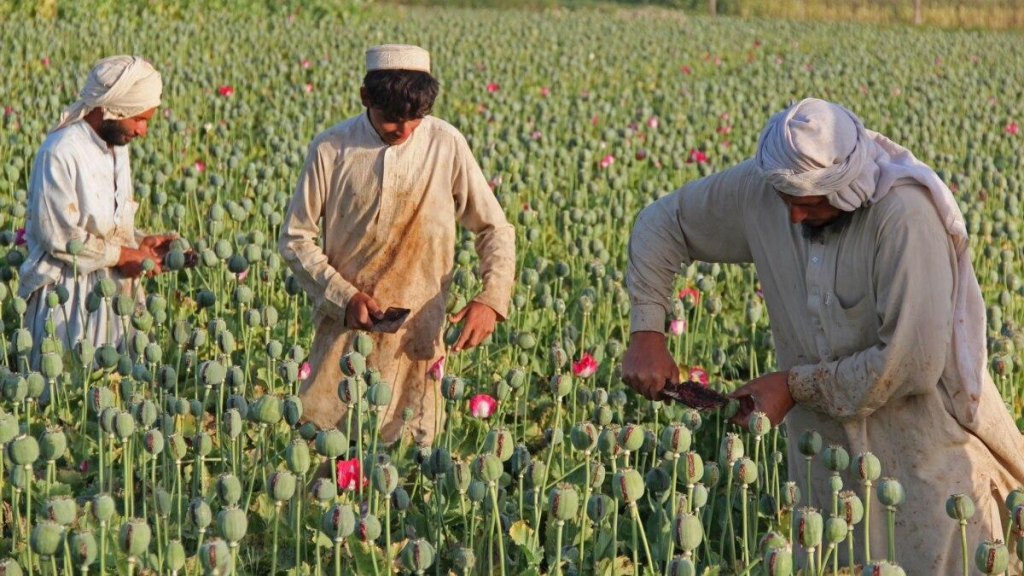
The increase has coincided with a 330% expansion in land under poppy cultivation and a rise in the number of provinces where the crop is being grown.
According to the UNODC report, poppy cultivation in Afghanistan has expanded to more than 43,000 hectares, while the geographical spread of cultivation has increased from 11 provinces to 16.
The figures come despite the Taliban authorities’ earlier announcement that they had enforced a ban on poppy cultivation and destroyed 22,000 hectares of poppy fields. However, the UN findings point to a substantial resurgence in cultivation and a sharp rise in opium production.
Economic hardship, a lack of livelihood opportunities, insufficient support for farmers to grow alternative crops, and continued demand in international markets have been identified as major factors behind the renewed increase in drug production.
Taliban leader Hibatullah Akhundzada issued a decree banning poppy cultivation and drug production in April 2022. Although its initial implementation led to a significant decline in opium production, the absence of sustained support programmes and adequate investment in alternative livelihoods gradually encouraged farmers to return to poppy cultivation.
Meanwhile, concerns persist over the expansion of synthetic drug production and trafficking from Afghanistan, particularly methamphetamine, commonly known as crystal meth. Security agencies and international organisations have repeatedly warned about the movement of these substances to neighbouring countries and other regions.
The renewed increase in opium production and the expansion of poppy cultivation into additional provinces indicate that a legal ban alone has not resolved Afghanistan’s drug problem. The lack of sustainable economic alternatives for farmers remains one of the main challenges in addressing the issue.