Severe Malnutrition Crisis Overwhelms Hospitals in Southern Afghanistan
DID Press: A sharp rise in severe malnutrition in Afghanistan is overwhelming healthcare facilities in the country’s southern provinces, where hospitals are struggling to accommodate growing numbers of sick children. Meanwhile, declining humanitarian assistance and forecasts that 19.2 million people will face acute food insecurity have raised concerns about a worsening humanitarian crisis in the coming months.
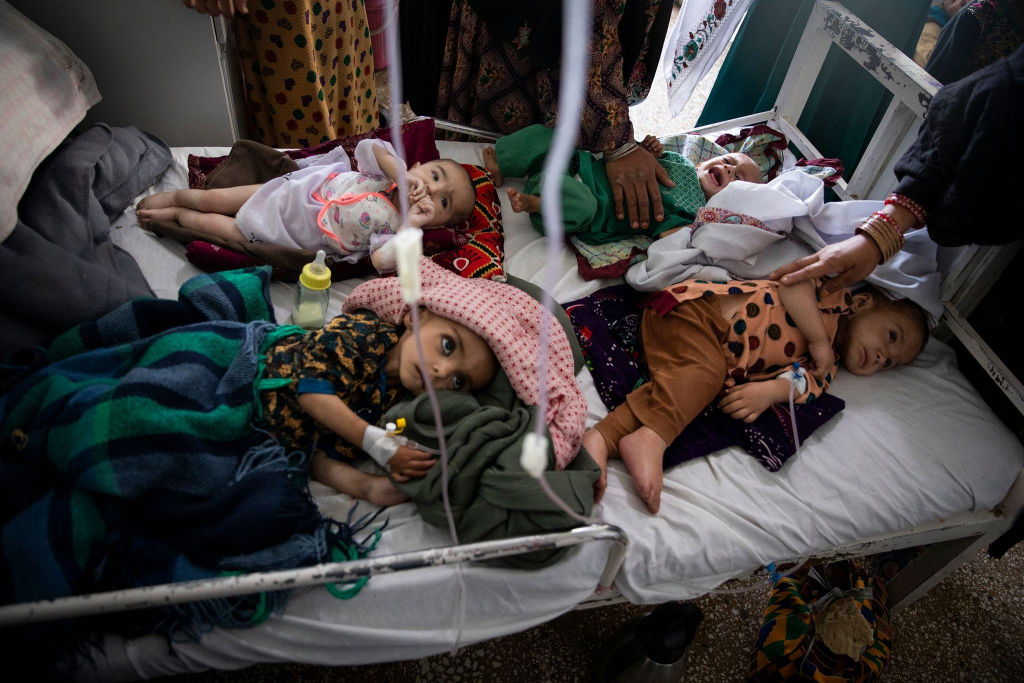
The UN Office for the Coordination of Humanitarian Affairs (OCHA) has warned that hospitals and healthcare centres in southern Afghanistan are facing a surge in severely malnourished children and a shortage of inpatient capacity. In some facilities, three to four children are being admitted for every available bed.
According to a joint assessment by the UN Food and Agriculture Organization (FAO) and the World Food Programme (WFP), around 19.2 million people—38 percent of Afghanistan’s population—are expected to face crisis-level or worse acute food insecurity between November 2026 and April 2027. This compares with 17.4 million people during the same period last year.
The assessment also projects that around five million people will face emergency levels of hunger. Cases of acute malnutrition are expected to rise by nearly 10 percent in 2027, reaching approximately four million. Nearly one-quarter of these cases are projected to be severe and life-threatening.
UNICEF previously reported that around 3.7 million children in Afghanistan suffer from acute malnutrition, including nearly one million experiencing severe malnutrition. Since the beginning of 2026, more than 500,000 children have also been admitted to healthcare facilities for treatment of high-risk moderate and severe malnutrition.
The forced return of more than 1.2 million migrants from Iran and Pakistan, disruptions at border crossings, rising food prices, unemployment and declining funding for aid organisations have been identified as factors worsening the crisis.
UNICEF has also warned that cuts to humanitarian funding have led to the closure of more than 100 treatment centres for severe acute malnutrition among children compared with 2025. Afghanistan’s nutrition programmes are facing a 57 percent funding gap.
As winter approaches, international organisations are warning that food and medical needs will increase, further worsening conditions for vulnerable families across Afghanistan.