Afghanistan’s Opium Poppy Cultivation Surges 330% in One Year
DID Press: Opium poppy cultivation in Afghanistan increased by 330% in 2026, according to an analysis published by Modern Diplomacy, which warns that shifting drug trafficking routes could intensify pressure along Iran’s eastern borders.
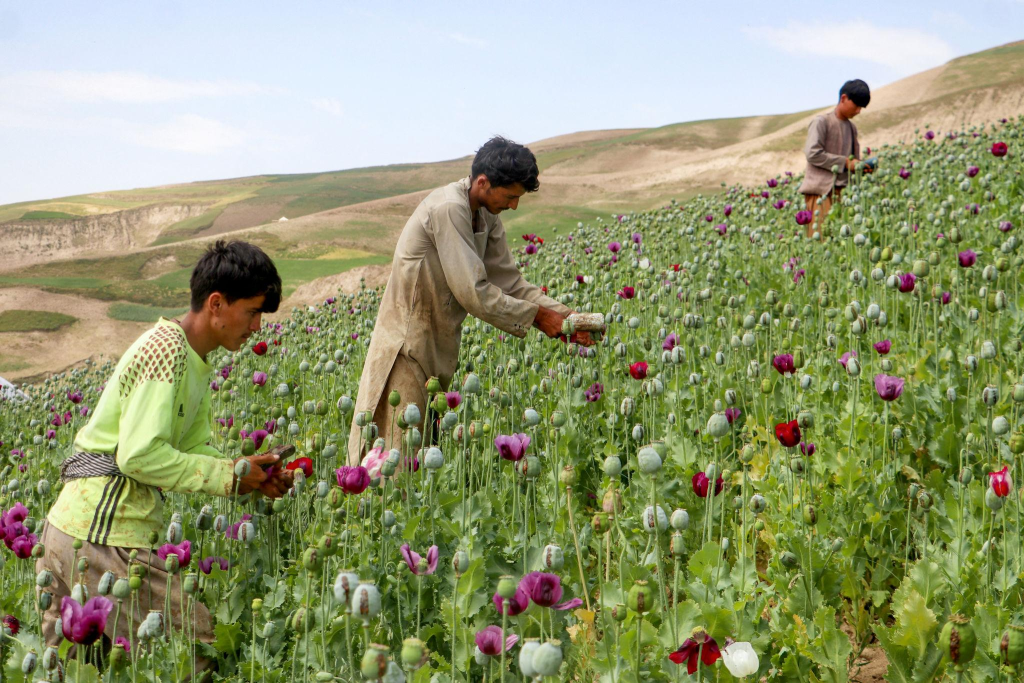
In a report published on November 23, Modern Diplomacy expressed concern over the widespread resurgence of poppy cultivation in Afghanistan despite the ban announced by the Taliban, warning of regional consequences from increased drug production and trafficking.
According to the report, the area under poppy cultivation in Afghanistan rose from approximately 10,200 hectares in 2025 to more than 43,000 hectares in 2026, an increase of around 330%.
Afghanistan’s opium production also increased from approximately 300 tonnes last year to nearly 1,500 tonnes this year.
The report said poppy cultivation is concentrated mainly in northeastern Afghanistan, with Badakhshan accounting for the largest share at approximately 29,482 hectares. The value of opium produced at the initial domestic trading stage is estimated at around $525 million.
Modern Diplomacy argues that the Taliban are not enforcing the poppy cultivation ban uniformly across the country, with political and security considerations, particularly in Badakhshan province, influencing how the policy is implemented.
The report identifies rural poverty, mounting economic pressure on farmers, the return of migrants and trade restrictions between Afghanistan and Pakistan as factors contributing to the renewed expansion of poppy cultivation.
At the regional level, Iran is identified as one of the main transit routes for drugs originating in Afghanistan. According to the report’s authors, disruptions to traditional trafficking routes, particularly along the Afghanistan-Pakistan border, could redirect some drug trafficking networks towards Afghanistan’s western borders with Iran.
Modern Diplomacy also outlines three possible scenarios for 2027: a continued gradual expansion of cultivation in northeastern Afghanistan; its spread to southern regions alongside increased drug shipments towards Iran; or intensified crop eradication operations, prompting cultivation to shift towards border areas of neighbouring countries.
The renewed increase in poppy cultivation has raised serious questions about the nature and objectives of the ban announced by the Taliban. Critics argue that, given the role of the informal drug economy in sustaining financial resources and economic networks linked to the Taliban, the ban may have been intended more to manage public opinion and gain international credibility than to establish a lasting anti-narcotics policy.
Meanwhile, the shift in the centre of poppy cultivation from southern Afghanistan to the north and northeast, particularly areas close to neighbouring countries, could have security and geopolitical implications and ultimately create channels through which insecurity and instability spill across Afghanistan’s borders.