Report Highlights Unequal Distribution of Development and Healthcare Resources Across Afghanistan
DID Press: The return of more than 7.2 million Afghan migrants from neighbouring countries over the past five years means that one in every seven people in Afghanistan is now a returnee. This is more than a demographic statistic; it represents a major test of fairness, governance effectiveness and the priorities of Afghanistan’s current authorities.
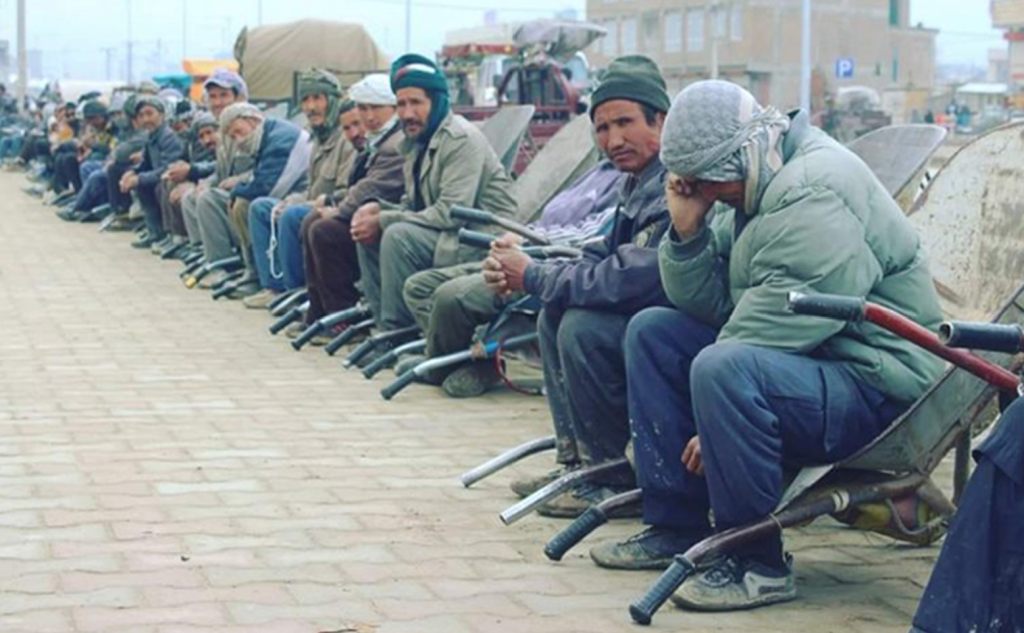
A new report by the Data for Afghanistan institute, which examines conditions across 401 districts nationwide, reveals a troubling reality: the pressure caused by the return of migrants, alongside livelihood and healthcare crises, is disproportionately affecting northern, western and central regions. Meanwhile, a major share of development and healthcare budgets and projects is flowing towards southern provinces.
The report’s figures clearly illustrate the depth of this geographical disparity and inequality in the distribution of public resources. In provinces such as Kunduz, Daykundi and Herat, population pressure has reached its highest levels, with nearly one in every four residents being a returnee.
The situation in public healthcare is even more critical. While the national average stands at 252 returnees for every healthcare worker, the figure has reached between 469 and 563 in northern and western provinces, including Kunduz, Takhar, Balkh and Herat.
Despite the overwhelming pressure and the urgent need for hospitals and clinics in these areas, the figures show that only eight new healthcare facilities were opened in Kunduz and 10 in Daykundi over the past five years. By contrast, southern Helmand province saw the opening of 80 new healthcare facilities during the same period — eight to 10 times more than in areas facing the highest proportions of returnees and the most severe shortages of healthcare services.
This apparent inequality in the allocation of national resources has raised a fundamental question among citizens and Afghanistan observers: What criteria determine the distribution of budgets and public services across the country?
Under basic principles of crisis management and social justice, financial resources and infrastructure should be allocated according to population density, levels of deprivation and the severity of local needs. However, what is currently visible across Afghanistan’s geographical landscape is a form of “selective development” shaped by political and regional considerations.
When a province such as Daykundi in central Afghanistan, which has long suffered from historical deprivation and a severe lack of roads and healthcare facilities, receives tens of thousands of returnees but sees only 10 new health centres over five years, while dozens of infrastructure and healthcare projects are rapidly implemented in the south, the situation can no longer be attributed solely to budget shortages. It also raises questions about political will and uneven priorities.
The consequences of this one-sided approach extend beyond healthcare statistics and directly affect the livelihoods and daily lives of thousands of families. According to the same report, even if an unskilled worker works continuously for 26 days a month, their wages cover only 37% to 76% of a family’s poverty-line income. In none of the country’s provinces is this amount sufficient to meet the minimum cost of living.
Meanwhile, a 19% increase in healthcare costs and a rise of more than 12% in housing rents — equivalent to an entire month’s wages for a worker in cities such as Jalalabad and Kabul — have pushed both returnees and local residents into an increasingly difficult situation.
Under these circumstances, neglecting densely populated areas that receive large numbers of returnees in the north, west and centre means leaving millions of citizens trapped in a cycle of poverty, illness and despair.
Warnings that another one million migrants may return in the near future should serve as a serious alarm for the authorities. Such a development would push the proportion of returnees in provinces such as Kunduz above 25% and further increase the need for dozens of new healthcare facilities and educational capacity for hundreds of thousands of children.
Afghanistan is one country with shared challenges, and no region should be deprived of basic citizenship rights and public services because of its distance from the centre of decision-making in Kandahar.
Continuing a policy under which population pressure and hardship are borne by the north, west and centre while budgets and resources remain concentrated in the south will not only deepen the humanitarian crisis across large parts of the country but also widen social divisions and erode public trust.
Overcoming this crisis requires an urgent change in resource-allocation policies and replacing political priorities with “geographical justice.”
By Sayed Baqer Waezi – DID News Agency