Taliban Shift From Tehran Alignment Toward UAE-Leaning Neutrality
DID Press: After roughly two and a half months of regional escalation and Iran’s consolidation of military and diplomatic leverage, the Taliban’s stance on the unfolding geopolitical crisis has undergone a noticeable adjustment. What initially appeared as a position closer to Tehran has now evolved into what the group describes as “active neutrality”—a posture increasingly interpreted as strategic distancing from Iran and a gradual tilt toward the UAE–US alignment.
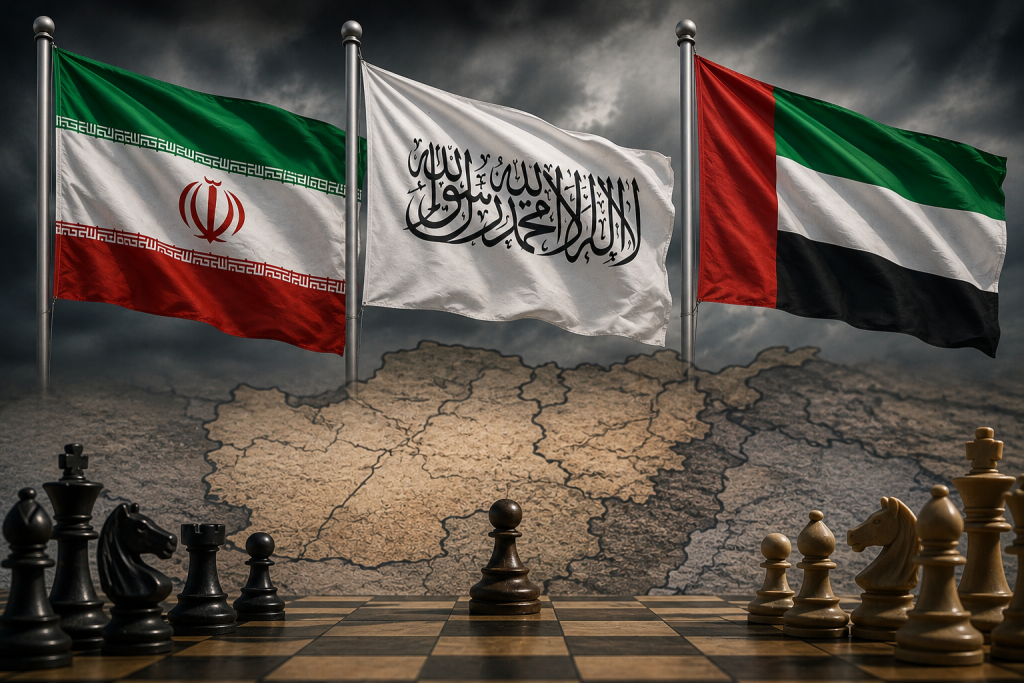
UAE Influence and Economic Dependency
The United Arab Emirates plays a central role in this shift. Over recent years, Abu Dhabi has expanded its economic, financial, and indirect security footprint inside Afghanistan’s emerging governance structures. A significant portion of Afghanistan’s trade and financial flows continues to pass through Dubai, creating structural dependency that limits Kabul’s strategic autonomy.
Analysts argue that this economic linkage has made the Taliban vulnerable to Emirati political leverage, particularly as the UAE aligns itself with broader US and Israeli regional positions during the ongoing crisis.
Active Neutrality or Strategic Realignment?
While “active neutrality” is presented as non-involvement in regional conflict, analysts suggest it may function as a de facto alignment with UAE and US preferences.
The Taliban continues to seek international recognition and access to global financial systems, maintaining indirect channels with Washington. This necessity, experts argue, constrains its foreign policy independence and encourages pragmatic alignment shifts.
Internal Factional Dynamics
Internal divisions within the Taliban also appear to be shaping the new stance. One faction maintains closer ideological and political proximity to Iran, while more influential power centers reportedly lean toward Pakistan and the UAE.
The current shift is seen as reflecting the growing dominance of these latter factions within the group’s decision-making structure.
Regional Implications for Iran
The recalibration of Taliban policy carries significant implications for Iran’s regional security environment. Increased Emirati presence across Afghanistan’s northern and southern corridors could reshape economic and strategic dynamics along Iran’s eastern frontier.
Observers note that Kabul’s effort to maintain distance from Tehran while balancing ties with competing regional blocs reflects a broader strategy of political hedging in an increasingly fragmented geopolitical landscape.
Conclusion
The Taliban’s evolving posture is not viewed as an abrupt reversal, but rather as the outcome of sustained Emirati influence, US pressure mechanisms, and internal factional competition. While Iran currently maintains strong leverage in the regional arena, Afghanistan’s ruling authorities appear to be recalibrating their position toward a neutrality that increasingly aligns with the UAE–US strategic axis.
By Sayed Hassan Mousavi – DID News Agency