DID Press: FIFA World Cup 2026 is expected to open under unprecedented geopolitical, economic, and security pressures, turning the tournament into one of the most politically charged editions in the history of international football.
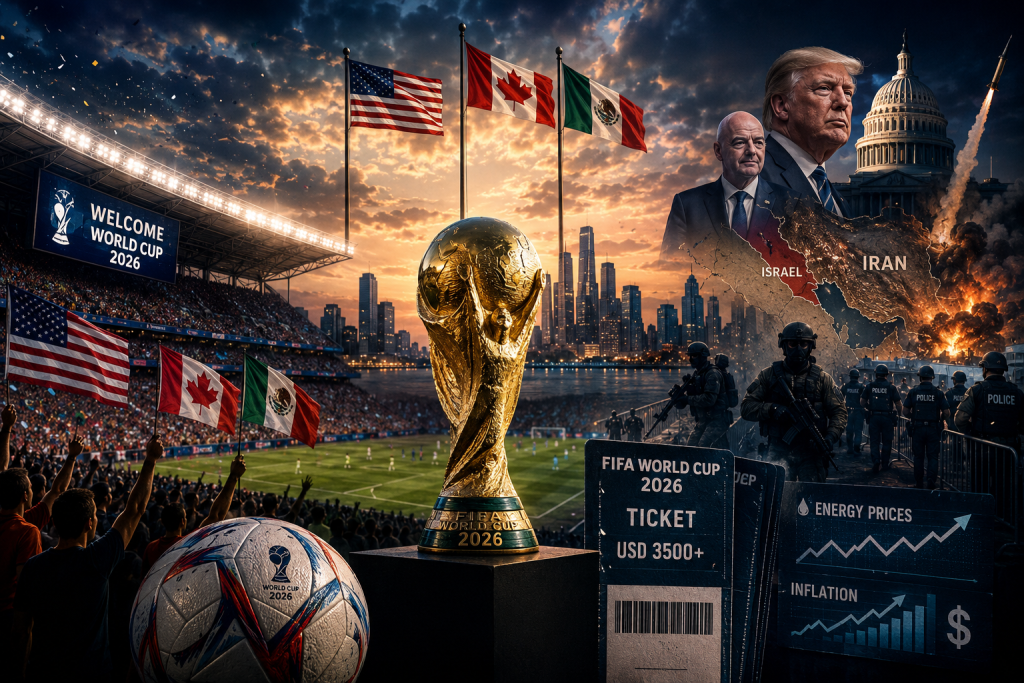
The competition, set to feature 48 teams and 104 matches across the United States, Canada, and Mexico, is being staged against a backdrop of global instability, rising economic strain, and heightened security concerns.
FIFA has described the tournament as the most inclusive World Cup ever organized, yet its preparation phase has been marked by sustained criticism over growing political influence and questions surrounding institutional neutrality.
Tensions have intensified amid broader international conflicts and heightened diplomatic sensitivities involving host nations. Analysts say the intersection of global politics and sport is increasingly shaping the narrative around the tournament, particularly in relation to security planning and economic conditions.
Iran Participation Becomes a Political Flashpoint
The presence of Iran has emerged as a focal point of political attention, with reported visa complications for members of its delegation and adjustments to training arrangements raising concerns about logistical and diplomatic friction.
Some international outlets have warned that Iran’s participation could become one of the most sensitive security and media issues of the tournament, reflecting broader regional tensions.
Rising Costs and Economic Exclusion
Ticket pricing has also triggered widespread criticism, with premium seating reaching several thousand dollars and secondary market prices further escalating costs for fans.
Observers argue that the World Cup is increasingly shifting away from a mass public event toward a premium commercialized experience dominated by corporate stakeholders and high-income spectators.
Climate and Security Challenges
Extreme heat conditions in several U.S. host cities have prompted FIFA to adjust match protocols, including mandatory cooling breaks and enhanced hydration measures for players.
Experts suggest that the 2026 edition could become a benchmark for how major sporting events adapt to climate change in the coming decades.
Football Still at the Center
Despite the surrounding controversy, football remains the central focus. The tournament is widely expected to mark the final World Cup appearances of global icons Lionel Messi and Cristiano Ronaldo, adding historic significance to the competition.
Teams such as Brazil under Carlo Ancelotti, England seeking to end a decades-long title drought, and the United States under ambitious coaching leadership are also seen as major contenders.